
24/7 Customer Support

Free returns

Same-day & Next-day Delivery

Quality Guaranteed

Unlock Your Welcome Offers: FREE Delivery | Up to 80% OFF | Free 30-day JoyPlus trial
Download the APP
Choosing between fridges and fridge freezers is not simply a matter of comparing litre capacity and colour. UK kitchens vary considerably in width, ventilation, door clearance and plumbing access, while energy use can make a meaningful difference over several years.
The most suitable appliance depends on how you shop, how much fresh or frozen food you store and whether your kitchen can accommodate a freestanding, integrated or American-style model. This guide highlights common buying traps, explains the specifications that matter and presents practical options for different households.
A fridge may technically fit into a gap but still be difficult to install or use. Check the full width, height and depth, including door movement and required ventilation space. American-style fridge freezers are often around 90–92cm wide and may need additional clearance at the sides or rear.
For integrated fridges, measure the housing aperture rather than relying only on the product’s external dimensions. Hinge type also matters: sliding hinges and fixed hinges are not interchangeable without checking cabinet compatibility.
A large-capacity fridge freezer can be useful for a family that bulk-buys, but it may waste floor space and electricity in a smaller flat. Conversely, a compact fridge freezer can become inconvenient if frozen food storage is regularly insufficient.
A dedicated larder fridge may be more practical for households that buy fresh food frequently or already have a separate freezer. A 126-litre under-counter model suits a different need from a 304- or 319-litre built-in larder fridge.
A non-plumbed water and ice dispenser uses an internal tank, so it does not require a fixed water connection. This makes positioning easier, but the tank needs regular cleaning and manual refilling. Plumbed models provide a continuous water supply but require suitable pipework and installation access.
Likewise, No Frost reduces the need for manual defrosting, but shelves, seals, tanks and dispensers still require routine cleaning.
Measure the route into the property first, including doorways, stairwells and lift dimensions. Then check:
For example, the CHiQ JKR120DWE measures approximately 545 × 562 × 850mm, making it suitable for many under-counter locations. By contrast, a Samsung RS70F67QCFEU American-style fridge freezer is approximately 912mm wide, 726mm deep and 1,784mm high.
Look for net capacity, not just gross capacity. Net capacity represents usable storage after shelves, drawers and internal fittings are accounted for.
Consider the split between fridge and freezer space. A 60/40 slim fridge freezer such as the Midea MDRB254FGE01 provides 120 litres of fridge storage and 53 litres of freezer storage, while a side-by-side model may offer more than 200 litres of freezer space.
Storage features can be more useful than headline capacity. Adjustable shelves, door balconies, crisper drawers and large freezer drawers help accommodate bottles, meal-preparation containers and bulky packaging.
The UK energy label ranges from A to G, with A being the most efficient classification under the current scale. Compare models within a similar size category, as a larger appliance will generally require more energy than a compact one even if both have a similar rating.
Noise is especially relevant in open-plan kitchens. Models in the reference range list operating levels from approximately 33dB to 40dB. Check the manufacturer’s specification rather than relying on phrases such as “quiet” or “whisper-quiet”.
Features such as Total No Frost, multi-airflow cooling and inverter compressors can reduce maintenance or support more consistent operation. However, they should be weighed against price, capacity and actual household requirements.
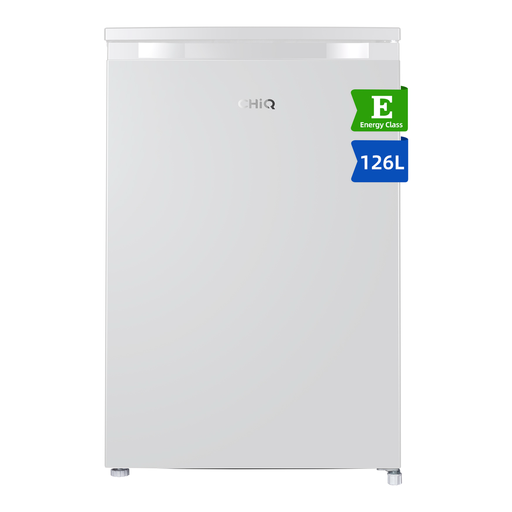
Why This Fits Their Persona: A practical choice for renters, students, offices, utility rooms and smaller UK kitchens where a full-height appliance would be excessive.
Its compact dimensions and clear 126-litre net capacity make the space requirement easier to assess before purchase.
55cm width, 39dB stated noise level, seven temperature settings and three door bins.
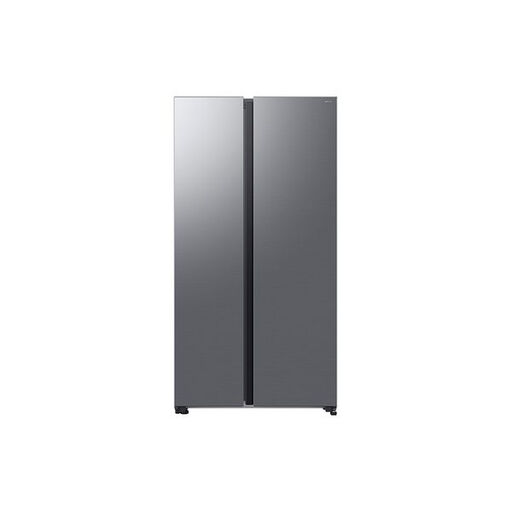
Why This Fits Their Persona: Suited to larger households and kitchen renovators with enough room for a wide side-by-side appliance and an interest in connected features.
The listed 652-litre capacity is separated into 409 litres of fridge storage and 243 litres of freezer storage, making the layout easier to compare.
C energy class, Total No Frost, Wi-Fi connectivity and a non-plumbed manual ice maker.
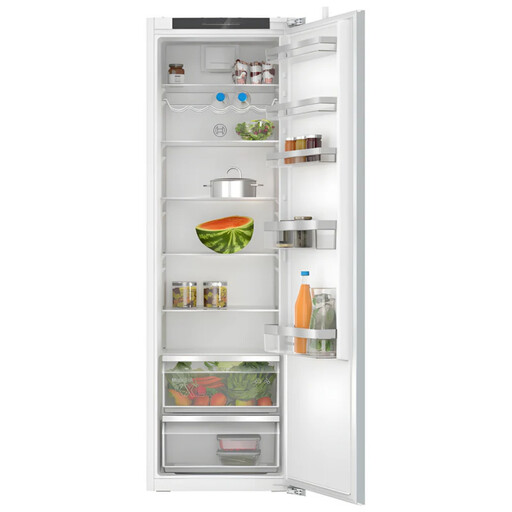
Why This Fits Their Persona: Designed for homeowners replacing an integrated appliance or creating a streamlined fitted kitchen with dedicated fresh-food storage.
The stated required niche is approximately 1,775 × 560 × 550mm, helping buyers check cabinet compatibility before ordering.
319-litre fresh-food capacity, sliding hinge, six glass shelves and a 37dBA listed noise level.
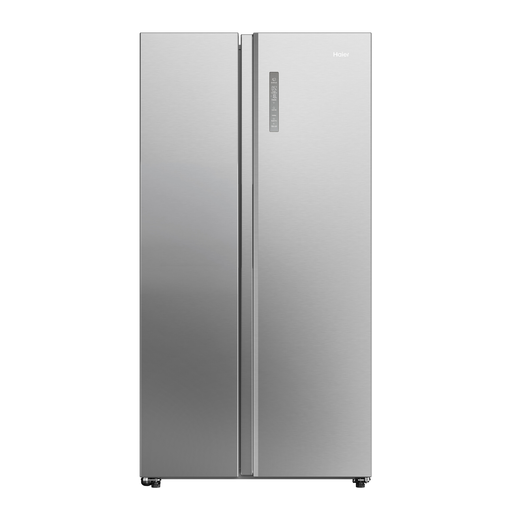
Why This Fits Their Persona: A spacious option for families, frequent entertainers and households that want side-by-side access to fresh and frozen food.
The specification identifies an approximately 600-litre capacity, 905mm width and plumbed dispenser, so installation requirements are clear.
Total No Frost, multi-airflow cooling, hOn app connectivity and a D energy rating.
We have compiled a complete, real-time list of products that fully satisfy these strict selection criteria and UK safety regulations.
Before delivery, confirm that:
For integrated fridges, use suitable cabinetry ventilation and follow the fitting instructions. Electrical or plumbing work should be completed by a suitably qualified person where required.
Running cost depends on capacity, energy class, usage, room temperature and electricity tariff. Compare the annual energy consumption shown on the UK energy label rather than judging by the rating alone. A larger appliance generally has more storage but may consume more electricity than a compact model.
Lifespan varies with build quality, usage, ventilation and maintenance. Keeping door seals clean, avoiding overloading, allowing airflow and following the manufacturer’s care instructions can help maintain operation. Check the warranty terms, registration requirements and whether coverage applies to parts, labour or specific components.
Not always. Non-plumbed dispensers use an internal tank and can be installed without a mains water connection. Plumbed models need a suitable water supply and may require professional installation. Always check the exact product specification, as similar-looking models can have different dispenser systems.