Parents starting dairy during weaning
For carers choosing a first dairy food around 6 months while continuing breast milk or first infant formula. NHS guidance points to pasteurised, full-fat plain yoghurt or fromage frais with no added sugar.


The NHS advises choosing pasteurised, full-fat plain yoghurt or fromage frais with no added sugar from around 6 months, once a baby is ready for solid food; it complements rather than replaces breast milk or first infant formula. For a summer outing, choose it only with a suitable storage plan: NHS guidance recommends keeping food cold in a cool bag with frozen water bottles or ice blocks and throwing away leftovers.
For carers choosing a first dairy food around 6 months while continuing breast milk or first infant formula. NHS guidance points to pasteurised, full-fat plain yoghurt or fromage frais with no added sugar.
For anyone taking a baby to a park, beach or holiday accommodation who needs to decide whether a chilled pot can be kept cold until serving.
For carers checking whether a product’s age guidance, ingredients and storage instructions fit early weaning, rather than relying on child-focused packaging alone.
Check whether the baby is ready for solids and the dairy food fits NHS guidance before deciding how to carry and serve it.
| Priority | What to check | When it matters |
|---|---|---|
| Starting solids | Look for the recognised readiness signs: sitting with a steady head, coordinating eyes, hands and mouth, and swallowing food rather than pushing it back out. Check the product’s age guidance separately. | My baby is around 6 months, and I want to introduce dairy when they are ready to eat solid food. |
| Dairy and ingredients | The NHS recommends pasteurised, full-fat plain yoghurt or fromage frais with no added sugar from around 6 months. Read the ingredients as well as front-of-pack wording. | I’m choosing a first dairy food, not assuming that every fruit-flavoured or child-labelled pot follows this guidance. |
| Milk feeds | Keep offering breast milk or first infant formula on demand; NHS Best Start in Life says it remains the main source of nutrition at this stage. | A serving of fromage frais would be part of weaning, not a replacement for a usual milk feed. |
| Storage away from home | Follow the pack’s storage directions. For chilled food, NHS Best Start in Life recommends a cool bag with frozen water bottles or ice blocks; food that has not stayed cold should be eaten as soon as possible, within 4 hours maximum, and leftovers discarded. | For a day out, I need a way to keep the food cold until serving or a different food plan. |
| First exposure to dairy | Check the current allergen declaration. NHS Best Start in Life advises introducing foods that can trigger allergic reactions one at a time and in very small amounts so a reaction can be spotted. | If dairy is new to my baby, I’d rather introduce it when I can watch for a reaction than for the first time during travel. |
Child-focused packaging or nutrient claims do not establish an age recommendation for early weaning.
Check the current label for age guidance, pasteurisation, fat content and ingredients. For a first dairy food, use the NHS advice on plain, full-fat products with no added sugar.
Those claims are not interchangeable: the Ella’s Kitchen Stage 1 fromage frais listed by Tesco mentions no refined sugar but lists agave nectar.
Read the ingredients before deciding whether a product fits the NHS no-added-sugar guidance.
A hot outing changes how long a chilled food can be kept before serving.
NHS Best Start in Life recommends a cool bag with frozen water bottles or ice blocks. If the food has not stayed cold, serve it as soon as possible, within 4 hours maximum, and throw away leftovers.
Packing chilled food also means bringing a cool bag and frozen water bottles or ice blocks.
NHS Best Start in Life says breast milk or first infant formula remains a baby’s main source of nutrition when solids begin.
Offer dairy as part of complementary feeding while continuing usual milk feeds.
These examples concern particular products, not every food sold under each brand.
Tesco lists an Ella’s Kitchen Stage 1 whole-milk fromage frais with ingredients labelled suitable from 6 months.
Petits Filous describes its Strawberry & Banana fromage frais as a no-added-sugar product for children.
Tesco lists Müller Little Stars fromage frais in an 18 × 50g pack.
These 6+ months fruit yoghurt pouches are alternatives to consider alongside the question of fromage frais for a summer outing. They are not plain fromage frais; check each current pack against the dairy and storage guidance above.
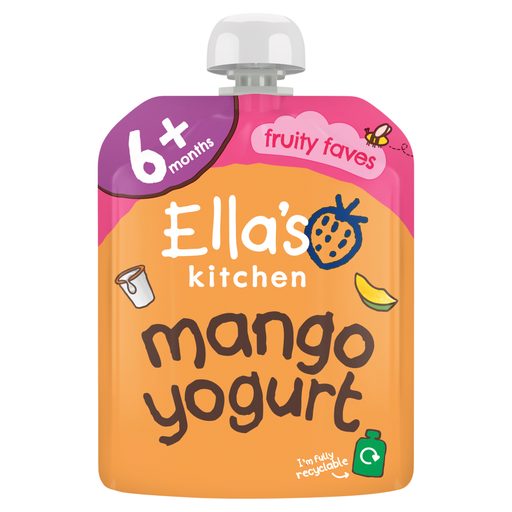 No image available
For a snack during an outing, this 6+ months mango yoghurt pouch is a fruit-flavoured option rather than plain fromage frais.
Check the current pack for full-fat status, ingredients and storage directions before deciding whether it fits your feeding and travel plans.
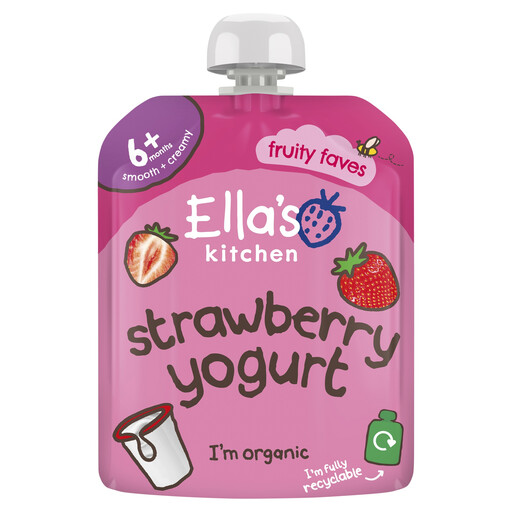 No image available
This 6+ months strawberry yoghurt pouch is another fruit-flavoured option for a snack, rather than plain fromage frais.
Check the current pack for pasteurisation, full-fat status, ingredients and storage directions before choosing it for early weaning or a day out.
Yes, once the baby is ready for solids. The NHS recommends pasteurised, full-fat plain yoghurt or fromage frais with no added sugar from around 6 months; continue breast milk or first infant formula as the main source of nutrition.
No. Check the ingredients: the Ella’s Kitchen Stage 1 fromage frais listed by Tesco uses “no refined sugar” wording but lists agave nectar. NHS advice is to choose first dairy foods with no added sugar.
For chilled food, NHS Best Start in Life recommends a cool bag with frozen water bottles or ice blocks to keep it cold until serving. If it has not stayed cold, it should be eaten as soon as possible, within 4 hours maximum; throw away leftovers.
No. NHS Best Start in Life advises throwing away leftovers rather than saving a half-eaten serving.
Introduce foods that can trigger allergic reactions one at a time and in very small amounts, as NHS Best Start in Life advises, so you can spot a reaction. Plan a first dairy serving for a time when you can observe your baby rather than introducing it for the first time while travelling.