Carers starting solids around 6 months
A dairy snack is a complementary food once a baby is ready for solids, not a replacement for breast milk or first infant formula. The NHS advises continuing usual milk feeds.


For a baby ready for solids at around 6 months, NHS guidance supports pasteurised, full-fat, plain or unsweetened yoghurt; a children’s fromage frais pot is not automatically suitable. Check the exact pack’s age statement and ingredients, and keep breast milk or first infant formula as the baby’s main source of nutrition.
A dairy snack is a complementary food once a baby is ready for solids, not a replacement for breast milk or first infant formula. The NHS advises continuing usual milk feeds.
A convenient children’s multipack may have an age statement or ingredients that make it a different choice from plain yoghurt for a baby. Check each product rather than using one pack for every child.
Ordinary fromage frais and yoghurt contain milk. Cambridgeshire and Peterborough Children’s Health advises avoiding cow’s-milk protein when weaning a baby with a cow’s-milk allergy; seek professional advice about suitable alternatives.
Start with the baby’s readiness and the exact product label, then consider how the snack will be served and stored during the day.
| Priority | What to check | Your needs |
|---|---|---|
| Age and milk feeds | Check that the baby is ready for solids at around 6 months and read any age statement on the pack. Keep breast milk or first infant formula as the main source of nutrition, as the NHS advises. | I’m offering a small snack alongside usual milk feeds, rather than using dairy to replace a feed. |
| Dairy and ingredients | The NHS identifies pasteurised, full-fat yoghurt as suitable from around 6 months and favours plain or unsweetened choices without added sugar. Check pasteurisation, fat description and ingredients on the exact pack. | I want to distinguish a plain dairy food from a fruit-flavoured children’s pot, even if both sit in the same aisle. |
| Milk allergy | Read the milk allergen declaration. The NHS advises introducing foods that can trigger allergies one at a time and in very small amounts; a baby with a diagnosed cow’s-milk allergy must avoid cow’s-milk protein. | If there’s an allergy concern, I need advice on an appropriate choice rather than assuming any dairy snack will do. |
| Serving and storage | Follow the pack’s chilled-storage and use-by instructions. The NHS advises against saving food left on a child’s plate for another serving. | For a holiday outing, I need a way to keep the dairy snack chilled and serve only what the baby will eat. |
Tesco’s listing for Petits Filous Strawberry & Raspberry small pots says that exact product is made for children from 3 years old.
Read the age statement on the pack. For a baby ready for solids at around 6 months, use the NHS guidance on pasteurised, full-fat, plain or unsweetened dairy foods as your starting point.
A fruit flavour or nutrient claim does not answer whether a product is plain, unsweetened or intended for a baby’s age. The NHS advises that babies do not need sugar or sweeteners.
Compare the ingredients and age statement on the exact product, rather than treating children’s branding as a suitability check.
The NHS says breast milk or first infant formula remains a baby’s main source of nutrition when solids are introduced.
Offer a small portion as part of weaning and continue the baby’s usual milk feeds.
Ordinary dairy is unsuitable for a baby who must avoid cow’s-milk protein. Food left after feeding should not be saved and served again, according to NHS food-safety advice.
Seek professional advice if cow’s-milk allergy is suspected, and follow the pack’s storage instructions when preparing a snack.
A familiar name does not establish that every product in its range suits a baby from around 6 months; check the particular pack.
Rachel’s Organic lists a Greek Style Natural yoghurt made from organic natural yoghurt containing milk, with 8.3g fat per 100g.
Petits Filous sells children’s dairy products in small-pot formats, but suitability depends on the specific product.
Tesco lists own-label fromage frais pouches alongside branded products, providing different packs to compare.
Müller’s product range includes yoghurts, milkshakes and desserts, so the brand name alone does not identify a suitable baby dairy snack.
These two 6+ months pouches contain yoghurt in fruit blends. Neither is plain fromage frais or plain yoghurt, so check the exact pack if you are looking for the full-fat, plain dairy choice described by the NHS.
 No image available
This 6+ months mango and yoghurt pouch is an option to examine when choosing a portioned holiday snack for a baby starting solids.
The product description says it is gently pasteurised and has no added sugar. It contains milk and is not plain yoghurt; check the finished product’s full-fat status on the pack. Serve it from a bowl or spoon and keep the cap away from children under 36 months.
 No image available
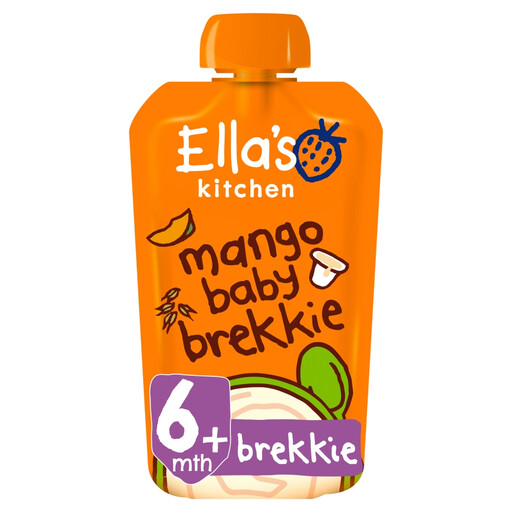
This 6+ months pouch combines mango, yoghurt and grains; it is presented primarily as a breakfast blend rather than plain dairy.
The product description says it is gently pasteurised and has no added sugar. It contains milk and oats; check the pack for allergens and the finished product’s full-fat status. Serve from a spoon, keep the cap away from children under 36 months, and follow the stated instruction to refrigerate opened contents and use them within 48 hours.
A baby ready for solids at around 6 months can have suitable pasteurised dairy foods. The NHS specifically identifies pasteurised, full-fat yoghurt as suitable and favours plain or unsweetened yoghurt; check the age statement, ingredients and pasteurisation information on any fromage frais product rather than assuming its name establishes suitability.
No. The NHS says breast milk or first infant formula remains the main source of nutrition at the start of weaning. Offer a small amount of solid food alongside usual milk feeds.
Do not treat that particular product as a from-6-months choice: Tesco’s listing says its Strawberry & Raspberry small pots are made for children from 3 years old. Check other Petits Filous products individually rather than applying that age statement to the whole range.
Ordinary dairy yoghurt and fromage frais contain milk and must be avoided when a baby has a diagnosed cow’s-milk allergy. Cambridgeshire and Peterborough Children’s Health advises avoiding cow’s-milk protein in that situation; seek advice from a GP, health visitor or dietitian if allergy is diagnosed or suspected before choosing an alternative.
Follow the pack’s chilled-storage and use-by instructions, and serve the snack with clean utensils. NHS guidance says not to save and reuse food left on a child’s plate, so portion out what the baby needs rather than keeping leftovers from a serving.