Parents starting weaning at around 6 months
A dairy pot can be part of introducing solid foods, rather than a replacement for milk feeds. The NHS says breast milk or first infant formula remains a baby’s main source of nutrition at this stage.


For a baby starting solid foods at around 6 months, look for a full-fat, unsweetened dairy food and check the exact pack for age guidance and ingredients. Tesco lists Yeo Valley Organic Little Yeos No Added Sugar Kids Yogurt with a lower age limit of 6 months, but it is yoghurt rather than fromage frais; at this stage, the NHS says breast milk or first infant formula remains the main source of nutrition.
A dairy pot can be part of introducing solid foods, rather than a replacement for milk feeds. The NHS says breast milk or first infant formula remains a baby’s main source of nutrition at this stage.
A small pot may be convenient alongside a meal or cooled fruit purée. Check the age guidance, ingredients and storage directions on the product you choose; the NHS recommends full-fat yoghurt and fromage frais for young children up to age 2.
A children’s range name does not tell you whether every variant is suitable from 6 months. Compare the exact age statement and ingredient list, particularly when choosing a flavoured pot.
Start with your baby’s feeding stage, then compare the exact product’s ingredients and dairy type; a familiar brand or small pot is not a substitute for those checks.
| Priority | What to check | Your needs |
|---|---|---|
| Feeding stage | Check that your baby is ready to start solid foods at around 6 months. Look for an age statement on the exact pot and choose a texture appropriate to their stage. | I want a spoonable food for the start of weaning, while keeping breast milk or first infant formula as the main source of nutrition, as the NHS advises. |
| Added sugar | Read the ingredients for added sugar and sweeteners. A no-added-sugar label does not mean the food contains no naturally occurring sugars. | For an everyday dairy choice, I would rather not add sweetness the baby does not need. The NHS advises that babies do not need sugar or sweeteners. |
| Dairy type | Check whether the yoghurt or fromage frais is full-fat, rather than assuming a children’s pot is. Check the exact variant, especially if it is described as light or fat-free. | I’m choosing dairy for a young child, so the NHS recommendation for full-fat yoghurt and fromage frais up to age 2 matters more than an adult-oriented label. |
| Milk allergy | Check the milk allergen declaration. Do not treat lactose-free cow’s-milk yoghurt as an alternative for a child with cow’s-milk allergy. | If my child has a suspected or diagnosed milk allergy, I need an alternative guided by their clinician or dietitian, not a different ordinary dairy pot. |
| Serving and storage | Follow the pack’s refrigeration, opening and use-by instructions. Serve with a clean spoon and consider whether the portion size suits the meal. | A small pot may be convenient with a winter meal, but I still need to store and serve that particular product as directed. |
Small portions and children’s branding do not establish an age limit. Tesco explicitly lists a 6-month lower age limit for Little Yeos No Added Sugar Kids Yogurt; that does not establish the same limit for other products or variants.
When age suitability is central to the choice, check the current pack for guidance on the exact product rather than relying on the range name.
Fruit-flavoured pots can have different ingredient lists. The NHS advises that babies do not need sugar or sweeteners, while sugars naturally present in milk or fruit can still appear in the nutrition information.
Check the ingredients for added sugar and sweeteners, then read the sugars figure per 100g without assuming that it represents added sugar alone.
An adult-oriented dairy pot may not match the NHS recommendation for full-fat yoghurt and fromage frais for young children up to age 2.
Check the product description and nutrition panel for the dairy type instead of using packaging terms as a shortcut.
Lactose-free cow’s-milk yoghurt can still contain milk proteins. Rachel’s Organic states that its lactose-free natural yoghurt is not suitable for people with milk allergy.
For a child with suspected or diagnosed cow’s-milk allergy, follow their clinician’s or dietitian’s guidance rather than substituting a lactose-free dairy pot.
These examples show why the exact product and variant matter more than the name on the front of a pot.
The Little Yeos range includes yoghurt pots positioned for weaning; Tesco lists the No Added Sugar Kids Yogurt 6 x 42g with a lower age limit of 6 months.
The range includes flavoured children’s fromage frais. Yoplait describes its No Added Sugar Strawberry & Banana variant as containing pasteurised semi-skimmed milk and cream.
Its natural yoghurt products provide a different starting point from flavoured children’s pots when comparing dairy ingredients.
Müller Little Stars is a children’s fromage frais range.
These Heinz banana-and-yoghurt baby-food pots are labelled 6+ months. They are fruit-based pots rather than plain fromage frais or a full-fat plain yoghurt choice, so compare the current pack with the dairy criteria above.
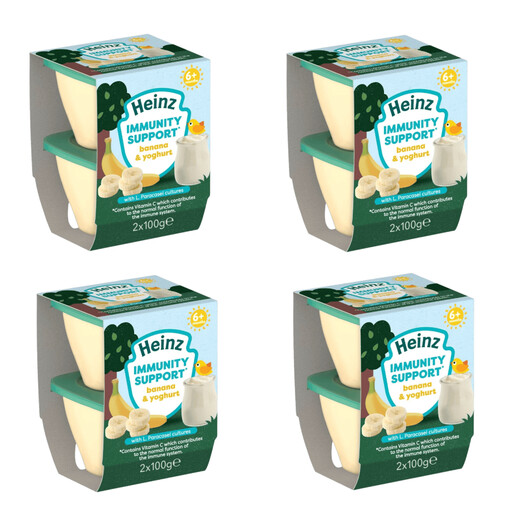 Image unavailable
A fruit-and-yoghurt baby-food pot labelled 6+ months, rather than plain fromage frais. This bundle contains four 2 x 100g packs. Check the current ingredients and storage directions; it is not a substitute for a full-fat plain dairy choice.
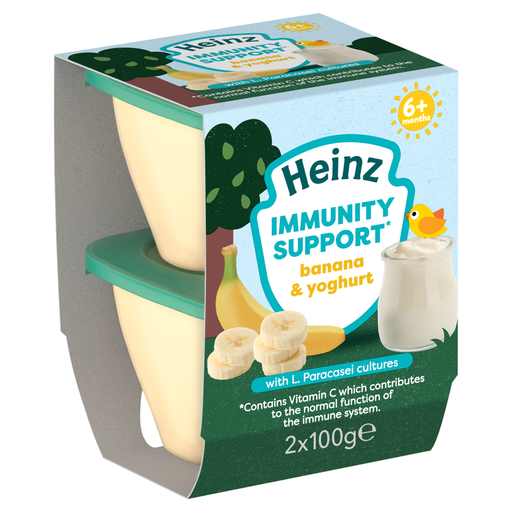 Image unavailable
A two-pot fruit-and-yoghurt baby-food pack labelled 6+ months. It is not plain fromage frais or a full-fat plain dairy choice; check the current ingredients and storage directions before serving.
For a baby ready to start solid foods at around 6 months, check the exact fromage frais for age guidance and ingredients, and choose a full-fat option without added sugar or sweeteners. The NHS says breast milk or first infant formula remains the main source of nutrition at the start of weaning.
Choose full-fat fromage frais or yoghurt for a young child where suitable. The NHS recommends full-fat cheese, yoghurt and fromage frais up to age 2; check the exact pot rather than assuming a children’s product is full-fat.
No. Sugars can occur naturally in milk and fruit even when sugar has not been added. Read the ingredients to check what has been added, and the nutrition panel for the product’s total sugars per 100g.
Do not use lactose-free cow’s-milk yoghurt as a milk-allergy alternative: it can still contain milk proteins. Rachel’s Organic explicitly says its lactose-free natural yoghurt is not suitable for people with milk allergy; follow the child’s clinician’s or dietitian’s guidance.
Follow the exact pack’s refrigeration and use-by instructions, and serve with a clean spoon. For Little Yeos No Added Sugar Kids Yogurt, Tesco’s product information says to keep it refrigerated and check the lid for the use-by date.