Parents planning brunch for a 7-to-9-month baby
For a baby moving towards regular meals, fromage frais can be one spoonable part of brunch. NHS guidance emphasises variety at this stage, including foods that provide iron.


For a 7-to-9-month baby who is ready for solids, plain, unsweetened, pasteurised full-fat dairy fits NHS feeding guidance; if choosing a baby fromage frais pot, check its infant-age guidance and ingredients. Serve it as part of a varied brunch rather than in place of milk feeds. A children’s pot labelled ‘no added sugar’ still needs an age and ingredient check.
For a baby moving towards regular meals, fromage frais can be one spoonable part of brunch. NHS guidance emphasises variety at this stage, including foods that provide iron.
A children’s label or small pot does not establish infant-age suitability. Check the age guidance, whether the dairy is pasteurised and full-fat, and whether sugar appears in the ingredients.
If cow’s-milk foods are new to the baby, the NHS advises introducing foods that can trigger allergies one at a time and in very small amounts. A diagnosed milk allergy calls for individual advice rather than ordinary cow’s-milk fromage frais.
Start with the baby’s age and the dairy type, then compare ingredients and plan what else will be served at brunch.
| Priority | What to check | Your needs |
|---|---|---|
| Age and feeding stage | For a baby-labelled pot, check the stated starting age on the current pack. Check that its texture suits the baby’s progress with solids. | I’m choosing a spoonable brunch food for a baby in the 7-to-9-month weaning phase, not assuming that every children’s pot is suitable. |
| Dairy type | Check for pasteurised, full-fat dairy. The NHS recommends full-fat yoghurt and fromage frais up to age 2. | I want a dairy option that fits the baby’s age, rather than choosing a lower-fat pot because it has children’s branding. |
| Added sugar | Read the ingredients as well as sugars per 100g. ‘No added sugar’ does not mean sugar-free: milk and fruit can contribute sugars. | For a regular brunch choice, I’d rather compare plain, unsweetened dairy with flavoured pots than rely on the front-of-pack wording. |
| Milk allergy | Read the milk allergen declaration. If dairy is new, follow NHS advice to introduce allergenic foods one at a time in very small amounts. | Being able to identify a reaction matters when my baby is trying cow’s-milk food for the first time. |
| Place in the meal | Plan other age-appropriate foods alongside the dairy. NHS guidance for 7 to 9 months stresses variety, including foods that provide iron. | I’m putting together a varied brunch, not treating one dairy pot as the whole meal or a replacement for milk feeds. |
Children’s branding and portion size do not tell you whether a product is intended for a baby from around 6 months. Glenisk states an age of 6 months+ for its Organic Baby range; a no-added-sugar Petits Filous children’s product needs a separate age check.
Read the current pack’s age guidance, ingredients and allergen declaration before choosing a pot for weaning.
The Yoplait Wildlife pots in Sainsbury’s listing include added vitamin D but also list added sugar at 6.7% or 6.8%, depending on flavour. Vitamin information does not replace an ingredient check.
Compare ingredients and sugars per 100g with a plain, unsweetened full-fat option that is suitable for the baby.
The NHS advises a variety of foods as babies move towards three meals a day at 7 to 9 months, including foods that provide iron.
Offer fromage frais alongside other developmentally appropriate brunch foods rather than using it as the meal’s only component.
Cow’s milk can trigger an allergic reaction. Introducing several new foods together makes it harder to identify which food was involved.
When dairy is new, introduce it separately and in a very small amount, as the NHS advises. Seek GP or health-visitor advice for a baby with a diagnosed allergy or where additional allergy caution applies.
These examples show why the exact variant and its label matter more than the brand name alone.
Glenisk describes its Organic Baby fromage frais range as intended from 6 months+.
Its Strawberry & Banana fromage frais is a children’s product labelled ‘No Added Sugar’.
Yoplait Wildlife chilled pots are listed by Sainsbury’s as children’s fromage frais with added vitamin D.
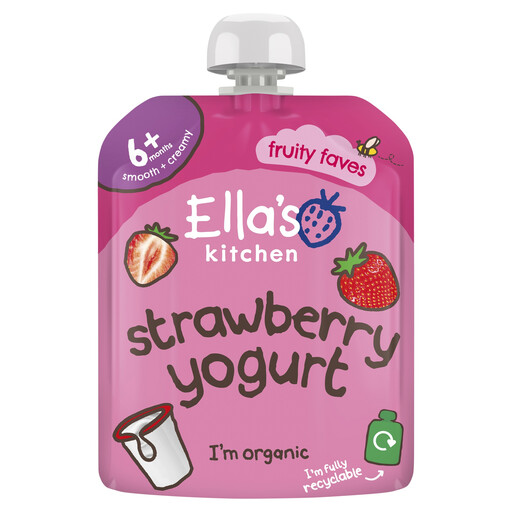
This strawberry Greek yoghurt is an adjacent dairy option for a weaning brunch, not a fromage frais product. Check its current pack against the dairy criteria before serving it to a baby.
 No image available
A strawberry Greek yoghurt labelled for 6+ months that could be one dairy component of brunch, rather than a fromage frais choice. Check the current pack for pasteurisation, full-fat classification and milk allergens; if dairy is new, introduce it separately in a very small amount.
It refers to the 7-to-9-month weaning phase discussed in NHS feeding guidance, not a universal age label for fromage frais. Check each packaged product’s own age guidance rather than relying on the phrase.
Yes, as part of a varied meal if the baby is ready for solids and the dairy is suitable for them. The NHS recommends full-fat yoghurt and fromage frais up to age 2 and describes pasteurised dairy foods as suitable from around 6 months.
No. A product with no added sugar may still contain sugars from milk or fruit: Petits Filous lists 4.9g sugars per 100g for its No Added Sugar Strawberry & Banana variant. Read both the ingredients and the per-100g nutrition information when comparing it with plain dairy.
No. During weaning, breast milk or first infant formula remains important. Offer fromage frais as one part of a varied brunch rather than treating a dairy pot as a replacement feed.
Introduce a cow’s-milk-containing food separately and in a very small amount, following NHS advice for foods that can trigger allergies. Ordinary cow’s-milk fromage frais is not suitable for a baby with a diagnosed cow’s-milk allergy; seek individual professional advice in that situation.