Parents bringing a child aged 12–23 months
The NHS recommends full-fat yoghurt and fromage frais up to age two. Check the pack for ingredients, allergens and storage directions before choosing a pot for brunch.


For a child aged 12 months to under two, start with full-fat fromage frais; the NHS recommends full-fat yoghurt and fromage frais up to age two. Plain or unsweetened dairy lets you add fruit separately, while individual fruit-flavoured pots may be easier to serve at a shared brunch but need an ingredients check for added sugar and milk.
The choice changes depending on who will eat the fromage frais and who is serving it.
The NHS recommends full-fat yoghurt and fromage frais up to age two. Check the pack for ingredients, allergens and storage directions before choosing a pot for brunch.
An individual pot can be served separately from adult dishes. Keep its packaging available so the child’s parent or carer can check the ingredients and milk allergen information.
Standard dairy fromage frais contains milk. Dairy-free yoghurt alternatives need a separate label check: Kingston and Richmond NHS Foundation Trust notes that some are not fortified and some are low in protein or energy.
Choose the dairy type first, then compare the ingredients and a serving format that works at the table. A baby label or fruit flavour does not replace those checks.
| Priority | What to check | Your needs |
|---|---|---|
| Fat content | Look for full-fat fromage frais or yoghurt for a child under two. Check rather than relying on a product’s age-related or diet-style name; the NHS recommends full-fat dairy in this age group. | I’m choosing for a child aged 12 months to under two and want the product to fit the NHS’s general full-fat dairy guidance. |
| Sweetening | Compare plain or unsweetened products with the ingredients of flavoured ones. Tesco Groceries lists sugar in its strawberry-and-raspberry fromage frais pouches and its mixed-fruit pots. | For a routine option, I’d rather add fruit myself than assume a fruit-flavoured pot has no added sugar. |
| Milk and alternatives | Read the complete allergen declaration on the pack. If cow’s milk must be avoided, check a dairy-free alternative’s calcium fortification, protein and energy information with the child’s parent or carer. | The child cannot have cow’s milk, so a standard dairy fromage frais is not an option for our brunch. |
| Serving and storage | Compare individual pot or pouch sizes with how you plan to serve the food. Follow the exact pack’s refrigeration and instructions for use after opening. | I’m serving several guests and want to put the child’s portion in a separate bowl without leaving the dairy out beyond its pack directions. |
The NHS recommends full-fat yoghurt and fromage frais up to age two, whereas Tesco Groceries describes its Healthy Living Natural Fromage Frais as fat-free.
Start with full-fat dairy for a child in this age range unless their clinician or dietitian has advised otherwise.
Tesco Groceries describes the Ella’s Kitchen Stage 1 fromage frais as containing fruit purée and agave nectar. Its wording does not make it a plain, unsweetened product.
Read the current ingredients list when comparing it with plain fromage frais or other flavoured pots.
Kingston and Richmond NHS Foundation Trust notes that some dairy substitutes are not fortified and some are low in protein or energy.
If the child avoids cow’s milk, check the alternative’s allergen declaration and nutritional information in line with their existing dietary advice.
These examples show different pack and ingredient choices; a brand name alone does not establish whether a particular product suits the child.
Tesco Groceries lists Ella’s Kitchen Stage 1 Fromage Frais in six 55g pots.
Tesco Groceries lists a Petits Filous strawberry-and-banana fromage frais multipack labelled “No Added Sugar”, as well as a variety multipack.
Tesco Groceries lists own-label fruit fromage frais in 80g pouches and 50g pots.
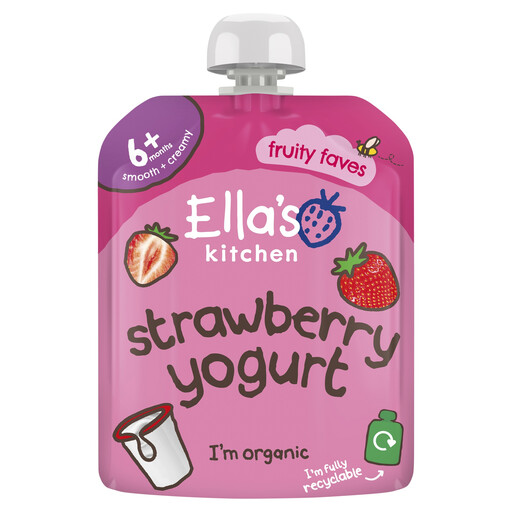
This strawberry Greek yoghurt is a yoghurt alternative for the brunch decision, not a fromage frais product. Check its current pack against the child’s dairy needs before treating the age label as enough to choose it.
 No image available
This strawberry yoghurt offers a 90g option for an individual brunch serving, but it is not identified as fromage frais. For a child under two, check the current pack’s fat content, pasteurisation, ingredients, milk allergen information and storage directions against their needs; the age label does not establish those details.
Yes, fromage frais can be an option at 12 months. The NHS recommends full-fat yoghurt and fromage frais up to age two; check the product label and follow any individual advice for a child who must avoid cow’s milk.
Full-fat is the general starting point for a child under two, according to NHS guidance on yoghurt and fromage frais. Follow a clinician’s or dietitian’s advice if the child has different dietary requirements.
They can be a practical individual serving, but fruit flavour does not mean no added sugar. Tesco Groceries lists sugar in the ingredients of its fruit fromage frais pouches and pots, so compare the current pack with a plain or unsweetened option.
Do not serve standard dairy fromage frais to a child who must avoid cow’s milk. Check the complete allergen declaration and follow the child’s existing advice; Kingston and Richmond NHS Foundation Trust notes that dairy-free alternatives vary in fortification, protein and energy.
Follow the refrigeration and after-opening directions on the exact pack you serve. Keep the packaging available so the parent or carer can also check its ingredients and allergens.