Who is this first-food choice for?
The decision starts with whether a baby is ready for solids, then turns to the exact dairy product and any allergy considerations.
Parents starting solids at around 6 months
For a first food shop when a baby can sit with a steady head, bring food to their mouth and swallow it rather than push it back out. NHS guidance places the start of solid foods at around 6 months; an age statement on a pot does not replace checking readiness.
Shoppers choosing between small pots and plain yoghurt
For families weighing a pre-portioned, baby-labelled fromage frais against a plain whole-milk yoghurt they can portion themselves. Check the exact pack for pasteurisation, fat content and added sugar rather than deciding by pot size or brand alone.
Families considering milk allergy
For families who need to check milk ingredients before introducing dairy. NHS advice is to introduce foods that can trigger allergies one at a time; seek advice from a GP or health visitor before introduction if a baby has a diagnosed allergy or eczema, or a relevant family history.
What should you check before buying?
Choose the type of dairy food first, then read the label of the particular flavour and pack. NHS guidance identifies pasteurised, full-fat, plain or unsweetened yoghurt as a choice from around 6 months.
| Priority |
What to check |
Your needs |
| Readiness and age |
Check that your baby is ready for solids at around 6 months. If choosing baby-labelled fromage frais, read the age statement on the exact product. |
I’m shopping for a baby starting solids, not choosing a children’s pot on the assumption that every small dairy snack has the same age guidance. |
| Dairy type |
For a plain yoghurt route, check that the pack identifies a pasteurised, full-fat product. A baby-labelled fromage frais still needs its own ingredient and label checks. |
A plain yoghurt would suit my shop if I can confirm those details and am happy to portion it myself; a baby-labelled pot offers a stated age position to check. |
| Ingredients and sugars |
Read the ingredients and nutrition panel for the exact flavour. “No added sugar” does not mean sugar-free or establish an age claim; milk and fruit can contribute sugars. |
I’d rather choose a plain or unsweetened first dairy food than rely on a colourful front label. If I consider a flavoured pot, I want to know what else it contains. |
| Milk and other allergens |
Check the allergen declaration and any added ingredients, such as oats. NHS advice is to introduce foods that can trigger allergies one at a time. |
Where allergy is a concern, I need to know exactly which food I’m introducing. A diagnosed cows’ milk protein allergy calls for an individual dietary plan, not a different flavour of dairy pot. |
| Portions and variety |
Choose a format from which you can offer a small amount and follow the pack’s storage instructions. Continue milk feeds and introduce a variety of foods gradually. |
A small pot is convenient, but I don’t need to treat its full contents as a required serving or make dairy the whole first-food shop. |
Which brand ranges are relevant?
These examples show why the precise product matters: a brand can sell plain yoghurt, baby-positioned fromage frais or children’s pots with different ingredients and age statements.
Glenisk
Glenisk positions its Organic Baby Fromage Frais range for babies from 6 months+.
- Tesco’s listing for the Apple, Pear and Carrot product states that it is made from pasteurised milk and has no added sugar.
- That fruit-and-oat product is not plain dairy. Check the ingredients and allergen panel of the flavour you intend to buy.
Petits Filous
The range includes products with different ingredients and stated age positioning.
- Yoplait UK lists pasteurised semi-skimmed milk, cream and fruit in its No Added Sugar Strawberry & Banana product.
- Sainsbury’s describes a standard Strawberry & Raspberry product as made for children from 3 years old. Do not transfer one pot’s label claims to another.
Yoplait
Yoplait UK identifies Petits Filous as one of its brands; the parent brand is not itself an age recommendation.
- Its product information can help compare the ingredients and nutrition of a named Petits Filous pot.
- Use the exact product’s age statement and pack details when deciding what to buy for a baby.
Sainsbury’s
Its Natural Yoghurt is a plain whole-milk alternative to a baby-labelled fromage frais.
- The Sainsbury’s listing gives whole-milk natural yoghurt as its ingredient, with 3.8g fat and 6.6g sugars per 100g.
- Confirm pasteurisation on the pack before choosing it for a baby.
Tesco
Tesco lists plain Greek-style yoghurts as well as a separate 0%-fat product.
- The range offers specific packs to compare by ingredients and fat content rather than by “Greek style” wording alone.
- Check the chosen SKU: a plain yoghurt and a 0%-fat yoghurt do not meet the same full-fat criterion.
Rachel’s Organic
Rachel’s Organic Greek Style Natural Bio-Live Yogurt is a plain yoghurt option rather than a baby-labelled fromage frais.
- Rachel’s Organic lists organic natural yoghurt as the ingredient, with 8.3g fat and 5.0g sugars per 100g.
- Check pasteurisation on the pack; do not assume that “organic” supplies a from-6-months age claim.
Müller
Müller sells several dairy ranges, so an adult-positioned product should not stand in for the whole brand.
- The Müller Light range is clearly identified by Müller as fat free.
- That fat-free positioning does not match the full-fat dairy route in NHS first-food guidance. Judge any other Müller product by its own pack.
Joybuy yoghurt options
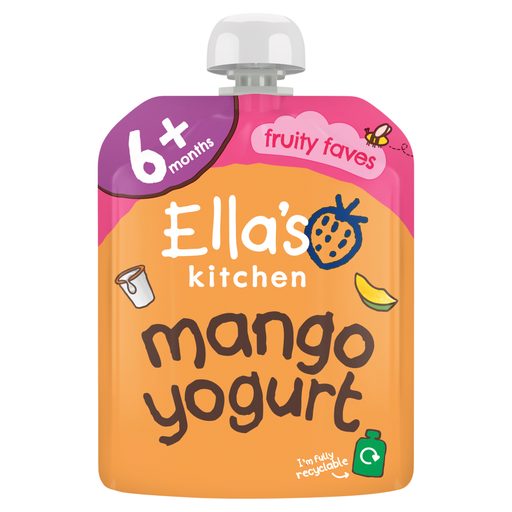
This Joybuy option is a fruit-flavoured Greek-style yoghurt pouch labelled for 6+ months, rather than plain yoghurt or a product identified as fromage frais. Compare its exact pack details with the first-food checks above.
 No image available
Ella’s Kitchen Organic Mango Greek Style Yoghurt Pouch, 6+ Months, 90g
The 90g pouch is labelled for 6+ months and offers a fruit-flavoured yoghurt format for a first-food shop; it is not a plain yoghurt or a fromage frais. Check the pack for pasteurisation, fat content, ingredients, allergens and serving directions before choosing it.
View on Joybuy
Questions about first dairy foods
Can a baby have fromage frais from around 6 months?
A baby who is ready for solids can have an appropriate pasteurised dairy food from around 6 months. NHS guidance identifies pasteurised, full-fat plain or unsweetened yoghurt as a choice; for fromage frais, check the exact product’s age positioning, ingredients and label. Breast milk or first infant formula remains the main source of nutrition at this stage.
Is any Petits Filous pot suitable for a 6-month-old?
No age conclusion applies to the whole range. Sainsbury’s describes its standard Strawberry & Raspberry product as made for children from 3 years old and lists sugar among its ingredients. Check the age statement and ingredients of the particular pot rather than relying on the brand name.
Does “no added sugar” mean a fromage frais has no sugars?
No. Yoplait UK declares 4.9g sugars per 100g for Petits Filous No Added Sugar Strawberry & Banana, which contains milk and fruit ingredients. Read the nutrition panel and ingredients as well as the age statement; the front-of-pack claim cannot answer all three questions.
What if a baby has eczema or a diagnosed milk allergy?
Seek individual advice before introducing dairy if a baby has a diagnosed allergy or eczema, or a relevant family history. NHS advice is to introduce foods that can trigger allergies one at a time from around 6 months so a reaction can be identified. For diagnosed cows’ milk protein allergy, follow the clinician’s dietary plan and avoid foods containing cows’ milk protein.
How should I serve yoghurt or fromage frais from a larger tub?
Spoon out a small amount into a separate bowl and follow the exact pack’s refrigeration and after-opening instructions. Do not return food touched by the baby’s spoon to the tub; a pot’s full contents are not a required first-food serving.


