Parents of babies learning to manage textures
At 10 to 12 months, smooth fromage frais can be part of a meal, but it does not provide the mashed, lumpy, chopped and finger foods described in NHS feeding guidance.


For a baby moving towards textured meals, choose plain, unsweetened full-fat yoghurt or fromage frais as a dairy accompaniment, not as a substitute for practising with different food textures. The NHS says babies aged 10 to 12 months should be managing mashed, lumpy, chopped and finger foods. For summer days out, check the exact product’s storage directions and keep chilled dairy cool in an insulated bag with an ice pack when refrigeration is unavailable.
At 10 to 12 months, smooth fromage frais can be part of a meal, but it does not provide the mashed, lumpy, chopped and finger foods described in NHS feeding guidance.
Portion format matters when packing a snack, but so do the exact product’s storage instructions and a way to keep chilled dairy cool away from a fridge.
Plain, no-added-sugar and sweetened fruit-flavoured products have different ingredient lists. Check the individual recipe rather than judging it by its small pot or pouch.
Decide how the dairy food fits into the meal first, then compare its recipe, milk allergen information and storage directions.
| Priority | What to check | Your needs |
|---|---|---|
| Food texture | Check whether the product is smooth. For a baby aged 10 to 12 months, include developmentally suitable mashed, lumpy, chopped and finger foods alongside smooth dairy, in line with NHS guidance. | I want a dairy accompaniment without letting a smooth pudding take the place of texture practice. |
| Recipe | For a baby eating solids, compare plain, unsweetened full-fat options with flavoured recipes. Read both the ingredients and the sugars figure per 100g; “no added sugar” does not mean sugar-free. | If I choose a fruit-flavoured pot, I want to know whether its recipe contains added sugar. |
| Milk allergen | Check the allergen declaration on the exact pack. Standard dairy fromage frais contains milk; the NHS advises introducing foods that can trigger allergies one at a time when starting solids. | Milk needs to be clear on the label, especially if my child must avoid cow’s-milk protein. |
| Storage on outings | Follow the unopened and opened storage directions for the specific product. For chilled food in a lunchbox without access to a fridge, the NHS advises an insulated box with an ice pack. | On a summer trip, I need a way to follow the pack’s storage instructions until the food is served. |
Smooth dairy can accompany a meal, but it does not give a baby experience of the mashed, lumpy, chopped and finger foods described in NHS guidance for 10 to 12 months.
Serve it alongside foods with textures the child is ready to manage, rather than using it as the textured part of the meal.
Yoplait UK lists 4.9g sugars per 100g for its Petits Filous no-added-sugar Strawberry & Banana recipe. Its regular Strawberry & Raspberry small pots list added sugar and 9.4g sugars per 100g.
Check the current ingredients and nutrition panel. For a baby, compare these products with a plain, unsweetened full-fat option.
A pouch or small pot is easy to pack, but its format does not change the storage instructions. Sainsbury’s Bluey strawberry fromage frais, for example, is labelled for refrigeration.
Check the pack before leaving. Where a chilled product cannot go in a fridge, use an insulated bag or box with an ice pack, as the NHS advises for lunchboxes.
This means taking an insulated container and ice pack when refrigeration is unavailable.
The Petits Filous, Tesco and Sainsbury’s fromage frais recipes described here list milk. Child-focused packaging does not make a dairy product suitable for a child who must avoid cow’s-milk protein.
Read the allergen declaration on the exact pack. If a child has a diagnosed allergy, follow their clinician’s advice about suitable foods.
These brand examples show why the exact recipe and format matter; a brand name alone does not establish suitability for a baby.
Yoplait’s children’s dairy range includes regular and no-added-sugar fromage frais pots.
Tesco lists a strawberry-and-raspberry fromage frais pouch multipack with 80g portions.
Sainsbury’s lists children’s chilled dairy products, including a Bluey strawberry fromage frais multipack.
Rachel’s Organic describes a yoghurt range made in West Wales with local British milk.
Yoplait UK identifies Petit Filous, Frubes and Wildlife among its children’s dairy brands.
Müller UK & Ireland lists yoghurts and other dairy products in its wider range.
These options are 6+ months yoghurt pouches, not fromage frais. Consider them as smooth dairy accompaniments and check each pack’s recipe and storage directions before taking one on a summer outing.
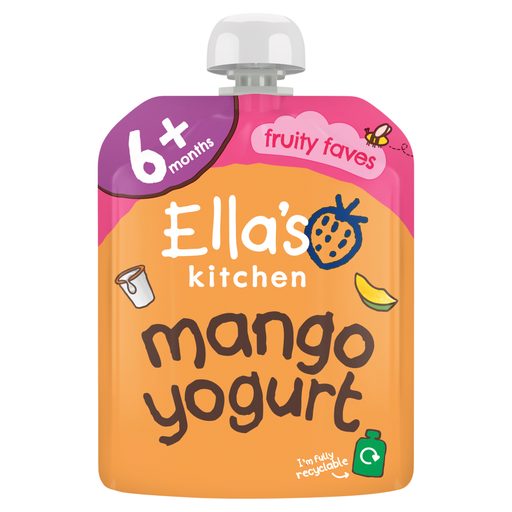 No image available
For a baby already eating solids, this smooth yoghurt can accompany a meal but cannot replace practice with lumpy or finger foods. Check the milk allergen, ingredients and pack storage directions before taking the pouch out for the day.
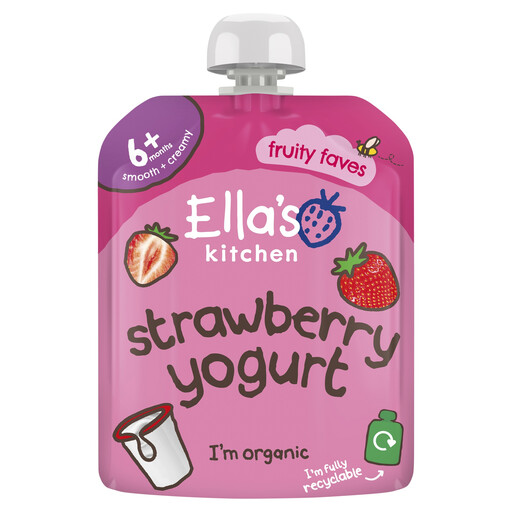 No image available
This smooth 6+ months yoghurt pouch is a spoonable dairy option, not a textured-food choice for later weaning. Check the milk allergen and current recipe, and follow the pack’s storage instructions, particularly after opening.
No, not on its own. “Stage 3” is a shorthand here rather than a texture description for fromage frais: NHS guidance says babies aged 10 to 12 months should be managing mashed, lumpy, chopped and finger foods. Smooth fromage frais can accompany those foods, but does not provide the same texture practice.
Plain, unsweetened full-fat yoghurt or fromage frais can be considered when a baby is ready for solids from around 6 months, alongside breast milk or first infant formula. Continue offering a variety of suitable foods and textures as the baby develops.
Read the ingredients and sugars figure for the exact recipe. Yoplait UK lists 4.9g sugars per 100g for Petits Filous no-added-sugar Strawberry & Banana, while its regular Strawberry & Raspberry small pots list added sugar and 9.4g sugars per 100g. “No added sugar” does not mean the product contains no sugars from milk or fruit.
Follow the storage directions on the exact pack. For a chilled product without access to a fridge, the NHS advises using an insulated lunchbox with an ice pack. Check yoghurt pouches separately for their unopened and opened storage instructions rather than assuming every format is stored alike.
Standard dairy fromage frais contains milk, so do not give it to a child who must avoid cow’s-milk protein unless their clinician advises it is appropriate. Check the exact pack’s allergen declaration; when starting solids, the NHS advises introducing foods that can trigger allergies one at a time so a reaction can be identified.