Households keeping the view within their boundary
You want to see your entrance while avoiding unnecessary footage of neighbours, public areas or communal space. The ICO advises keeping the view to your own property where possible.


Start with the view you need of your front entrance: the Information Commissioner's Office (ICO) advises positioning a domestic camera to capture only your own property where possible. A wired outdoor camera or Power over Ethernet (PoE) system suits a household that can accommodate cabling and prioritises fixed power and local recording; a battery camera or video doorbell suits an entrance where cable routing is difficult, provided charging and the available recording history meet your needs. Check the selected model's night view, audio settings and saved footage before relying on any of these routes.
You want to see your entrance while avoiding unnecessary footage of neighbours, public areas or communal space. The ICO advises keeping the view to your own property where possible.
You can accommodate a fixed installation and want to assess local footage storage, potentially including continuous recording. Reolink describes PoE camera and NVR systems for this kind of setup, but recording options depend on the equipment selected.
You chiefly want to see and speak to callers or check the immediate doorstep rather than monitor a broad area. A video doorbell may fit that use, subject to its mounted view, power needs and audio settings.
Decide what the mounted camera must capture, then match its power and recording arrangements to the entrance; resolution alone cannot answer those questions.
| Concern | What to check | Who this matters to |
|---|---|---|
| Property-boundary view | Check the live view from the intended mounting point and whether any privacy mask affects saved footage. | I need a useful entrance view without unnecessarily recording beyond my property. About 33% of consumers put control of that boundary first. |
| Night footage and recording | Check the model's night mode and whether your chosen power and storage setup saves continuous footage or event clips. | If I need to review activity after dark, I care about what the camera actually saves, not just its stated resolution. For about 27% of consumers, dependable footage is the primary need. |
| Power and upkeep | Check the cable route or charging access, plus compatible PoE equipment if choosing that route. | Where running a cable would be disruptive, I need a workable way to power and maintain the camera. Manageable installation is the main concern for about 20% of consumers. |
| Doorstep interaction | Check two-way talk, the mounted view of visitors and parcels, and whether audio recording has a separate control. | I mainly want to respond to callers and see the doorstep without widening the view unnecessarily. Roughly 20% of consumers place that interaction first. |
A wide angle can also include neighbouring property, a public area or communal space. The ICO says UK data-protection law applies when a domestic camera captures those areas.
Assess the live view from the actual mounting position and use the narrowest framing that serves your entrance. Treat any model-specific privacy mask as an additional control, not a substitute for placement.
Speaking to a visitor does not, by itself, tell you whether conversations are saved. The ICO's domestic CCTV fact sheet describes recording conversations between members of the public as highly intrusive when data-protection rules apply.
Check how the chosen device controls recorded audio, particularly if people outside your property could be captured.
A Wi-Fi camera can still need a power connection, while a battery device needs charging access. Reolink describes PoE as carrying power and data over Ethernet, which requires a suitable cable route and compatible hardware.
Map the mounting point, protected power or cable route, and safe charging access before selecting a device.
A storage option does not establish whether the device saves events or continuous video. Google Nest distinguishes event history from 24/7 history by eligible device and subscription; local recording arrangements also vary by model.
Confirm the selected setup's recording mode, included storage hardware, retention settings and footage export method.
Tapo is relevant to outdoor Wi-Fi cameras with local microSD and optional cloud-storage routes. TP-Link's UK specification for the C320WS describes 2K video, IP66 housing, two-way audio and wired or wireless networking.
Reolink is relevant where Ethernet cabling and a local network video recorder (NVR) are feasible. Its UK materials describe the RLK8-520D4 kit with a 2TB NVR drive and 24/7 recording.
eufy is relevant to doorbell-led entrance monitoring. Its UK E340 specification describes two cameras, 2K video, two-way audio and battery or wired operation.
These selections cover battery and solar-powered entrance cameras, a video doorbell, and fixed-power outdoor cameras. Choose by the power route you can support and the view and recording arrangement you need.
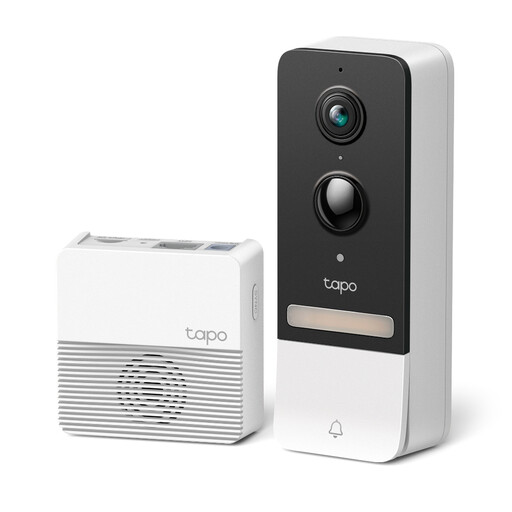 Image unavailable
Consider this battery doorbell when seeing and speaking to callers at the entrance matters more than installing a permanent power route. Check charging access, whether a microSD card is included, and the recording mode before choosing your storage setup.
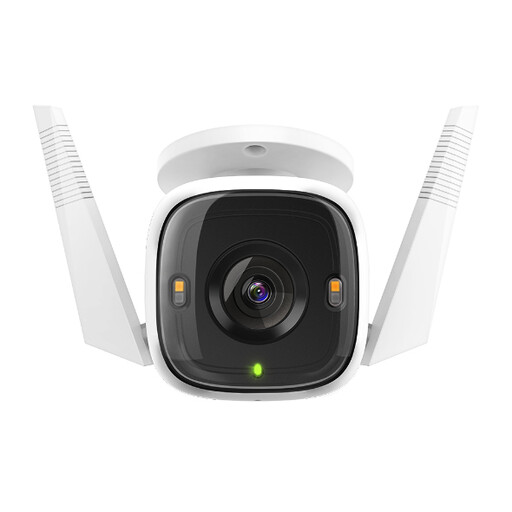 Image unavailable
Consider this fixed-power outdoor camera if you can provide a protected power route and want a choice of Wi-Fi or Ethernet networking. TP-Link specifies 2K video, IP66 housing, two-way audio and local microSD storage for the C320WS; check the supported card capacity for the selected listing, card inclusion and recording mode before buying.
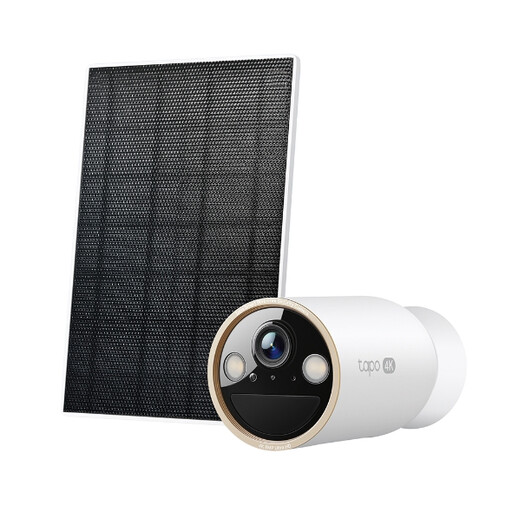 Image unavailable
Consider this solar-powered kit where routing a power cable is difficult and the panel can be placed for useful sun exposure. Check the mounted camera angle and the exact footage saved by your chosen setup; do not assume it provides continuous video.
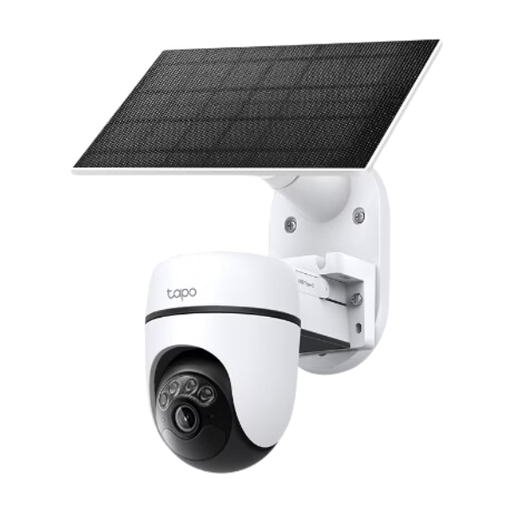 Image unavailable
Consider this solar-powered pan-and-tilt kit if you need an adjustable entrance view without a nearby power outlet. Check panel placement, recording mode and card inclusion; assess the full range of camera movement so it does not unnecessarily capture areas beyond your property.
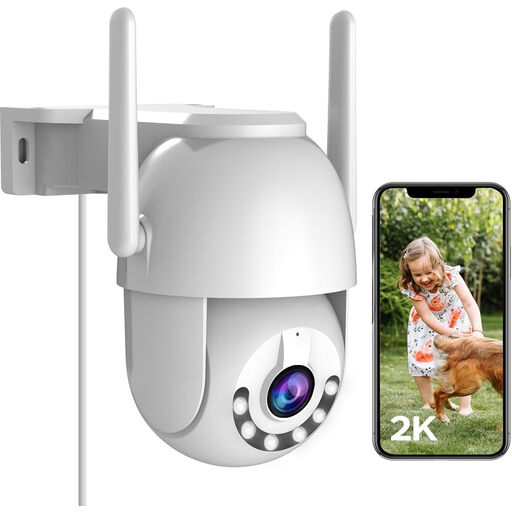 Image unavailable
Consider this plug-in outdoor camera if a fixed power connection is practical and you need to adjust its view. Its product name specifies 2K video, 2.4G Wi-Fi, 360° pan-and-tilt capability and IP66 housing. The microSD card is not included; check the recording settings and keep the power connection protected from outdoor exposure.
Yes, if it captures another property, a public area or communal space, according to the ICO's home CCTV guidance. Position the camera to capture only your own property where possible; the ICO includes smart doorbells in this guidance.
The ICO's domestic CCTV fact sheet advises considering what is captured, displaying signage and keeping access to footage secure where the data-protection regime applies. Check the ICO's current guidance for your planned installation: it says its home CCTV guidance is under review following changes made by the Data (Use and Access) Act.
Check whether two-way talk and saved audio can be controlled separately. The ICO's domestic CCTV fact sheet says systems should not normally record conversations between members of the public without clear, robust justification when data-protection rules apply.
No. Check the selected camera's storage medium, whether it is included, its supported capacity, recording mode and overwrite settings. Cloud history also varies: Google Nest says event and 24/7 history depend on the eligible device and subscription.
Not necessarily. Google Nest says its Nest Doorbell (battery) does not offer 24/7 history even with optional wired installation. For another doorbell, check the exact model, power mode and recording plan rather than assuming wiring changes its video history.