
24/7 Customer Support

Free returns

Same-day & Next-day Delivery

Quality Guaranteed

Unlock Your Welcome Offers: FREE Delivery | Up to 80% OFF | Free 30-day JoyPlus trial
Download the APP
Frozen Asian dumplings can turn a busy evening into a quick meal, appetiser or snack. However, product descriptions often highlight flavour and convenience while leaving out details that affect value, allergens and cooking results. Whether you are comparing Chinese dumplings, Japanese gyoza, Korean dumplings or frozen dim sum, a few checks can help you avoid disappointing purchases.
A larger bag is not automatically better value. Some products contain small dumplings suitable for side dishes, while others contain larger pieces intended as a main meal. Compare the net weight, filling percentage and suggested serving size rather than relying on the front-of-pack imagery.
For example, a 600g pack may suit families or regular meal preparation, while a 176g pack of prawn dumplings may be more appropriate as a small dim sum serving.
“Ready to cook” does not mean ready to eat. Most frozen dumplings contain raw fillings and must be thoroughly cooked. Some are designed primarily for steaming, while others are shaped for pan-frying or boiling.
Using the wrong method can split delicate wrappers, leave the centre cold or produce a soggy base. Check whether the instructions recommend cooking from frozen, require defrosting or specify a minimum cooking time.
Words such as “seafood”, “premium” or “traditional” do not tell you how much of the named ingredient is included. Look for the quantitative ingredient declaration, such as pork 30%, prawn 36.6% or chicken 19%. This gives a clearer basis for comparing prawn dumplings, pork dumplings, chicken dumplings and beef dumplings.
Ingredients are generally listed by weight, with the largest ingredient first. A higher stated percentage of meat or seafood may be useful if you want a more substantial filling, but also check the wrapper-to-filling balance.
Many frozen dumplings contain wheat, soya and sesame. Seafood varieties may contain crustaceans, while recipes with celery, fish, molluscs, egg or mustard require additional care.
Always read the latest packaging rather than relying solely on an online description. Allergen information can vary between flavours and pack formats. Products described as Japanese gyoza or Korean dumplings are not necessarily suitable for gluten-free, vegetarian or pescatarian diets.
Most products should remain frozen at -18°C or below and should not be refrozen after thawing. Cooking times vary:
Follow the pack instructions and ensure the centre is piping hot before serving. Filled products such as soup dumplings can retain very hot liquid, so allow them to stand briefly before eating.
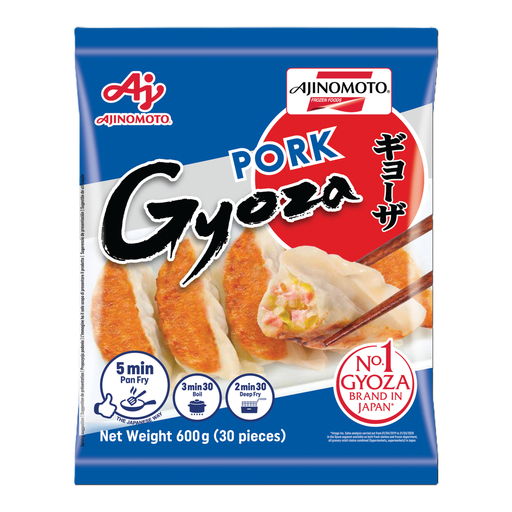
Why This Fits Their Persona: The 600g pack suits students, couples and households wanting a familiar pork option for several quick meals.
The pack size is clear, and the cooking method is specified for pan-frying, steaming, boiling or deep-frying.
Contains 19% pork and 31% vegetables; the stated pan-fry method requires no added oil.
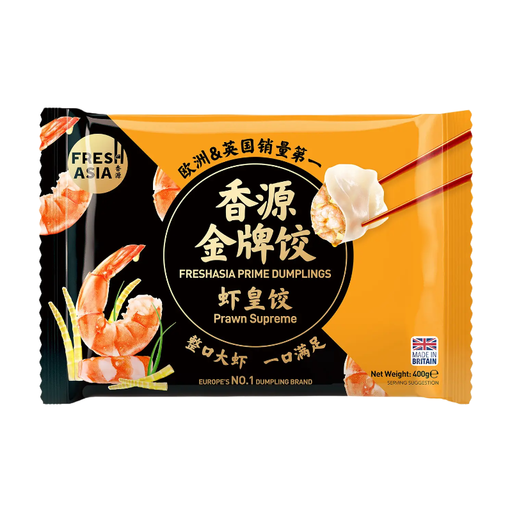
Why This Fits Their Persona: Seafood enthusiasts can compare a clearly stated 36.6% prawn content with a 400g household pack.
The named seafood ingredient is supported by a quantitative declaration rather than a general seafood description.
Contains 36.6% prawn and bamboo shoot; suitable for boiling, pan-frying or steaming.
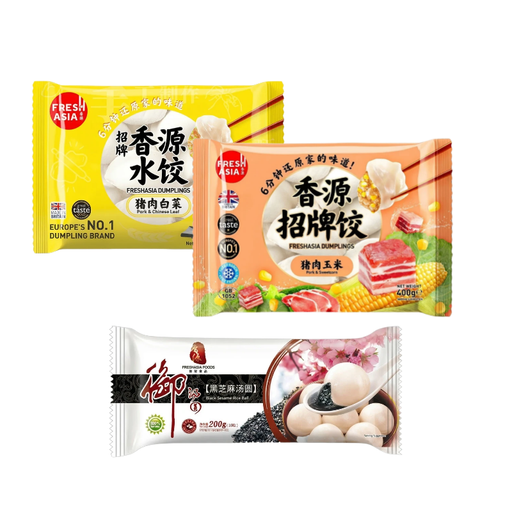
Why This Fits Their Persona: Families and frequent shoppers get two savoury flavours plus a dessert option for varied quick Asian meals.
The bundle states the weight of each component, making it easier to judge variety and storage requirements.
Includes pork and corn, pork and cabbage and 200g of black sesame tangyuan; multiple boiling, steaming and pan-frying options are listed.
We have compiled a complete, real-time list of products that fully satisfy these strict selection criteria and UK safety regulations.
Keep dumplings frozen until the pan, steamer or boiling water is ready. Avoid overcrowding, as this can lower the water temperature and cause sticking. For pan-fried dumplings, brown the base first, then add water and cover the pan to cook the filling with steam.
Sweet products such as tangyuan and black sesame rice balls should usually be boiled from frozen. Once they float, continue cooking according to the pack instructions. They can be served in the cooking water or a sweet ginger soup.
Not always. Many Chinese dumplings, Japanese gyoza and Korean dumplings are frozen raw products. Check the label and cook until thoroughly heated throughout. Do not eat raw dough or raw filling.
The difference depends on appliance size, cooking time and energy tariff. Steaming and boiling can suit larger batches, while pan-frying may be practical for a smaller portion. Using a lid and cooking only the required amount can reduce heat and energy waste.
Keep them at -18°C or below and follow the best-before date on the packaging. Once thawed, refrigerate and use within the stated period, commonly 24 hours for products that specify this. Do not refreeze after defrosting.