
24/7 Customer Support

Free returns

Same-day & Next-day Delivery

Quality Guaranteed

Unlock Your Welcome Offers: FREE Delivery | Up to 80% OFF | Free 30-day JoyPlus trial
Download the APP
Frozen bao buns are a convenient way to enjoy soft Chinese steamed buns, filled bao buns and dim sum buns at home. They can work as a quick lunch, student meal, family snack or sharing platter, but the product descriptions can make comparison difficult.
As the Joybuy Product Recommendation Officer, I focus on the details that affect your purchase: filling, pack size, allergens, cooking method and storage. Here are the common pitfalls to avoid before adding frozen steamed buns to your basket.
Not every bao-style product contains a filling. Plain mantou buns, such as pandan-flavoured steamed buns, may be intended for spreading with butter or jam, serving with curry or using as a side dish. Gua bao are also usually open-folded buns designed for you to add pork, chicken, vegetables or another filling.
If you want a complete snack, look for terms such as filled bao buns, chicken bao buns, pork bao buns or duck bao buns. If you prefer to customise your meal, plain buns or gua bao may offer more flexibility.
Cooking instructions vary considerably. Some bao buns can be microwaved in under a minute, while others need 8–15 minutes of steaming. Pan-fried buns may require oil, water and a covered frying pan.
Check whether the product is suitable for:
A product with a short microwave time may suit an office lunch, while a larger family pack may be more practical when you already own a steamer.
Many Chinese steamed buns contain wheat, soya and sesame. Other products may include egg, milk, molluscs or oyster sauce. “Vegetarian” does not automatically mean free from soya, sesame or wheat, and a product labelled halal may still contain other allergens.
Always read the current packaging, particularly if you have an allergy, coeliac disease or dietary restriction. Manufacturer information can change, and the pack remains the relevant source at the point of purchase.
The range includes savoury and sweet options. Chicken bao buns may include teriyaki sauce, mushrooms or glass noodles. Pork bao buns can feature spring onion, cabbage or char siu seasoning. Duck bao buns often use hoisin-style sauce, while vegetarian bao buns may contain bok choy, Chinese spinach, mushroom or tofu.
For a dessert-style option, consider custard, taro, sesame paste, lotus seed or salted egg custard buns. Check the ingredient list rather than relying only on the product title, especially when choosing vegetarian, halal or lower-allergen options.
Pack weights range from around 225g to 600g, with some products containing approximately six pieces and others offering ten individual buns. For one person, a six-piece pack can provide several snack portions if stored correctly. Larger packs may be more suitable for families or a dim sum spread.
Compare piece count as well as total weight. A 300g pack containing six bao gives an approximate average of 50g per bun, while a 600g pack may be intended for more substantial servings.
Most frozen bao products require storage at -18°C or below. Keep them frozen until needed, cook according to the pack instructions and avoid refreezing after thawing.
For meat-filled products, ensure the centre is thoroughly hot before serving. Some supplied instructions specify an internal temperature, such as 75°C for chicken products, while others state that the filling should be piping hot throughout. Follow the instructions for the specific product.
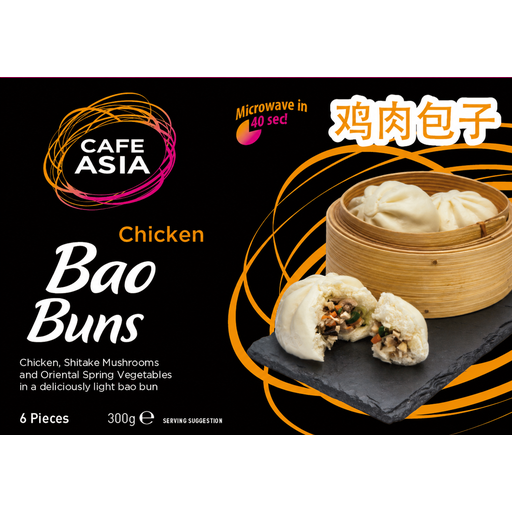
Why This Fits Their Persona: Six individually portioned chicken bao buns offer a straightforward entry point for students, couples and first-time buyers looking for a quick Asian frozen food option.
The listing states an approximate six-piece pack and provides microwave and steaming options, making portion and preparation expectations clearer.
Chicken, shiitake mushroom, carrot and glass noodles; microwave in the provided steam pouch in under a minute.
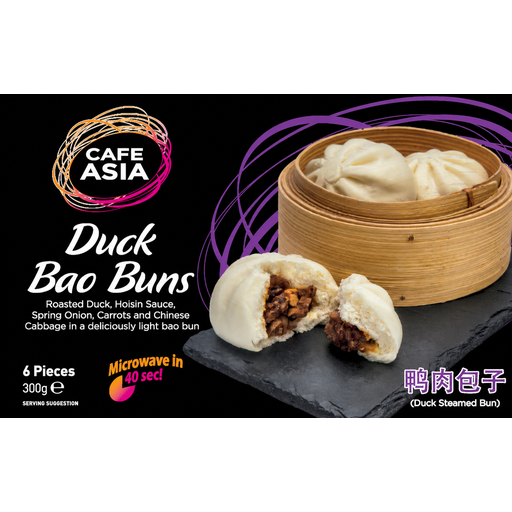
Why This Fits Their Persona: A suitable choice for shoppers planning a restaurant-style evening meal or a more distinctive sharing platter at home.
The product information identifies duck content, hoisin sauce and key allergens, rather than leaving the flavour profile to the product name alone.
Approximately six bao; supplied steam pouch for microwave preparation; duck filling with hoisin and orange notes.
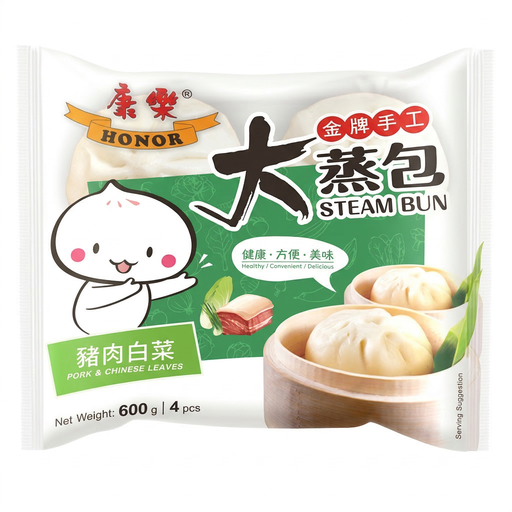
Why This Fits Their Persona: The larger 600g pack suits families, frequent bao eaters and shoppers building a freezer supply for several meals.
Its stated 600g net weight makes it easier to compare with smaller snack packs and plan a multi-person serving.
Pork and Chinese cabbage filling; steam from frozen for 10–12 minutes; no thawing required according to the listed instructions.
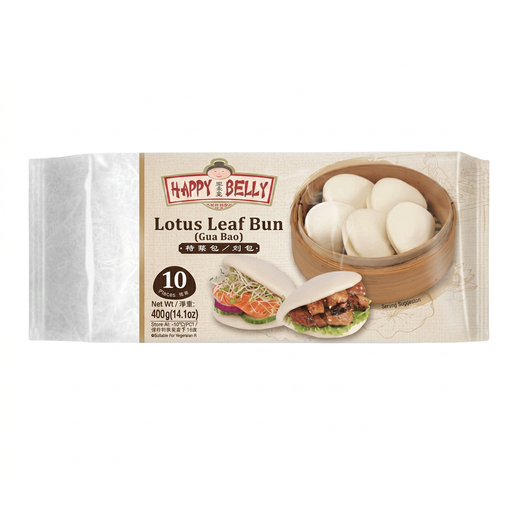
Why This Fits Their Persona: These plain folded buns allow vegetarian and vegan-friendly fillings to be added at home, from tofu and vegetables to meat alternatives.
The product is a plain gua bao rather than a pre-filled bun, so you can select the filling and toppings while checking each ingredient yourself.
Ten 40g buns; listed as vegan, vegetarian-friendly and halal certified; suitable for custom fillings.
We have compiled a complete, real-time list of products that fully satisfy these strict selection criteria and UK safety regulations.
Some can, but not all. Follow the product-specific instructions, including the wattage, pouch or wrapping requirements and standing time. If microwave instructions are not provided, use the stated steaming method instead.
They should remain frozen at -18°C or below and be used by the best-before date shown on the packaging. Avoid refreezing after thawing. Once cooked, follow the pack guidance and consume promptly.
Yes, selected microwave bao buns can be ready in under a minute, while steamed products commonly take around 5–15 minutes. For a balanced lunch, serve filled bao with vegetables, salad, soup or another suitable side, and check the nutrition and allergen information before buying.