
24/7 Customer Support

Free returns

Same-day & Next-day Delivery

Quality Guaranteed

Unlock Your Welcome Offers: FREE Delivery | Up to 80% OFF | Free 30-day JoyPlus trial
Download the APP
Frozen beef short ribs can make a satisfying Korean galbi dinner, rich stew or slow-cooked family meal, but the wrong cut can leave you with tough meat, too much bone or a pack that does not suit your recipe. For UK shoppers, the most useful comparison points are not simply price or attractive descriptions. Cut, thickness, pack size, origin, storage instructions and cooking time all affect the result.
This guide explains how to compare frozen beef short ribs, beef brisket, beef rib fingers and other frozen beef cuts before ordering, followed by practical recommendations for different cooking styles.
“Short ribs” can describe several formats. Flanken-cut beef ribs are sliced across the bone into thin pieces, often used for Korean BBQ. Traditional meaty short ribs are thicker and more suitable for braising or slow cooking. Boneless beef short ribs offer more edible meat per pack, while rib fingers are long strips taken from between the rib bones.
Choosing a thin Korean galbi cut for a two-hour stew may produce a dry result. Conversely, using a thick braising cut for quick hot pot cooking can leave the centre undercooked.
A 700g bone-in pack will not provide the same amount of edible meat as 700g of boneless short ribs. Pre-marinated products also include sauce within the stated net weight. Always check:
Frozen beef brisket, flank, beef stew meat and rib fingers contain connective tissue that usually needs time to soften. Thin slices are a different category: they are designed for brief cooking in hot pot or over high heat. A product described as suitable for grilling may still need thorough cooking, particularly if it is thicker than a typical Korean BBQ slice.
Match the cut to the dish:
Marbling refers to intramuscular fat within the meat. It can add richness, but a higher fat figure is not automatically suitable for every dish. For example, a marbled short rib may work well on a grill, while a leaner brisket flat may be easier to slice for sandwiches or salt beef.
Nutrition panels can help compare products objectively. For example, the listed fat content is 18g per 100g for Ruston Choice Boneless Short Rib and 22.5g per 100g for Celeplate BMS 4 Beef Short Ribs. These figures describe the product as sold and should not be treated as a guarantee of tenderness.
Frozen raw beef should generally be kept at -18°C or below, following the product label. Defrost in the refrigerator where possible, keep the pack covered and use it within the stated period after thawing. Several listed products specify that meat should not be refrozen after defrosting.
Cooking times vary considerably. A thick short rib may require 1.5–3 hours of gentle cooking, while thin hot pot slices may need only seconds in boiling broth. Always follow the pack instructions and ensure raw beef is thoroughly cooked before eating.
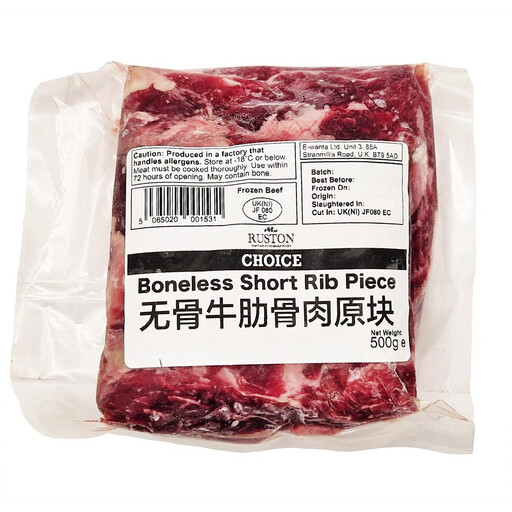
Why This Fits Their Persona: A 500g, two-piece pack gives newer home cooks a manageable starting point for Korean braised short ribs, red-braised beef or a slow-cooked family meal.
The cut is boneless, so the stated 500g is not mainly bone. The listing also gives a refrigerator defrosting period and a 1.5–2 hour slow-cooking method.
100% beef, boneless format and stated Irish origin; suitable for braising and slow cooking.
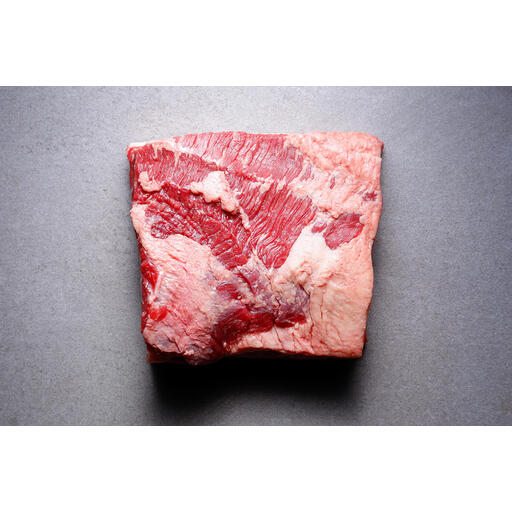
Why This Fits Their Persona: This 1kg boneless cut suits shoppers planning a weekend low-and-slow meal, pot roast, salt beef or a larger gathering.
The listing identifies it as a boneless flat cut and clearly positions it for low-temperature, long cooking rather than quick grilling.
Grass-fed British brisket sourced from cattle reared in Scotland and Ireland; flat-cut format slices neatly once cooked.

Why This Fits Their Persona: Thin, cross-cut slices are designed for Korean galbi, Korean BBQ beef and fast pan cooking rather than lengthy braising.
The product name and description specify the flanken cut, 225g quantity and frying or barbecuing as the cooking methods.
UK-origin product with thin bone-in slices; the format allows marinade to coat the exposed meat before grilling.
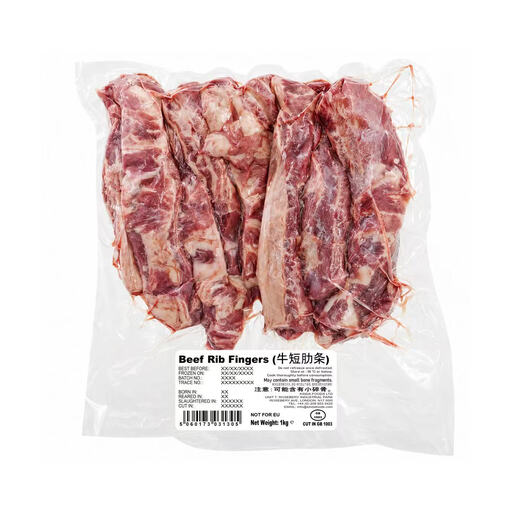
Why This Fits Their Persona: The larger pack is practical for families, batch cooking, BBQ preparation and freezing portions before defrosting.
It is explicitly labelled boneless and 100% beef, reducing uncertainty about bone weight and added ingredients.
1kg quantity and stated suitability for grilling, roasting, braising, stews and Korean-style BBQ.
For a traditional stew, Celeplate Beef Flank 500g is listed for long simmering, Chinese braised beef, curry and hotpot soups. Its instructions recommend 60 minutes or more in a regular pot, or at least 45 minutes in a pressure cooker.
For a quick communal meal, Ruston Prime Boneless Short Rib Slices 200g is designed for hot pot and shabu shabu. The product instructions advise cooking slices in boiling broth until no longer pink. For a ready-to-heat option, Sijia Kitchen Braised Beef 420g is pre-cooked and requires heating according to its label, making it different from raw frozen beef cuts.
We have compiled a complete, real-time list of products that fully satisfy these strict selection criteria and UK safety regulations.
Some recipes can accommodate frozen meat, but cooking is less even and takes longer. For thick short ribs, brisket or rib fingers, defrosting in the refrigerator is generally more practical. Follow the specific product instructions and do not refreeze meat after thawing unless the packaging explicitly permits it.
It depends on thickness and cut. Product guidance ranges from around 1.5–2 hours for some boneless short ribs to 2–3 hours for thicker pieces. Flanken-cut ribs are thin and are normally intended for frying or barbecuing, not extended braising. Cook until tender and confirm that raw beef is thoroughly cooked before serving.
Yes, beef rib fingers can be marinated and grilled, but their thicker connective tissue also makes them suitable for slow cooking. Slice or separate pieces evenly, watch for rendered fat on the grill and follow safe cooking instructions. For a more traditional quick-cooking galbi format, choose thin flanken-cut beef ribs instead.