Couples planning a plated anniversary dinner
Plain skinless breast fillets give you a chicken main without a ready-made coating or sauce. You can choose the accompaniments separately and check their ingredients and nutrition alongside the chicken.


For a plated anniversary dinner, plain skinless breast fillets let you choose the sauce and cooking fat separately; smaller fillets designed to cook from frozen may suit a tighter timetable. Compare fat figures per 100g on the same preparation basis where possible, then check whether the exact product needs defrosting before you plan the meal.
Plain skinless breast fillets give you a chicken main without a ready-made coating or sauce. You can choose the accompaniments separately and check their ingredients and nutrition alongside the chicken.
Preparation instructions matter as much as the format. Some frozen fillets are designed to cook from frozen, while others must be defrosted in the fridge before cooking.
Welfare or provenance claims may help you choose between products that fit your meal plan. Check the claim on the exact pack, separately from its fat figure and cooking instructions.
Choose the chicken format around your serving plan and available preparation time, then compare the nutrition declarations for the exact products.
| Priority | What to check | Your needs |
|---|---|---|
| Fat figures | Read total fat per 100g and check whether the figure is for the product as sold or after cooking. The NHS describes 3g of fat or less per 100g as low for solid foods; compare products on the same preparation basis where possible. | I want to compare the chicken itself before deciding what sauce or cooking fat to add to dinner. |
| Preparation time | Check whether the pack permits cooking from frozen or requires fridge defrosting. Taste Inc. Skinless Chicken Fillets, sold by Sainsbury's, give oven instructions for cooking from frozen; the cited Waitrose breast fillets require full defrosting. | Will I have time to defrost the chicken, or do I need a product with explicit cook-from-frozen directions? |
| Serving format | Decide whether whole fillets, smaller pieces or strips suit the dish. Read the ingredients and nutrition declaration of any coated or seasoned product rather than judging it by the chicken-breast wording alone. | I would like a whole fillet as the centre of the plate, or smaller pieces that fit the recipe I have planned. |
The phrase can describe the meat used without describing the finished coated product. Birds Eye describes its Crispy Chicken Dippers as battered and prefried.
Read total fat per 100g and the full ingredients list when comparing them with plain fillets.
Sainsbury's lists fat for its British Skinless Chicken Fillets per 100g after oven cooking; not every product declaration uses that preparation wording. Oil, butter or a sauce also changes what is in the finished dish.
Check what each per-100g figure describes before comparing products, and consider additions separately.
A product that requires fridge defrosting needs preparation ahead of the cooking session.
If dinner is soon, choose only a product whose instructions explicitly permit cooking from frozen. Otherwise, plan defrosting around the directions on its pack.
Raw poultry needs careful handling during defrosting and preparation to avoid contact with ready-to-eat food.
Keep it separate, wash hands and utensils after handling it, and follow the pack's defrosting and cooking instructions.
These examples illustrate differences between particular frozen chicken products and formats, not the full ranges sold under each name.
Frozen Oakham Gold British Chicken Breast Fillets are a whole-fillet option for a plated main.
Waitrose Frozen Chicken Breast Fillets offer a plain whole-fillet format.
The cited listings include Sainsbury's own-label whole fillets and Taste Inc. fillets sold by Sainsbury's.
Tesco's frozen chicken breast range lists whole fillets, mini fillets and diced breast.
Birds Eye Crispy Chicken Dippers are a coated convenience format rather than plain breast fillets.
These options cover whole breast fillets, sliced breasts and strips. Choose the format that fits your anniversary dinner, then check the exact pack for nutrition and preparation directions.
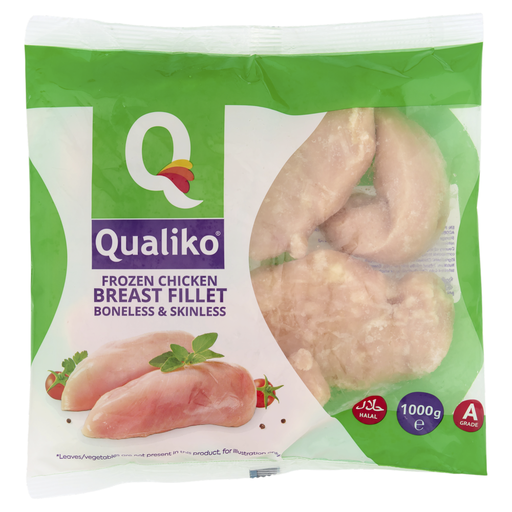 No image available
Whole fillets offer a plated-main format. If you are preparing dinner without defrosting ahead, check that the pack's oven directions and cooking time fit your schedule; check the ingredients if you want chicken as the sole ingredient.
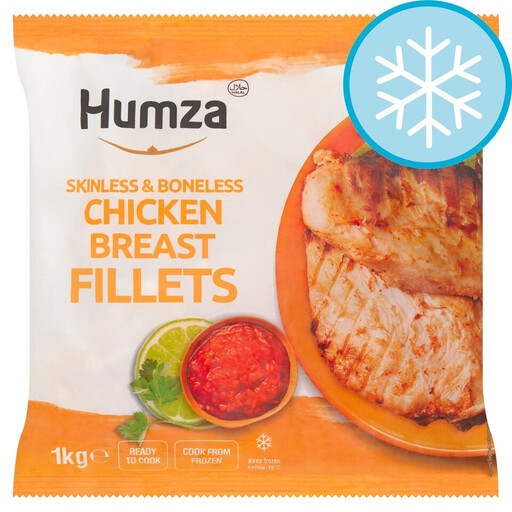 No image available
These whole fillets suit a meal planned in advance: they must be fully defrosted in the fridge before cooking. Allow time according to the pack's directions.
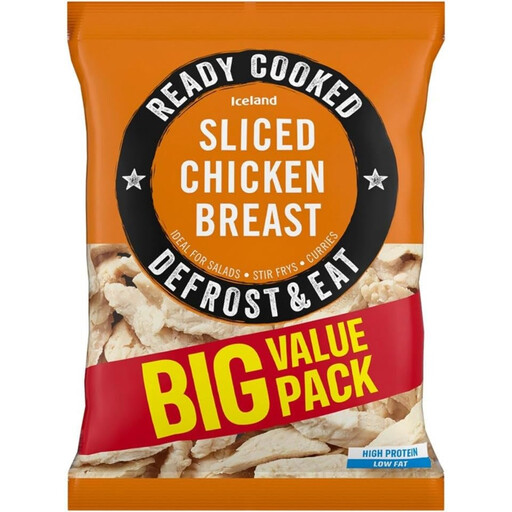 No image available
Sliced breast suits a dish assembled from smaller pieces rather than a whole fillet. Check the pack's cooking method and timing before deciding whether it fits your dinner plan.
 No image available
Strips fit recipes using smaller chicken pieces rather than a whole plated breast. Check the ingredients and the pack's cooking and defrosting directions before preparing the meal.
For solid foods, the NHS gives a threshold of 3g fat or less per 100g for “low fat”. Check the nutrition declaration for the exact product; “reduced fat” is a comparative claim, not another name for that threshold.
Whole, plain breast fillets suit a dish served around one chicken portion, while sliced breast or strips suit recipes built from smaller pieces. If fat content guides your choice, compare the exact products' per-100g declarations and check whether the figures use the same preparation basis.
No. Taste Inc. Skinless Chicken Fillets sold by Sainsbury's give oven directions for cooking from frozen, whereas the cited Waitrose breast fillets require full defrosting. Follow the instructions on the pack you buy rather than applying another product's method.
Follow the pack's defrosting and cooking directions. Keep raw poultry separate from ready-to-eat food, wash your hands and utensils after handling it, and cook it thoroughly.