Shoppers comparing fat content
If you are planning a budget shop, compare fat per 100g on the finished product rather than relying on the words “chicken breast”. Check the pack size and ingredients alongside the nutrition table.


Start with plain, skinless frozen chicken fillets if you want a straightforward lower-fat comparison, then check fat and saturates per 100g on the exact product. Coated or filled chicken needs its own nutrition check: a chicken-breast description does not describe the finished product’s fat content.
If you are planning a budget shop, compare fat per 100g on the finished product rather than relying on the words “chicken breast”. Check the pack size and ingredients alongside the nutrition table.
Plain frozen chicken can be used in different recipes. Choose a cut and pack size you can use while following its storage, defrosting and cooking directions.
Breaded, battered and filled products offer a different format from plain fillets. Compare the nutrition and allergen information for the complete product, not just its chicken content.
Compare the exact products you might use, starting with the nutrition table and then checking ingredients, pack format and preparation directions.
| Priority | What to check | Your needs |
|---|---|---|
| Fat content | Compare fat and saturates per 100g on the exact product. Include coating or filling in the comparison. | I want to compare plain fillets with other frozen chicken without treating “chicken breast” as a nutrition figure. Sainsbury’s lists 1.5g fat per 100g for its Humza fillets; Waitrose lists 1.6g per 100g for its frozen breast fillets. |
| Ingredients | Read the ingredient and allergen lists. Check for added water, seasoning, coating or fillings rather than assuming every breast product has the same composition. | If I want plain chicken for my own recipes, I need to know what else is in the bag. Waitrose lists chicken breast fillet as the ingredient in its frozen breast fillets; Sainsbury’s describes its Humza fillets as containing added water. |
| Pack format | Check pack size and whether the chicken is sold as whole fillets, slices or strips. Consider how much you can use while following the pack’s storage directions. | Whole fillets may suit one recipe; slices or strips may suit another. I would choose the format that fits the meals I plan to make. |
| Preparation | Read the exact pack’s defrosting, storage and cooking instructions. Keep raw chicken separate from other foods during preparation and cook it thoroughly. | For meals prepared on different days, I need directions that fit how I will store and cook each portion. Sainsbury’s Humza listing gives cook-from-frozen directions, while Waitrose instructs shoppers to defrost its breast fillets fully before use. |
Birds Eye says its coated chicken range uses chicken breast, but batter and breadcrumbs are also part of those products. The breast description alone cannot establish their total fat content.
Compare fat and saturates per 100g for the complete product, including any coating or filling.
The NHS notes that chicken skin has a high fat content. Removing it is relevant to the choice, but a skinless description does not give an exact fat or saturates figure for a particular bag.
Check the current pack’s nutrition table, ingredients and allergen statement before deciding between products.
Pack directions differ: Sainsbury’s gives cook-from-frozen directions for its Humza fillets, while Waitrose instructs shoppers to defrost its frozen breast fillets fully before use.
Follow the directions for the product in hand, prevent cross-contamination during preparation and cook raw chicken thoroughly.
These examples show why the exact product label matters more than a brand name when comparing frozen chicken.
Its frozen chicken category includes skinless fillets as well as other chicken formats.
Sainsbury’s lists Humza Quick Frozen Chicken Breast Fillets 1kg as skinless, boneless fillets with added water.
Waitrose lists frozen skinless chicken breast fillets with chicken breast fillet as the ingredient.
Birds Eye offers breaded and battered frozen chicken for shoppers considering coated products.
The M&S frozen range lists Oakham Gold breast fillets, diced breast and mini fillets.
These options are frozen chicken breast slices, fillets and strips for comparing pack formats. Check each product’s current nutrition table, ingredients and preparation directions before choosing.
 No image available
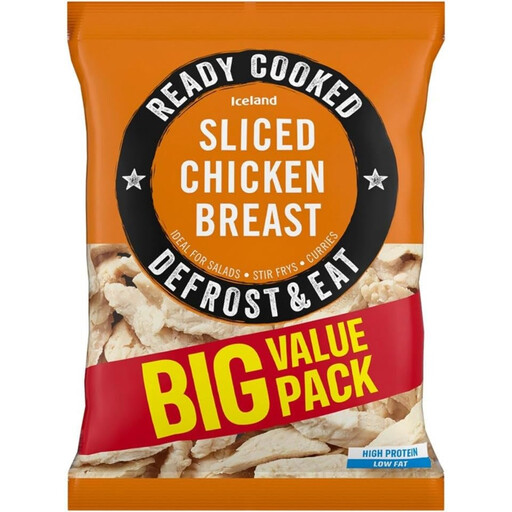
The 2.1kg sliced format is an option when planning several chicken meals. Compare its current fat and saturates figures per 100g, and follow the pack’s storage and cooking directions.
 No image available
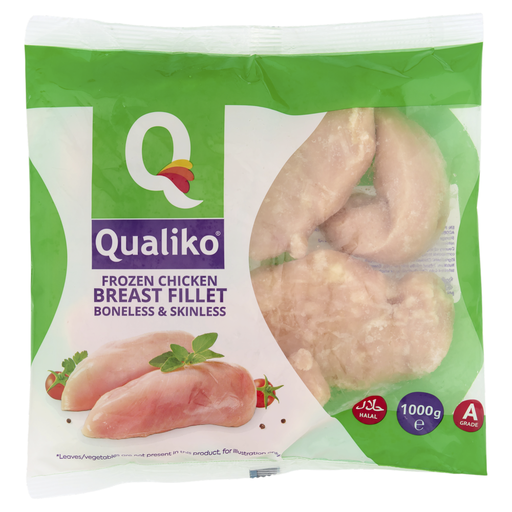
Consider this 1kg frozen fillet pack if you want boneless, skinless breast pieces. Check the current pack’s ingredient list before choosing: the supplied product descriptions differ on the chicken proportion.
 No image available
The 500g strip format suits recipes calling for smaller pieces. Compare the nutrition and ingredients on the current pack, and check its defrosting and cooking directions before preparation.
Read fat and saturates per 100g on each exact product’s nutrition table. Include breading, batter, sauces or fillings in the comparison; a chicken-breast description alone does not establish the finished product’s fat content. The NHS also notes that chicken skin has a high fat content.
Follow the directions for the exact product. Sainsbury’s gives cook-from-frozen directions for its Humza fillets, whereas Waitrose says to defrost its frozen breast fillets fully before use. Cook raw chicken thoroughly and prevent cross-contamination during preparation.
Follow the pack’s instructions for storage and use after thawing. Keep raw chicken contained and separate from foods that will not be cooked, and check the pack before refreezing: the Sainsbury’s Humza and Waitrose listings give product-specific directions.
Yes. Check the exact pack’s ingredient and allergen statements, particularly if the chicken has added ingredients. The Sainsbury’s Humza listing includes a may-contain allergen statement, so its plain-fillet appearance is not a substitute for reading the label.