If reducing fat is your priority, compare plain, skinless frozen breast fillets with coated products before deciding whether premium sourcing is worth paying for. M&S, Waitrose and Tesco list 1.2g, 1.6g and 1.4g fat per 100g respectively for the plain fillets discussed here, while Waitrose lists 9.1g per 100g for its southern-fried mini fillets. Welfare and origin claims may matter to you, but check the exact product’s nutrition, ingredients and cooking directions separately.
Who is this choice for?
The useful distinction is between the chicken you want to cook, the sourcing claims you value and the time you have to prepare it.
Home cooks reducing fat
If you want frozen chicken as the base of a lower-fat meal, start with plain, skinless breast and compare fat per 100g. Coatings, fillings and sauces make the finished product a different nutritional choice from an uncoated fillet.
Shoppers interested in sourcing
If British origin or stated welfare standards influence your purchase, look for those details on the exact product. Treat them as separate from its nutrition: a sourcing claim does not establish the fat content of a prepared chicken meal.
Households planning around cooking time
Check whether the pack permits cooking from frozen or requires defrosting. Waitrose instructs shoppers to defrost its frozen breast fillets fully before use, whereas Tesco provides cook-from-frozen instructions for its 100% Chicken Breast Fillets.
What should you check first?
Start with the finished product’s nutrition and ingredients, then consider sourcing and whether its preparation instructions fit the meal you have planned.
| Priority |
What to check |
Your needs |
| Fat content |
Compare fat per 100g on the exact packs, including the coating if present. M&S lists 1.2g for its Oakham Gold breast fillets; Waitrose lists 1.6g for its plain breast fillets and 9.1g for its southern-fried mini fillets. |
I’m choosing chicken for a lower-fat meal, so I want to compare the product I will actually cook rather than rely on the word “premium”. |
| Ingredients |
Check whether the product is plain breast or contains a coating or added ingredients. Tesco lists chicken as the sole ingredient in its 700g 100% Chicken Breast Fillets; its separate 1kg breast portions list chicken breast, water, dextrose and salt. |
A simple ingredient list matters to me, or I want to know what is included alongside the chicken before choosing a portion. |
| Sourcing |
Look for origin and welfare statements on the specific pack, then assess nutrition independently. M&S describes its Oakham Gold fillets as sourced from RSPCA Assured farms; Waitrose describes its plain fillets as coming from chickens reared more slowly with more space. |
I value stated sourcing credentials, but I don’t want to mistake them for a lower fat figure. |
| Preparation |
Read the pack’s defrosting and cooking instructions before buying. Waitrose says to defrost its plain frozen breast fillets fully; Tesco gives cook-from-frozen instructions for its 700g 100% Chicken Breast Fillets. |
If dinner needs to start straight from the freezer, I need a product whose own instructions allow that; otherwise, I can plan time to defrost it. |
What could lead to the wrong choice?
-
Reading “premium” as a nutrition claim
Premium positioning may refer to origin or rearing rather than the finished product’s fat content. Waitrose lists 9.1g fat per 100g for its southern-fried mini fillets, compared with 1.6g per 100g for its plain frozen breast fillets.
Compare nutrition per 100g and read the ingredients before deciding whether the sourcing claims are worth paying for.
-
Assuming every frozen breast product contains only chicken
Tesco lists chicken as the sole ingredient in its 700g 100% Chicken Breast Fillets, while its separate 1kg breast portions contain chicken breast, water, dextrose and salt. Similar names need not describe identical ingredients.
Read the ingredient list of the size and variant you intend to buy, especially when comparing portions or planning a recipe.
-
Expecting every pack to cook from frozen
The reviewed Waitrose plain breast fillets require full defrosting before use, while Tesco’s 700g 100% Chicken Breast Fillets have cook-from-frozen instructions. A frozen product is not necessarily a cook-from-frozen product.
Check the exact pack before planning dinner, and follow its defrosting and refreezing directions.
-
Relying on freezing instead of thorough cooking
The Food Standards Agency explains that freezing can reduce bacteria but cannot make chicken completely safe on its own. Cooking remains an essential step.
Follow the pack’s cooking instructions, avoid washing raw poultry and keep raw chicken away from ready-to-eat food, utensils and surfaces used for it.
Which brand ranges are relevant?
These product-line examples show why brand positioning, ingredients and nutrition need to be considered separately; they do not describe every product a brand sells.
M&S Food
M&S presents its frozen Oakham Gold British chicken breast fillets with stated RSPCA Assured sourcing.
- M&S lists 1.2g fat per 100g for the named plain breast fillets.
- The sourcing statement concerns this product; it does not establish a nutritional or eating-quality advantage across the M&S range.
Waitrose
Waitrose offers plain frozen British breast fillets as well as coated frozen chicken products.
- Its plain breast fillets list 1.6g fat per 100g, and Waitrose describes their sourcing as slower-reared with more space.
- The plain fillets require defrosting before use; its southern-fried mini fillets have a separate ingredient and nutrition profile.
Tesco
Tesco’s named frozen breast products illustrate the difference between a chicken-only fillet and breast portions with added ingredients.
- Tesco lists chicken as the sole ingredient and 1.4g fat per 100g for its 700g 100% Chicken Breast Fillets.
- Its separate 1kg breast portions list water, dextrose and salt alongside chicken breast; check the exact variant rather than transferring details between packs.
Birds Eye
Birds Eye describes a frozen chicken range that includes breaded, battered and other prepared formats.
- The range gives shoppers different preparation formats to consider.
- Birds Eye’s chicken-breast statement does not establish the fat content of a finished coated product; check the exact pack’s nutrition and ingredients.
Frozen chicken options on Joybuy
These options focus on frozen breast fillets, sliced breast and breast strips for home cooking. Compare each pack’s fat per 100g, ingredients and preparation directions if those details affect your choice; check sourcing claims separately if they are why you are considering a premium product.
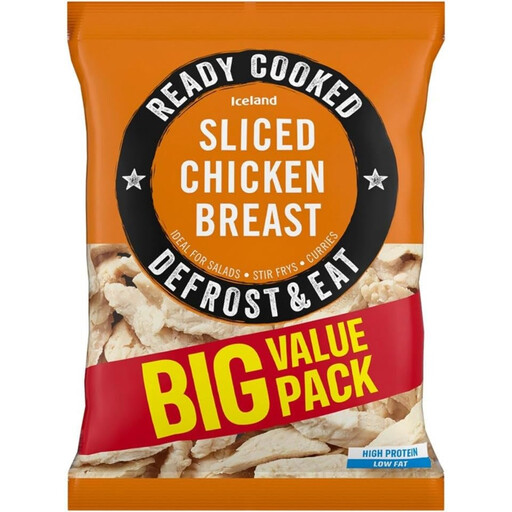 Image unavailable
Iceland Sliced Chicken Breasts 2.1kg
Pre-sliced breast is a format to consider if you want chicken already cut for a home-cooked meal. Check the pack’s fat per 100g and thawing and cooking directions before planning it for a lower-fat meal.
View on Joybuy
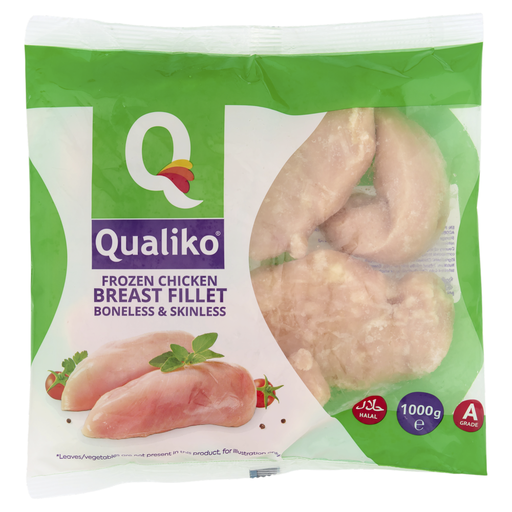 Image unavailable
Qualiko Frozen Chicken Breast Fillet Boneless & Skinless 1kg
These boneless, skinless fillets provide a plain-breast format for cooking at home. Check the chicken percentage on the pack before relying on a chicken-only description, and follow its cooking directions.
View on Joybuy
 Image unavailable
Morrisons Chicken Breast Strips 500g
Breast strips are worth considering when pre-cut chicken fits the dish you plan to make. Read the ingredients, fat per 100g and preparation instructions on the pack rather than assuming strips and whole fillets are interchangeable.
View on Joybuy
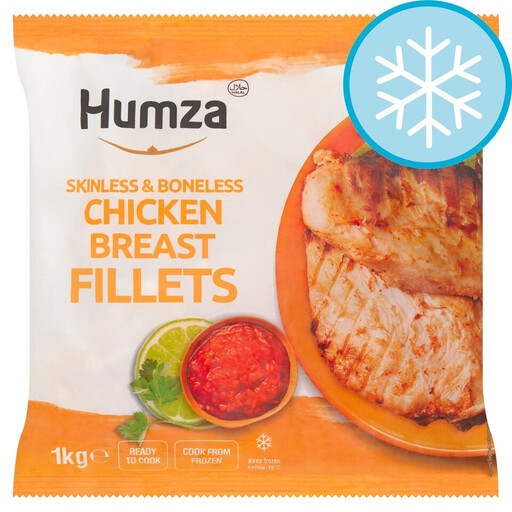 Image unavailable
Humza Skinless & Boneless Chicken Breast Fillets 1kg
These skinless, boneless fillets suit a meal planned around plain breast. Allow for the pack’s refrigerator-defrosting directions before cooking, and check its ingredient list if chicken percentage matters to your choice.
View on Joybuy
Common questions
Does premium frozen chicken automatically contain less fat?
No. Sourcing claims and fat content answer different questions. M&S and Waitrose list 1.2g and 1.6g fat per 100g respectively for their plain breast fillets, while Waitrose lists 9.1g per 100g for its coated southern-fried mini fillets. Compare the exact products rather than treating “premium” as a nutrition claim.
Which frozen chicken format should I compare first when reducing fat?
Start by comparing plain, skinless breast fillets with the prepared formats you would otherwise buy. Check fat per 100g and the ingredient list, then consider how you will cook and serve the chicken. NHS South West London advises choosing lean chicken and using lower-fat cooking methods where possible.
Can chicken breast be cooked straight from frozen?
Only when the exact product’s instructions permit it. Tesco gives cook-from-frozen instructions for its 700g 100% Chicken Breast Fillets, whereas Waitrose says to defrost its plain frozen breast fillets fully before use. Follow the directions on the pack you buy.
Does freezing raw chicken make it safe to eat?
No. The Food Standards Agency explains that freezing alone cannot make chicken completely safe and that thorough cooking is essential. Do not wash raw poultry; keep it away from ready-to-eat food and follow the pack’s handling and cooking instructions.


