People planning meals around plain chicken
Uncoated breast fillets give you control over seasoning and cooking additions. Compare the pack’s fat and saturates per 100g, then consider what else goes into the meal.


For a low-fat eating plan, plain, skinless frozen chicken breast fillets are a useful starting point, but compare total fat and saturates per 100g on the exact product. M&S Food declares 1.2g fat per 100g for its Frozen Oakham Gold fillets and Waitrose declares 1.6g for its plain fillets; Waitrose’s southern-fried mini fillets declare 9.1g, so a chicken-breast name alone does not settle the choice. Cooking additions and portion size also matter.
Uncoated breast fillets give you control over seasoning and cooking additions. Compare the pack’s fat and saturates per 100g, then consider what else goes into the meal.
Use the exact pack declaration, your portion and the advice given by your clinical team. Oxford University Hospitals says its guidance for diets containing no more than 20g of fat a day is intended for people advised to follow one by a healthcare professional.
Mini fillets can be plain or coated. Check the full product name, ingredients and nutrition panel rather than relying on the cut of chicken alone.
Start with comparable per-100g figures, then check the product format, ingredients and cooking directions for the meal you intend to make.
| Priority | What to check | Your needs |
|---|---|---|
| Fat and saturates | Compare both figures per 100g across similar products. M&S Food declares 1.2g fat and 0.4g saturates per 100g for its Frozen Oakham Gold breast fillets; Waitrose declares 1.6g and 0.5g for its plain frozen breast fillets. | I want to compare differently sized packs without mistaking a smaller serving for a lower-fat product. |
| Coating | Check whether mini fillets or breast pieces have crumb, batter or added oil. Waitrose declares 9.1g fat per 100g for its southern-fried mini fillets, compared with 1.6g for its plain breast fillets. | A coated format might be convenient, but I need its own nutrition figures before deciding whether it fits my meal. |
| Cooking | Follow the pack’s thawing and cooking directions. NHS guidance suggests grilling, baking, poaching or steaming instead of frying when cutting fat. | I want the cooking method and additions, such as oil or sauce, to fit the plan I am using. |
| Ingredients | Read the ingredient list for coating, oils and other additions; use the nutrition panel to assess fat rather than treating the ingredient list as a substitute. | If ingredients beyond chicken matter to me, I want to check them separately from the fat figure. |
Waitrose’s southern-fried breast mini fillets declare 9.1g fat per 100g, while its plain frozen breast fillets declare 1.6g per 100g.
Check the exact product’s coating, ingredients, total fat and saturates.
A pack and a serving can contain different amounts of chicken, making their figures unsuitable for a like-for-like comparison.
Use the per-100g declaration first, then consider the portion you will cook.
The fat declared for frozen chicken does not account for oil, butter or a sauce added at home.
Choose a cooking method and additions that suit the meal you are planning; NHS guidance suggests grilling, baking, poaching or steaming rather than frying when cutting fat.
Thawing and cooking instructions can differ between products, and raw poultry needs to be kept separate from ready-to-eat food.
Follow the directions on the exact pack and handle the chicken as raw poultry.
These examples show why the individual product label matters more than a retailer’s name.
Its Frozen Oakham Gold British Chicken Breast Fillets provide a named plain-fillet example for comparing declared nutrition.
Its plain frozen breast fillets and southern-fried mini fillets illustrate the difference between uncoated and coated formats.
Tesco’s frozen chicken-breast range includes fillets, diced breast and mini fillets alongside tempura chunks and buttermilk strips.
These Joybuy options cover frozen breast fillets, strips and sliced breast for shoppers comparing formats. Check each current pack’s nutrition, ingredients and cooking instructions for your intended portion and meal.
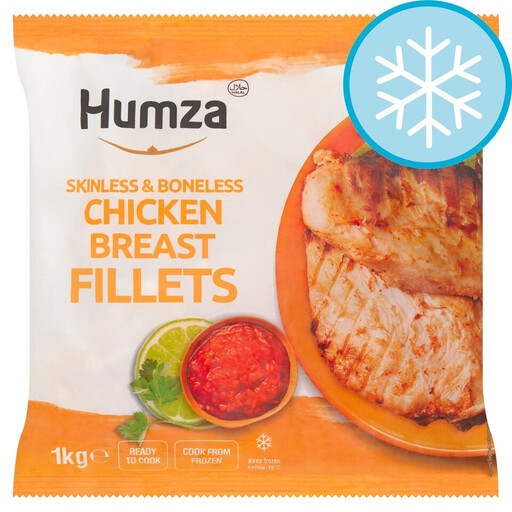 No image available
Skinless, boneless breast fillets suit meals where you want to choose the seasoning and cooking method. Check the current pack’s per-100g figures and account for your portion and cooking additions.
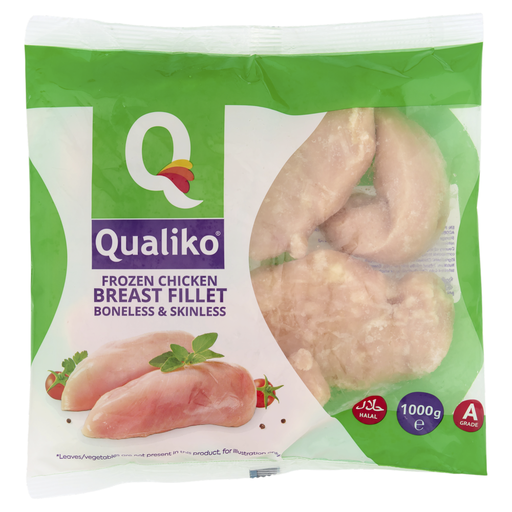 No image available
Another skinless, boneless breast-fillet option for comparing plain formats. Check the current ingredient list and per-100g nutrition, and follow the pack’s cooking directions.
 No image available
Strips offer a different cut for meals such as wraps or stir-fries. If skinless chicken is important to your choice, confirm that detail on the current pack, along with its nutrition and cooking directions.
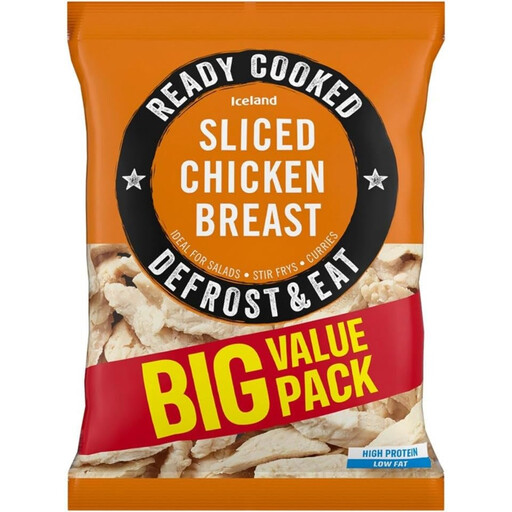 No image available
Pre-sliced breast may suit meals prepared in portions. Check the current pack for skinless status and per-100g nutrition, and follow its defrosting and cooking directions.
No. The coating and other ingredients matter: Waitrose declares 1.6g fat per 100g for its plain frozen breast fillets and 9.1g for its southern-fried breast mini fillets. Compare the exact products you are considering.
Compare total fat and saturates per 100g across similar frozen chicken products. Then check the ingredients, your portion and any oil or sauce you plan to add.
Not on its own. Check the actual nutrition declaration and the portion you intend to eat; a claim does not tell you how much fat the finished meal will contain.
Use your prescribed guidance and the exact product and portion figures rather than a general chicken recommendation. Oxford University Hospitals says its information on diets containing no more than 20g of fat a day is for people advised to follow one by a healthcare professional.