Solo cooks comparing fat content
If you want plain chicken as the basis of a meal, compare the fat figure per 100g before deciding how much to cook. A stated serving figure can then help you plan, but it may not match your portion.


If reducing fat is the priority for a meal for one, compare the finished products’ fat figures per 100g and start with plain frozen chicken breast rather than assuming a coated product has the same nutrition. Diced pieces or strips let you weigh out an amount; whole fillets offer a different format, but one fillet need not equal one meal portion. For example, Waitrose & Partners lists 1.6g fat per 100g for its plain frozen breast fillets and 9.9g per 100g for its Essential Frozen Chicken Steaks.
If you want plain chicken as the basis of a meal, compare the fat figure per 100g before deciding how much to cook. A stated serving figure can then help you plan, but it may not match your portion.
If you buy a larger pack, consider whether you can take out and weigh the amount you need while following its storage and thawing instructions. Diced pieces and fillets call for different portioning plans.
If a shaped or coated product suits your cooking routine, check its finished-product nutrition and ingredients. The words ‘chicken breast’ alone do not tell you its fat content.
Compare nutrition on the same per-100g basis, then choose a format you can portion and prepare according to its own pack instructions.
| Priority | What to check | Your needs |
|---|---|---|
| Fat content | Compare fat per 100g for the finished products, checking whether the figures describe the same prepared state. Read the ingredients as well as the product name: Waitrose & Partners lists 1.6g per 100g for its plain frozen breast fillets and 9.9g for its Essential Frozen Chicken Steaks. | I want to compare the chicken I will actually buy, rather than assume that every product containing breast meat has similar nutrition. |
| One-meal portions | Check pack size, piece size and any stated serving weight. Diced chicken or strips can be weighed; a whole fillet may need weighing too. Tesco gives a typical cooked portion of 72g for its Chicken Breast Fillet 1kg, not a serving rule for other products. | Some days I need a smaller amount, so I want to plan a meal without treating one fillet as a fixed portion. |
| Convenience format | Distinguish plain, coated and filled products. Check the nutrition and ingredient list for the exact item, rather than applying figures for plain breast to a shaped product. | A ready-shaped piece may suit my meal, but I still want its fat figure to fit what I am looking for. |
| Preparation | Follow the particular pack’s thawing, cooking and refreezing directions. Keep raw poultry and its utensils away from ready-to-eat food; the Food Standards Agency identifies thorough cooking as an important control for Campylobacter. | When cooking just one portion, I need a plan for preparing it and storing the rest without relying on instructions from another pack. |
Waitrose & Partners lists 9.9g fat per 100g for its Essential Frozen Chicken Steaks, which contain 58% chicken breast; its plain frozen breast fillets list 1.6g per 100g. The finished products are not interchangeable for a fat comparison.
Read the ingredient list and compare the finished products’ per-100g nutrition before choosing between plain and coated chicken.
Tesco’s typical cooked portion for its Chicken Breast Fillet 1kg is 72g. A portion figure on another pack may describe a different amount.
Use per-100g figures for product comparisons, then weigh the amount you intend to cook or use that product’s stated serving as a planning reference.
A pack can contain more chicken than one meal requires. M&S instructs buyers to cook its thawed Frozen Oakham Gold Diced Chicken Breast within 24 hours and not to refreeze it; Waitrose also says not to refreeze its frozen breast fillets after defrosting.
Check whether you can remove the amount you need while it is frozen. If you thaw the pack, plan around that product’s post-thaw instructions.
Freezing does not replace safe handling and thorough cooking of raw chicken. The Food Standards Agency identifies cooking as the most effective way to kill Campylobacter.
Do not wash raw chicken; keep it away from ready-to-eat food, clean hands and utensils after handling it, and follow its cooking instructions.
These product-line examples show why the exact format and label matter; a brand name alone does not establish a product’s fat content.
Frozen Oakham Gold Diced Chicken Breast is a 1kg pack of raw chicken pieces for recipes.
Its frozen range includes plain breast fillets and coated chicken steaks.
Its frozen chicken range includes breast fillets, diced breast and mini fillets.
Its frozen chicken range includes breaded and battered products, while Birds Eye describes its Chargrilled Chicken line as uncoated.
These strips, fillets, diced chicken and slices offer different ways to plan a single meal. Compare their stated fat per 100g, pack sizes and preparation directions before choosing a format.
 No image available
Strips give you pieces to weigh for a meal for one. The listed nutrition is 1.5g fat per 100g. Check the pack for whether the strips are raw or pre-cooked and follow its thawing and cooking directions; check whether the pieces can be separated while frozen before relying on that for portioning.
 No image available
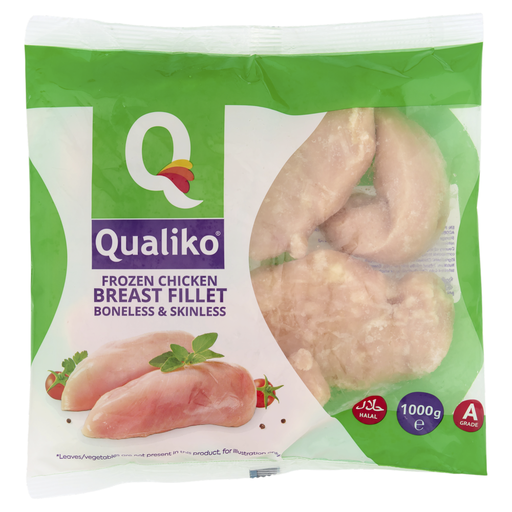
These whole fillets can be used intact or diced for a recipe, but weigh what you need rather than assuming one fillet is one portion. The listed nutrition is 1.2g fat per 100g. The product directions call for full refrigerator defrosting before cooking and say not to refreeze once defrosted.
 No image available
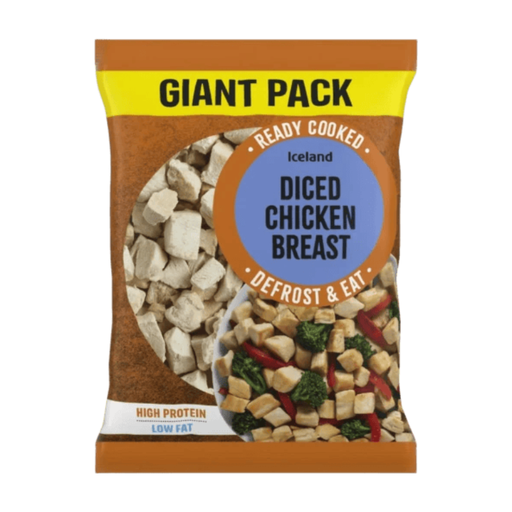
This pre-cooked diced chicken is a different preparation option from raw fillets, with 1.8g fat per 100g listed. For a meal for one, check whether you can separate a portion before defrosting the 2.1kg pack. Its directions call for refrigerator defrosting, thorough heating and no refreezing once defrosted.
 No image available
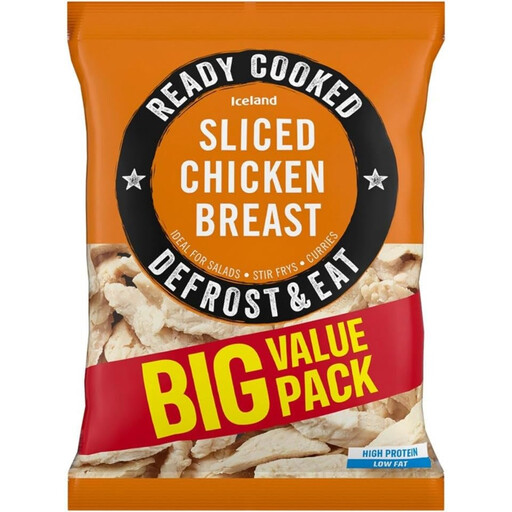
Slices can be weighed for a single recipe if the amount needed can be removed from the 2.1kg pack. The listed nutrition is 1.8g fat per 100g; check whether slices separate while frozen. This is raw chicken, and the listing calls for cooking to a core temperature of at least 75°C, using it within 24 hours after thawing and not refreezing it after thawing.
 No image available
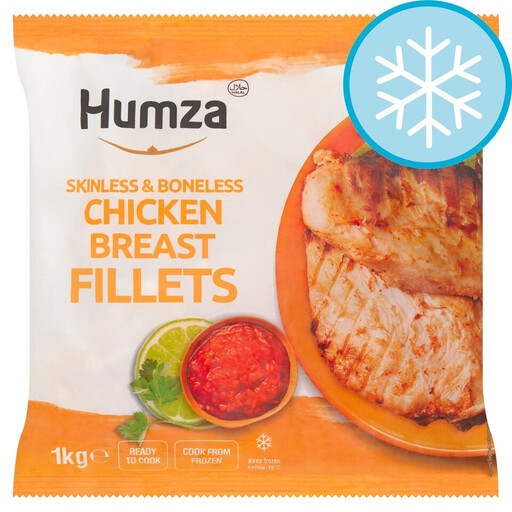
These fillets offer a whole-piece format; weigh the amount needed for one meal rather than assuming a fillet has a set serving weight. The listed nutrition is 1.9g fat per 100g. The directions call for cooking from frozen for 50–55 minutes; follow the current pack directions and check its ingredient label when comparing products.
Start with the finished products’ fat figures per 100g, checking that the labels describe the same prepared state; a lower figure for a stated portion may simply reflect a smaller portion. M&S lists 0.9g per 100g for Frozen Oakham Gold Diced Chicken Breast, while Waitrose & Partners lists 9.9g per 100g for its coated Essential Frozen Chicken Steaks.
Not necessarily: the amount in a fillet can vary, so weigh what you plan to cook. Tesco’s Chicken Breast Fillet 1kg listing gives a typical cooked portion of 72g, but that figure describes its own product rather than a universal serving size.
No. Tesco and Waitrose & Partners instruct shoppers not to wash their raw poultry products. Wash your hands after handling raw chicken and keep its utensils and surfaces separate from ready-to-eat food.
No. Freezing is not a substitute for thorough cooking. The Food Standards Agency identifies cooking as the most effective way to kill Campylobacter and reports that heating chicken all the way through to 70°C or more reduces the bacteria within minutes; follow the cooking directions for your product.
Check the instructions for the exact product. M&S says not to refreeze its Frozen Oakham Gold Diced Chicken Breast after thawing and to cook it within 24 hours; Waitrose & Partners also says not to refreeze its Frozen Chicken Breast Fillets once defrosted.