What should you check?
Choose the chicken format first, then check its nutrition, ingredients and cooking directions against the roast you plan to make.
| Priority |
What to check |
Your needs |
| Fat and saturates |
Compare fat and saturates per 100g, noting whether figures refer to the product as sold or cooked. The NHS identifies 1.5g saturates or less per 100g as a low value on food labels; this does not describe the whole roast dinner. |
I would rather add my own flavouring than start with a coating. I also want to compare packs on the same per-100g basis, not by differently sized servings. |
| Preparation time |
Look for an explicit oven-from-frozen method or a requirement to defrost. Tesco Groceries gives an oven-from-frozen method for its 1kg breast fillets, while Waitrose & Partners says to defrost its frozen breast fillets fully before use. |
If dinner is today, I need a pack whose instructions allow cooking from frozen. If I can plan ahead, a defrost-before-cooking pack remains an option. |
| Ingredients and salt |
Read the full ingredient list, allergen declaration and salt figure per 100g. Waitrose & Partners lists 0.13g salt per 100g for its plain frozen breast fillets and 0.94g for its Southern Fried Mini Fillets; Asda lists wheat as an allergen in its breaded breast fillets. |
Plain chicken may suit the recipe I have in mind, while added salt or a wheat-containing coating could change which pack I choose. |
| Handling and cooking |
Follow the exact pack’s storage, defrosting and cooking instructions. Keep raw chicken separate from ready-to-eat food, clean hands and equipment after handling it, and check that it is cooked thoroughly before serving. |
I need enough time and space to prepare raw chicken without mixing it with ready-to-eat roast components. |
Relevant brand references
These examples illustrate differences between specific frozen chicken products; a brand name alone does not establish a pack’s nutrition or cooking method.
M&S
M&S Frozen Oakham Gold British Chicken Breast Fillets are a plain-fillet example for a roast planned ahead of time.
- Marks & Spencer lists 1.2g fat and 0.4g saturates per 100g for this product.
- M&S instructs shoppers to defrost the fillets in a refrigerator before cooking; check the current pack when scheduling the roast.
Waitrose
Waitrose has both plain frozen breast fillets and coated mini fillets, which serve different meal plans.
- Waitrose & Partners lists 1.6g fat and 0.5g saturates per 100g for its plain frozen breast fillets.
- Those fillets must be fully defrosted before use. Its Southern Fried Mini Fillets list 9.1g fat per 100g, so check the exact product rather than the retailer name.
Sainsbury’s
Sainsbury’s British Skinless Chicken Fillets are plain frozen portions for a roast with time to defrost.
- Sainsbury’s lists 1.8g fat and 0.6g saturates per 100g oven cooked.
- Sainsbury’s says to defrost this product in a refrigerator overnight and cook it the same day; it is not suitable for cooking from frozen.
Tesco
Tesco Chicken Breast Fillet 1kg is a plain-fillet example with an oven-from-frozen method.
- Tesco Groceries specifies 50 minutes at 200°C, fan 180°C or gas 6 for cooking this product from frozen.
- Check the ingredients and the pack’s cooked-yield information if either matters to your recipe; do not assume frozen pack weight equals the cooked portion.
Asda
Asda’s plain frozen breast fillets and breaded breast fillets illustrate why format matters when comparing a roast ingredient.
- ASDA Groceries lists 3.5g fat and 1.3g saturates per 100g oven baked for its plain 600g fillets.
- Its breaded breast fillets list 8.3g fat per 100g oven baked and contain wheat. Check which product and cooking method the figures describe.
Birds Eye
Birds Eye describes a frozen chicken range that includes breaded and battered products, dippers and nuggets.
- A coated or formed product may suit a meal where that format is wanted.
- Tesco Groceries describes Birds Eye Original Chicken Breast Steaks as formed from chopped, marinated breast, then lightly fried, seared and glazed. Check the finished product’s ingredients and nutrition rather than treating a chicken-breast claim as a description of a plain fillet.
Joybuy chicken options
These Joybuy options include whole breast fillets for a roast centrepiece and smaller sliced or strip formats that could be used alongside roast dinner sides. Check each pack’s preparation instructions before deciding how it fits your meal.
 No image available
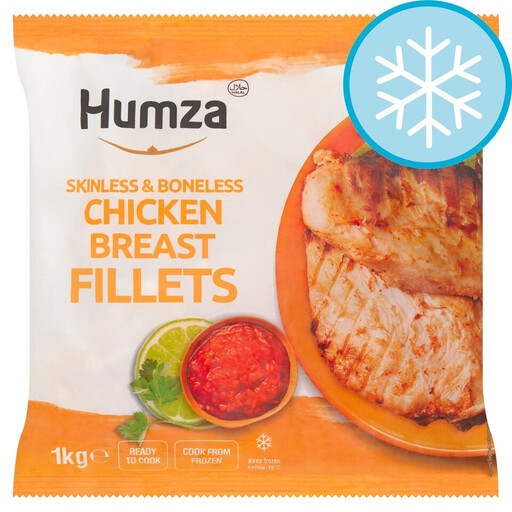
Humza Skinless & Boneless Chicken Breast Fillets 1kg
Whole breast fillets suit a roast built around chicken portions. Plan to defrost them thoroughly in the refrigerator before cooking, and follow the current pack directions.
View on Joybuy
 No image available
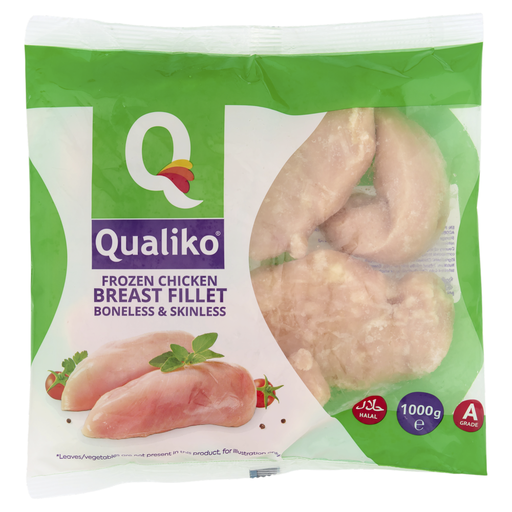
Qualiko Frozen Boneless & Skinless Chicken Breast Fillet 1kg
Breast fillets offer a whole-portion format for the roast, with oven-from-frozen directions described for this product. Check the current pack’s ingredient list before relying on a 100% chicken-breast description: the supplied detailed ingredient information also names water, dextrose and salt.
View on Joybuy
 No image available
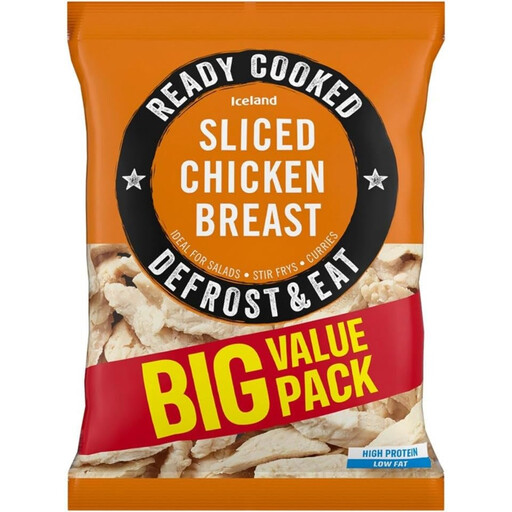
Iceland Sliced Chicken Breasts 2.1kg
Sliced breasts are a smaller-cut option to consider alongside roast dinner sides rather than as whole fillets. Check the current pack for a suitable cooking method and whether cooking from frozen is permitted.
View on Joybuy
 No image available
Morrisons Chicken Breast Strips 500g
Strips may fit a meal using smaller pieces of chicken, but they are not whole roast fillets. Check the current pack for cooking directions, suitability for cooking from frozen and the ingredient list if added ingredients matter to you.
View on Joybuy
Frequently asked questions
Should I choose plain or coated frozen chicken for a lower-fat roast?
Start by comparing plain, skinless breast fillets with the coated products you are considering. Waitrose & Partners lists 1.6g fat per 100g for its plain frozen fillets and 9.1g per 100g for its Southern Fried Mini Fillets, but check each exact pack’s fat, saturates and salt figures rather than assuming every product follows that pattern.
Can every frozen chicken breast fillet go straight into the oven?
No. Tesco Groceries gives oven-from-frozen directions for its 1kg breast fillets, while Sainsbury’s says its British Skinless Chicken Fillets are not suitable for cooking from frozen and Waitrose & Partners says to defrost its frozen breast fillets fully. Follow the instructions on the exact pack.
How should I handle raw frozen chicken for a roast?
Follow the pack’s storage, defrosting and cooking instructions. Do not wash raw chicken; keep it and the equipment used for it separate from ready-to-eat food, wash hands after handling it, and check that it is thoroughly cooked before serving.
Does “made with 100% chicken breast” mean the whole product is plain chicken?
Not necessarily. The phrase can describe the meat used without describing every ingredient in the finished product. Tesco Groceries describes Birds Eye Original Chicken Breast Steaks as formed from chopped, marinated breast and then lightly fried, seared and glazed; read the full ingredient list and nutrition table when comparing them with plain fillets.


