Christmas hosts planning a chicken main
If chicken is replacing or supplementing a roast, plain skinless fillets give you a base for a pie, curry or buffet dish while leaving the choice of coating, sauce and cooking fat to you.


For a Christmas meal where lower fat is the priority, start by comparing plain, skinless frozen chicken with coated options. Tesco Groceries, Sainsbury's and ASDA Groceries list 1.5g–2.6g fat per 100g after cooking for three plain products, against 8.3g per 100g oven-baked for one ASDA breaded product; those examples do not establish the values for every pack. Check salt and cooking instructions too, particularly if you need to cook from frozen.
If chicken is replacing or supplementing a roast, plain skinless fillets give you a base for a pie, curry or buffet dish while leaving the choice of coating, sauce and cooking fat to you.
Fillets and smaller cuts can be divided between dishes such as casseroles, fajitas and skewers. Choose a cut and pack size that fit the portions you plan to make, then check how it must be defrosted and cooked.
A chicken-breast description does not tell you the fat content of a coated product. Compare nutrition per 100g and check ingredients and allergens when considering breaded chicken for a buffet or snack.
Choose the format for your dish, compare the nutrition figures on a consistent per-100g basis, then check whether the preparation directions fit your Christmas cooking schedule.
| Priority | What to check | Your needs |
|---|---|---|
| Total fat and coating | Compare fat per 100g, checking whether each figure is for chicken as sold or after cooking. Check whether the product is plain, breaded or battered; a breast-meat description alone does not settle the comparison. | I want a plain base for a Christmas main, or I am deciding whether a coated option fits a separate buffet dish. |
| Salt and ingredients | Read salt per 100g alongside fat. Check the ingredient list for added water, seasoning and coating, and use traffic-light labels where the pack provides them. | If the meal also includes gravy, stuffing or other seasoned foods, I want to compare the chicken's salt figure rather than choosing on fat alone. |
| Cut and pack size | Check whether the pack contains whole fillets, mini fillets, slices or strips, and whether its size suits the dishes and freezer space you have planned. | A whole fillet suits one presentation; smaller pieces may be easier to divide between a curry, skewers or individual portions. |
| Preparation time | Follow the exact pack's cook-from-frozen or refrigerator-defrosting directions. Do not use another product's time or method for a different cut. | I need to know whether the chicken can go into the oven from frozen or needs space and time to defrost before Christmas cooking begins. |
| Raw-poultry handling | Keep raw chicken and its utensils separate from ready-to-eat food, and cook according to the pack directions. The Food Standards Agency identifies thorough cooking as an important control for Campylobacter in chicken. | When preparing food for guests, I need a plan for handling raw chicken without contaminating foods that will not be cooked again. |
Coating can change the comparison. Sainsbury's and Tesco Groceries list 1.5g–2.6g fat per 100g after cooking across three plain examples, while ASDA Groceries lists 8.3g per 100g oven-baked for one breaded example.
Compare the figures on the packs you are considering, including their cooked or as-sold basis, before choosing a coated product for a lower-fat meal.
Sainsbury's lists 0.7g salt per 100g oven-baked for Taste Inc. mini fillets and 0.13g per 100g oven-cooked for its own-label British skinless fillets. A lower listed fat figure does not settle the salt comparison.
Read both values per 100g when comparing the particular packs you might serve.
Preparation directions differ. ASDA Groceries provides cook-from-frozen directions for its plain breast fillets, while Sainsbury's says its British skinless fillets must be defrosted in a refrigerator before cooking.
Check the directions before planning the meal, especially if refrigerator space or preparation time is limited.
Frozen raw chicken still needs thorough cooking. The Food Standards Agency identifies cooking as the most effective way to kill Campylobacter in chicken.
Follow the pack's cooking directions and keep raw poultry, hands and utensils away from ready-to-eat Christmas food.
These examples show why the exact product label matters: cuts, coatings, salt values and preparation directions differ within the frozen-chicken category.
Tesco Chicken Breast Fillet 1Kg is a plain, skinless frozen option for dishes you season yourself.
Sainsbury's British Skinless Chicken Fillets 1kg offer a plain whole-fillet format.
ASDA's plain breast fillets and breaded breast fillets illustrate how the chosen format changes the nutrition comparison.
Taste Inc. Skinless Chicken Fillets 1kg are mini fillets that can be divided between smaller dishes.
Sainsbury's lists Birds Eye battered chicken breast steaks and crispy chicken grills among its coated chicken products.
These frozen breast fillets, slices and strips are options for meals where you want to add your own seasoning. Compare the current pack labels before treating their fat figures as directly comparable: the nutrition basis matters, as do each product's defrosting and cooking directions.
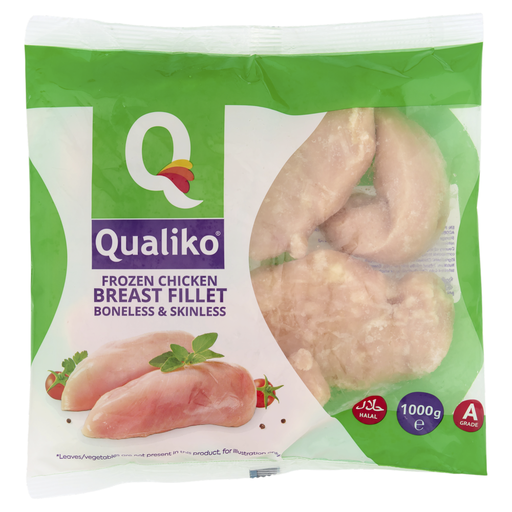 Image unavailable
A 1kg pack of plain frozen fillets for a chicken main or dishes you season yourself. Check the current pack's ingredient statement, nutrition basis and cook-from-frozen directions when planning your meal.
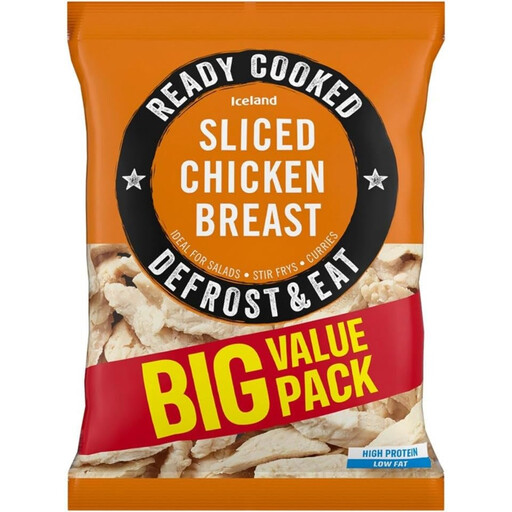 Image unavailable
The 2.1kg sliced format suits dishes that call for smaller chicken pieces or several batches. Allow for the stated refrigerator defrosting requirement, and check the pack's nutrition basis before comparing fat figures.
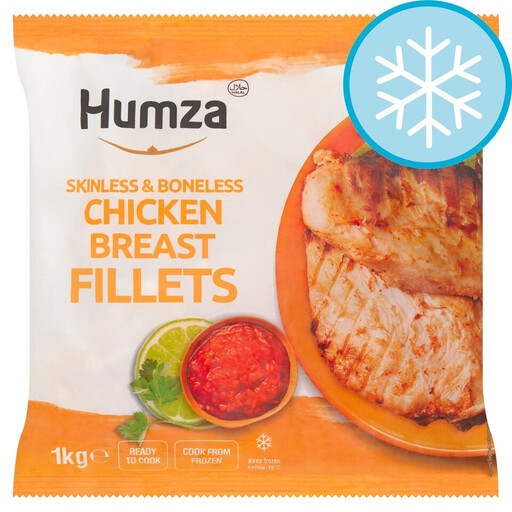 Image unavailable
These plain 1kg fillets provide a breast-meat format for a curry, stir-fry or other Christmas dish. Plan for refrigerator defrosting as directed, and confirm the nutrition basis on the pack when comparing products.
 Image unavailable
The 500g strip format offers pre-cut chicken for dishes such as wraps or stir-fries. Check the pack's cooking and defrosting directions before fitting it into your meal plan, and use its stated nutrition basis for any fat comparison.
Compare total fat per 100g and check whether the figures describe the product as sold or after cooking. The NHS describes foods with 3g fat or less per 100g as low in fat; retailer listings for three plain frozen chicken examples give 1.5g–2.6g per 100g after cooking, while one ASDA breaded example gives 8.3g per 100g oven-baked. Check the exact packs rather than applying those figures to other products.
No. Comparing the fat figures of two packs does not establish that either product makes a regulated 'reduced fat' claim. GOV.UK says nutrition claims must follow specific rules, so read the wording on the actual pack and use its per-100g nutrition panel for your comparison.
Only when the exact product's directions permit it. ASDA Groceries provides cook-from-frozen directions for its plain 1.2kg fillets, whereas Sainsbury's says its British Skinless Chicken Fillets must be defrosted in a refrigerator before cooking.
Keep raw chicken separate from ready-to-eat food, wash your hands and utensils after handling it, and follow the pack's cooking directions. The Food Standards Agency identifies thorough cooking as the most effective way to kill Campylobacter in chicken.
Follow the instructions on the exact pack rather than assuming products have the same directions. ASDA Groceries says not to refreeze its plain breast fillets once defrosted; plan which portions you need before thawing that product.