Breakfast planners comparing fat
If chicken is going into a wrap or a breakfast plate, compare total fat and saturates per 100g rather than relying on the word “chicken” or the front of the pack.


For a weekend breakfast where lower fat is the priority, start with plain, skinless chicken breast or fillets and compare total fat and saturates per 100g on the exact pack. Sainsbury's oven-cooked breast fillets list 1.8g fat per 100g and Taste Inc. oven-baked fillets list 1.5g; Waitrose southern-fried mini fillets list 9.1g, though the stated nutrition bases are not necessarily identical. Check whether your chosen product can be cooked from frozen or needs defrosting, and cook raw chicken thoroughly.
If chicken is going into a wrap or a breakfast plate, compare total fat and saturates per 100g rather than relying on the word “chicken” or the front of the pack.
If there is no time to defrost chicken overnight, look for instructions that explicitly permit cooking the exact product from frozen.
Allow for the handling and cooking steps as well as the breakfast recipe: keep raw poultry away from ready-to-eat food and cook it thoroughly.
Choose a format that fits your preparation time, then compare the nutrition panels on the same per-100g basis and note whether the figures describe the product as sold or cooked.
| Priority | What to check | Your needs |
|---|---|---|
| Fat and saturates | Read both values per 100g on the exact pack. The NHS food-label guide uses 3g fat or less and 1.5g saturates or less per 100g as its low-level guides. Check plain and coated products separately. | I want to compare chicken for a lower-fat breakfast without assuming every frozen format has the same nutrition. |
| Label basis and ingredients | Check whether nutrition is given for the product as sold or after cooking, and compare salt per 100g alongside fat. Read the ingredients list even for uncoated fillets. | A fat figure is useful to me only if I understand what it measures; I also want to see whether water, seasoning ingredients or salt have been added. |
| Preparation time | Follow the exact pack's cook-from-frozen or defrost-before-cooking instruction. Sainsbury's and Waitrose plain breast examples require defrosting; Taste Inc. fillets give oven cook-from-frozen instructions. | For an unplanned breakfast, I need a product whose instructions allow cooking from frozen. If I can plan ahead, defrost-only fillets remain an option. |
| Raw-poultry handling | Do not wash raw chicken; keep it and its utensils away from ready-to-eat food. Follow the pack's preparation instructions and cook the chicken thoroughly. | I need a breakfast plan that leaves time to handle and cook raw chicken safely, not just assemble the other ingredients. |
Waitrose southern-fried mini fillets list 9.1g fat per 100g. The cited plain Sainsbury's and Taste Inc. fillets list 1.8g and 1.5g respectively per 100g on their stated oven-cooked bases.
Compare total fat and saturates on the packs before choosing a coated product for a lower-fat breakfast.
Taste Inc. fillets list 0.7g salt per 100g and include added water, dried glucose syrup and salt. The cited Sainsbury's and Waitrose plain breast products each list 0.13g salt per 100g.
Read salt values and ingredients as well as fat, keeping differences in the stated nutrition basis in mind.
The cited Sainsbury's and Waitrose breast fillets need defrosting before cooking, whereas Taste Inc. fillets have oven cook-from-frozen instructions.
If you cannot defrost ahead, choose a product whose own pack expressly permits cooking from frozen.
Frozen raw chicken still needs thorough cooking. The Food Standards Agency reports that heating chicken all the way through to 70°C or more reduces Campylobacter within minutes.
Follow the pack, avoid washing raw poultry and keep its juices and utensils away from ready-to-eat food.
These examples show why the exact product label and cooking instructions matter more than the retailer or brand name alone.
Its British skinless chicken breast fillets are a plain frozen option for a breakfast planned in advance.
Its frozen skinless chicken fillets offer an oven cook-from-frozen option.
The frozen range includes plain breast fillets and southern-fried mini fillets with different preparation instructions and nutrition panels.
The Marks & Spencer frozen range includes Oakham Gold chicken breast fillets, mini fillets and diced breast, as well as coated formats.
Its frozen chicken-breast range includes fillets, mini fillets and diced formats alongside coated products.
These frozen chicken breast formats can be considered for a breakfast wrap or plate; check each pack's nutrition basis, ingredients and cooking directions before choosing between them.
 No image available
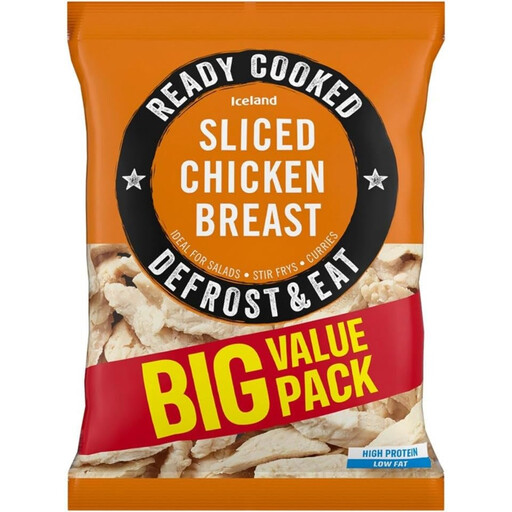
The sliced breast format could be used in a breakfast wrap. Check the current pack for its cooking instructions and whether the per-100g nutrition describes the chicken as sold or after cooking.
 No image available
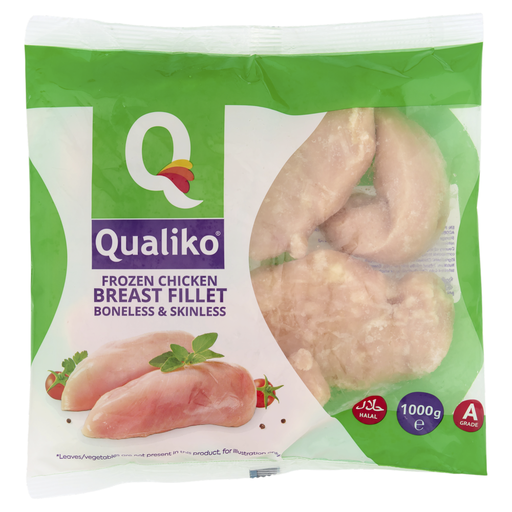
The stated instructions allow oven cooking from frozen, which matters if breakfast was not planned the night before. Check the current pack's ingredients and nutrition basis before comparing it with other fillets.
 No image available
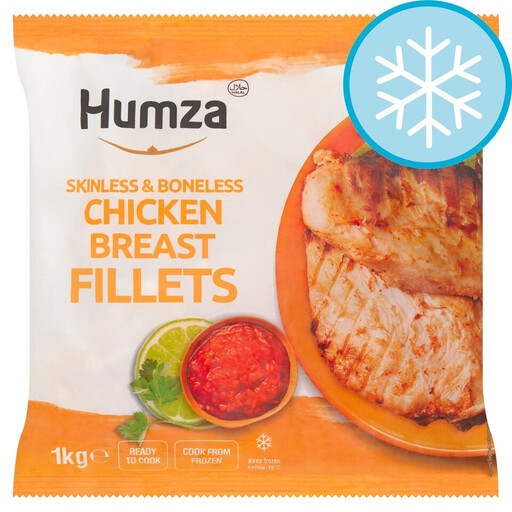
These fillets suit a breakfast planned far enough ahead for full defrosting before cooking. Check the current pack's ingredients and the basis of its per-100g nutrition when comparing products.
 No image available
The strip format could go into a breakfast wrap. Follow the cooking directions on the current pack and check its nutrition basis before comparing its per-100g figures with other products.
Start with total fat and saturates per 100g, and note whether the figures describe the food as sold or cooked. The NHS food-label guide uses 3g fat or less per 100g and 1.5g saturates or less per 100g as its low-level guides; check the exact product rather than assuming all frozen chicken has similar values.
Do not assume so. Waitrose southern-fried mini fillets list 9.1g fat per 100g, while the cited Sainsbury's and Taste Inc. plain fillets list 1.8g and 1.5g respectively per 100g on their stated oven-cooked bases. Compare the packs and their nutrition bases before deciding.
Only if the exact pack instructs you to do so. Taste Inc. fillets give oven cook-from-frozen instructions, whereas the cited Sainsbury's and Waitrose plain breast fillets require defrosting before cooking.
Follow the pack's defrosting and cooking instructions, do not wash raw poultry, and keep it away from ready-to-eat food and their utensils. Cook the chicken thoroughly: the Food Standards Agency reports that heating it all the way through to 70°C or more reduces Campylobacter within minutes.