Households planning keto-oriented meals
If you use chicken across several meals, check the carbohydrate declaration and ingredients alongside the pack size. A plain fillet and a coated chicken product need not have similar carbohydrate values.


For keto-oriented family meals, start with plain, unbreaded frozen chicken breast fillets and compare the carbohydrate declaration and ingredients per 100g. Then check whether the pack provides enough portions and whether its instructions fit your schedule: some fillets require defrosting, while others have directions for cooking from frozen.
If you use chicken across several meals, check the carbohydrate declaration and ingredients alongside the pack size. A plain fillet and a coated chicken product need not have similar carbohydrate values.
Check the exact pack instructions before relying on a freezer-to-oven meal. Tesco and Asda give from-frozen oven directions for their 1kg fillets; the Sainsbury's, Waitrose and M&S examples require defrosting first.
If sourcing matters to you, read the claim on the particular pack as well as its nutrition label. Sainsbury's, Waitrose and M&S identify British chicken in the products discussed here; sourcing does not establish the pack's carbohydrate content or cooking route.
Start with the food inside the pack, then check how many portions it will make and how it must be prepared.
| Priority | What to check | Your needs |
|---|---|---|
| Carbohydrate | Read carbohydrate per 100g and the stated portion size. Check whether the figures describe raw or cooked chicken before comparing packs. The NHS explains that pre-packed food labels give carbohydrate values per 100g. | I want to account for the chicken's carbohydrate contribution across several meals, rather than assume every frozen chicken product is the same. |
| Ingredients | Look for coatings and read the full ingredient list. Waitrose lists chicken breast fillet as the ingredient in its plain frozen fillets; Tesco and Asda list water and dextrose in theirs. | A short ingredient list matters to me, or I need to check whether a coating changes the product I am buying. |
| Portions | Check the net pack weight against any serving or cooked-yield statement. Asda suggests eight servings for its 1kg fillets; Tesco says its 1kg pack typically weighs 720g when cooked. | Will this pack cover the meals I have planned? The frozen weight alone does not tell me how much cooked chicken to expect. |
| Preparation | Check whether the particular product permits cooking from frozen or requires refrigerator defrosting. Follow its cooking instructions, and keep raw chicken separate from ready-to-eat food; the Food Standards Agency identifies Campylobacter and Salmonella as concerns with raw chicken. | Some days I need a pack I can cook from frozen; on others, I can plan ahead to defrost it safely. |
Coating changes the comparison. Waitrose lists wheat flour and 19.7g carbohydrate per 100g for its frozen goujons, whereas the plain breast-fillet products discussed here declare no more than 1.0g per 100g on their respective stated nutrition bases.
Check the carbohydrate line and ingredients on the pack, particularly when choosing breaded or battered chicken.
Sainsbury's states its values per 100g oven-cooked, while Tesco states values per 100g cooked according to its instructions. A figure without its preparation basis can give a misleading pack-to-pack comparison.
Read whether each label describes raw or cooked chicken, and compare like with like where possible.
Tesco says its 1kg pack typically weighs 720g when cooked. Asda instead gives a suggested eight servings for its 1kg pack; the two statements describe different measures.
Use the serving or yield information for the pack you are considering when planning household meals.
The preparation route differs between products: Tesco and Asda give from-frozen oven instructions for their listed fillets, while Sainsbury's, Waitrose and M&S require defrosting before cooking.
Choose a pack with instructions that fit your schedule, and do not apply another product's cooking directions to it.
These details concern particular frozen chicken products, not every item sold under each name.
Its Frozen Oakham Gold British Chicken Breast Fillets come in a 1kg pack.
Its frozen British chicken breast fillets are a plain-fillets option.
Its British Skinless Chicken Fillets are sold as a 1kg frozen pack.
Its 1kg Chicken Breast Fillet pack has oven-from-frozen instructions.
Its 1kg Chicken Breast Fillets have from-frozen oven instructions and a suggested serving count.
These options include two 1kg chicken breast fillet packs and a larger 2.1kg sliced-breast pack. Check each product's current label for ingredients, portions and preparation instructions before fitting it into your meal plan.
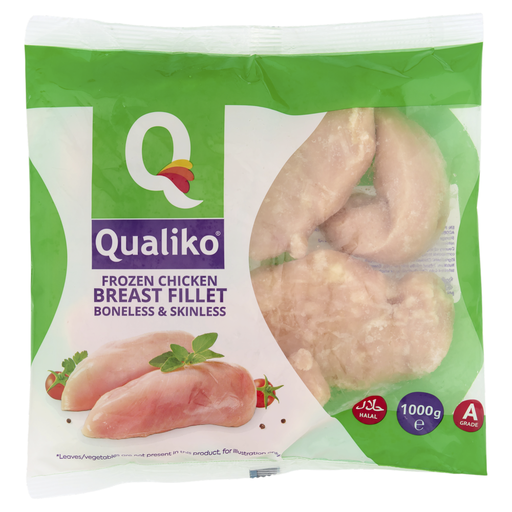 No image available
The 1kg pack is an option for planning several chicken meals. Check the physical pack's ingredient list before choosing it: the supplied product descriptions differ on the chicken content. Also confirm the nutrition basis, portions and cooking instructions for the pack you receive.
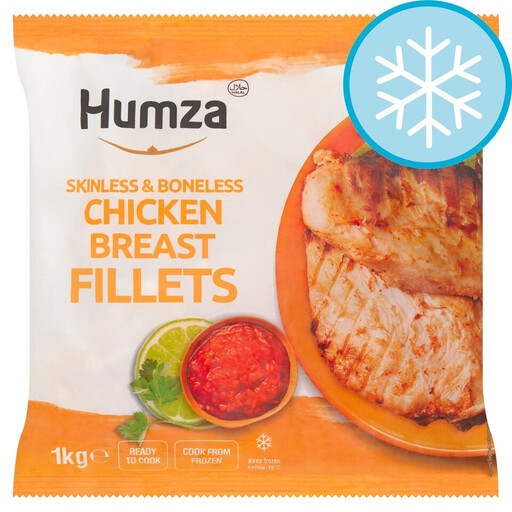 No image available
Consider this 1kg pack when you can plan for refrigerator defrosting before cooking, rather than relying on a from-frozen route. Check the pack's carbohydrate declaration and whether it describes raw or cooked chicken, then work out the portions needed for your household.
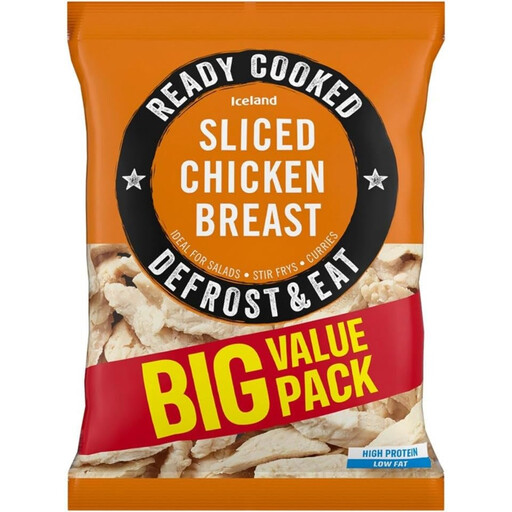 No image available
The 2.1kg sliced-breast pack is worth considering if you plan several batches and have room to store it. Check how many portions it will provide, the basis of its carbohydrate declaration and its specific cooking directions. Handle it as raw poultry and cook it thoroughly according to the pack.
They can fit a meal planned around a limited carbohydrate intake, but check the particular pack and the rest of the meal. The Tesco, Sainsbury's, Asda, Waitrose and M&S plain-fillets examples declare between less than 0.1g and 1.0g carbohydrate per 100g on their respective stated nutrition bases. HEART UK describes a ketogenic diet as very low in carbohydrate; a chicken label alone cannot establish how a whole meal or diet fits that description.
Not when you are comparing carbohydrate declarations. Waitrose lists wheat flour and 19.7g carbohydrate per 100g for its frozen goujons, while the plain-fillets examples here declare no more than 1.0g per 100g on their respective stated bases. Read the ingredients and nutrition label for the product you intend to buy.
Check carbohydrate per 100g, ingredients, pack weight, any stated servings or cooked yield, and the cooking instructions. Note whether nutrition values refer to raw or cooked chicken before comparing products. The NHS says pre-packed food nutrition labels give values per 100g, with some also giving values per portion.
No. Tesco and Asda give from-frozen oven instructions for the 1kg products discussed here, while the Sainsbury's, Waitrose and M&S examples require defrosting first. Follow the directions on the exact pack you are cooking.
Keep raw chicken separate from ready-to-eat food, avoid washing it, clean hands and equipment after handling it, and cook it thoroughly according to the pack. The Food Standards Agency identifies Campylobacter and Salmonella as pathogens of concern in raw chicken and stresses careful hygiene before cooking.