Hosts making chicken the main course
Plain fillets, thighs or other uncoated cuts leave room for your own seasoning and sides. Choose a cut that fits the recipe, then check its origin, ingredients and defrosting instructions.


For a Father’s Day meal built around chicken you season yourself, choose a plain cut and check its origin, ingredients and any stated welfare credentials. Coated chicken suits a more casual sharing spread, but its chicken content, allergens and cooking method need separate checks. Whichever format you choose, follow the instructions on the pack you buy.
Plain fillets, thighs or other uncoated cuts leave room for your own seasoning and sides. Choose a cut that fits the recipe, then check its origin, ingredients and defrosting instructions.
Look for a claim attached to the particular product, rather than relying on “premium” wording. Waitrose describes its frozen chicken as meeting Better Chicken Commitment standards; M&S describes its Oakham Gold frozen chicken as coming from RSPCA Assured M&S Select Farms.
Coated strips or burgers may fit a spread with sides and dips. Check the finished product’s chicken percentage, allergen declaration and cooking directions rather than treating it as equivalent to a plain cut.
Settle on the meal format first, then compare the pack details that affect preparation and what you can serve to guests.
| Priority | What to check | Your needs |
|---|---|---|
| Cut and format | Check whether the pack contains plain cuts or a coated, seasoned product. Match the cut and pack size to the dish you plan to make. | I want to add my own seasoning for a chicken main course. For a casual sharing plate, I might choose coated pieces instead. |
| Origin and welfare claims | Read the origin statement for the specific pack. If welfare credentials matter, check exactly which product carries the stated standard or farm assurance. | British origin or a stated welfare scheme matters to me, so I will check the particular product rather than assume every pack in a retailer’s range is alike. |
| Ingredients and allergens | Compare the ingredient list and, for coated chicken, the chicken percentage of the finished product. Read the current allergen declaration before serving guests: Birds Eye lists its Buttermilk Chicken Strips as 56% chicken breast and declares wheat, milk and barley. | I need to know whether I am serving plain chicken or a coated product, especially if someone at the table needs to avoid an ingredient. |
| Preparation time | Check whether the exact pack requires refrigerator defrosting or gives oven-from-frozen directions. Waitrose and Sainsbury’s specify defrosting for their listed fillets; Tesco and Asda give from-frozen oven directions for theirs. | If I cannot plan for thawing, I need a product whose own instructions allow cooking from frozen. |
| Handling and cooking | Keep raw chicken separate from ready-to-eat food and follow the pack’s cooking instructions. Check that the chicken is thoroughly cooked before serving. | When guests are eating, I want enough time and kitchen space to handle raw poultry separately and cook every portion as directed. |
Tesco lists its 1kg frozen breast portions as 90% chicken breast with added water; Asda lists its 1kg fillets as 87% chicken breast with added water. The retailers also give different origin and preparation information.
Compare ingredient lists, origin statements and cooking directions pack by pack, not just the weight on the front.
Birds Eye says the chicken used in its Buttermilk Chicken Strips is breast meat, while its ingredient list puts chicken breast at 56% of the finished coated product.
If chicken content matters to your dish, use the finished product’s ingredient declaration when comparing coated strips with plain fillets.
The listed Waitrose and Sainsbury’s fillets need defrosting before cooking. Tesco and Asda give from-frozen oven directions for their listed fillets, as Birds Eye does for its Buttermilk Chicken Strips.
Check the cooking route before buying; if the pack requires thawing, allow the refrigerator-defrost time it specifies.
Coated chicken can introduce allergens that are not part of a plain chicken cut. Raw poultry also needs to be kept separate from ready-to-eat food during preparation.
Ask guests about ingredients they need to avoid, read the current pack label, and use separate utensils and surfaces for raw chicken.
These details concern particular frozen chicken products and ranges; check the label of the pack you choose.
M&S lists frozen Oakham Gold British chicken breast fillets, mini fillets, diced breast and thighs for home-cooked meals.
Waitrose lists British frozen breast fillets for a plain-chicken recipe.
Its Chicken Shop Buttermilk Chicken Strips offer a coated option for an informal sharing meal.
Tesco’s listed 1kg frozen breast portions provide a plain-cut format for a recipe you season yourself.
Sainsbury’s lists frozen British skinless and boneless chicken breast fillet portions for a planned meal.
Asda’s listed 1kg frozen breast fillets are another plain-cut option to compare by ingredients and cooking route.
These options include plain cuts for a meal you prepare yourself and a coated fillet for a casual sharing spread. Compare each product’s preparation directions and current pack label before choosing.
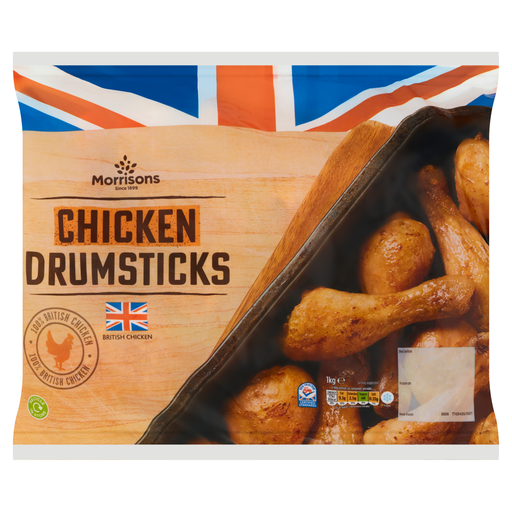 Image unavailable
A plain drumstick cut for a chicken main. The pieces contain bones and need refrigerator defrosting before cooking; check the pack for its instructions and any welfare claim important to you.
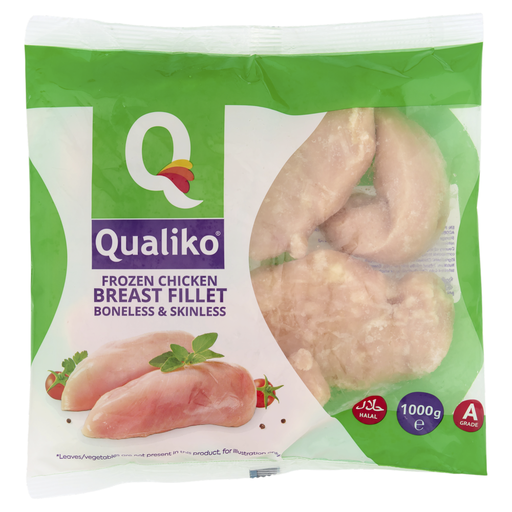 Image unavailable
A breast-fillet option for a chicken main with a stated from-frozen oven route. Check the current ingredients, origin and cooking directions if those details affect your choice.
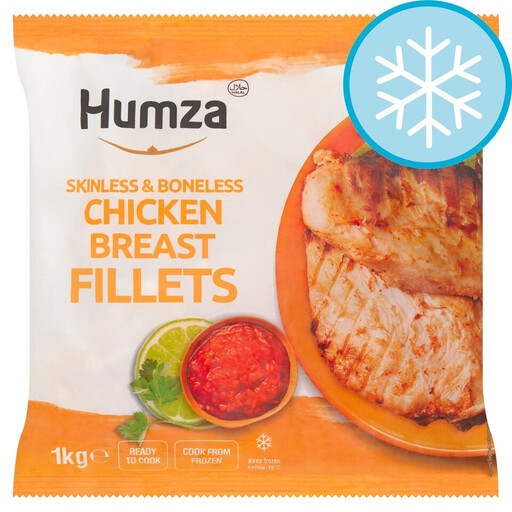 Image unavailable
Plain breast fillets for a meal planned ahead: they require thorough defrosting before cooking and must not be refrozen after thawing. Confirm ingredients and allergens on the current pack.
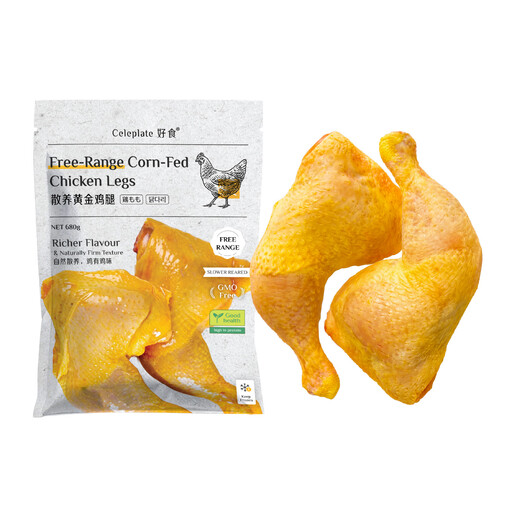 Image unavailable
Chicken legs for a planned main meal; allow for refrigerator defrosting. “Free-Range” is part of the product name, so check the current pack for the specific sourcing claim and cooking instructions if they matter to you.
 Image unavailable
A seasoned, coated fillet for an informal sharing meal rather than an uncoated chicken recipe. The listed allergens include wheat, barley and egg; check the current pack and its from-frozen cooking directions before serving.
Choose plain cuts if you want to season the chicken and build the main course around it; choose coated pieces if the plan is an informal sharing spread. For either route, check the specific pack’s ingredients, preparation method and any origin or welfare claim that matters to you.
Only when that product’s instructions allow it. Tesco and Asda give oven-from-frozen directions for their listed fillets, while the listed Waitrose and Sainsbury’s fillets require defrosting first. Use the timings and method on the pack you buy.
Follow the pack and defrost in the refrigerator where possible. The Food Standards Agency recommends refrigerator defrosting where possible; Sainsbury’s directs shoppers to thaw its listed fillets overnight in a refrigerator and cook them on the same day.
Yes. Birds Eye lists wheat, milk and barley for its Buttermilk Chicken Strips, whereas its listed Waitrose comparison is a plain breast fillet. Check the current label of the product you intend to serve, particularly when guests need to avoid specific ingredients.
Follow the cooking instructions for the exact product and check that it is piping hot throughout. If using a probe thermometer, the Food Standards Agency gives 70°C for 2 minutes as an example HACCP critical limit for chicken pieces; both the temperature and time are part of that example.