Weekly shoppers comparing fat content
If you are stocking the freezer for several meals, compare total fat and saturates per 100g. A reduced-fat claim alone will not tell you whether a pack meets the low-fat reference described by the NHS.


For a weekly shop, plain frozen chicken breast is a useful starting point when you want to compare fat content across several meals, but check each pack rather than relying on its format. Business Companion’s UK Trading Standards guidance says a ‘reduced fat’ claim compares a food with a similar product; it does not mean the food meets the NHS reference of no more than 3g fat per 100g for ‘low fat’. Compare the finished product’s total fat and saturates per 100g, particularly if it has a coating or added ingredients.
If you are stocking the freezer for several meals, compare total fat and saturates per 100g. A reduced-fat claim alone will not tell you whether a pack meets the low-fat reference described by the NHS.
Coated or flavoured products can simplify a busy dinner, but chicken-breast wording does not describe the nutrition of the whole product. Check its ingredients and per-100g figures before comparing it with plain chicken.
Plain fillets or diced breast can be used across different recipes, with seasoning and sauces added during preparation. Allow for the pack’s defrosting and cooking directions when planning those meals.
Start with the per-100g nutrition table, then check ingredients, pack size and preparation directions for the meals you intend to make.
| Priority | What to check | Your needs |
|---|---|---|
| Label claims | Read the actual grams of fat per 100g. Business Companion’s UK Trading Standards guidance says ‘reduced fat’ means at least 30% less fat than a similar product; NHS guidance describes 3g fat or less per 100g as low for food. | I want to know the pack’s fat content, not just how it compares with another chicken product. |
| Fat and saturates | Compare finished products on the same per-100g basis. The NHS describes 1.5g saturates or less per 100g as low; serving figures can then help with meal planning. | When choosing between packs, I need figures I can compare even if their suggested portions differ. |
| Coatings and ingredients | Check the chicken percentage, coating ingredients and nutrition table. Birds Eye lists chicken breast at 50% in its Crispy Chicken Breasts in Tempura Batter; its ‘100% chicken breast’ wording describes the meat used, not the whole product. | A coated option may suit a busy dinner, but I do not want its chicken-breast wording to stand in for a check of the finished food. |
| Preparation | Check whether the chicken is raw or cooked and follow that pack’s defrosting, storage and heating or cooking directions. Waitrose and M&S listings for plain frozen breast products both specify thorough defrosting and no refreezing after thawing. | I need to fit preparation safely around the meals planned for the week. |
| Weekly quantity | Use pack weight and serving information to plan how much you will use. Keep the per-100g figures as the basis for comparing different products. | For several meals, I want enough chicken without confusing pack size or a suggested serving with its fat content. |
A relative reduction can still leave a product above the low-fat reference. Business Companion’s UK Trading Standards guidance defines the reduction against a similar food, while the NHS uses 3g fat or less per 100g as its low-fat reference.
Check total fat per 100g on the pack before choosing it for your weekly meals.
For Birds Eye Crispy Chicken Breasts in Tempura Batter, Birds Eye lists chicken breast at 50% of the finished product and includes oils among the batter ingredients.
For coated chicken, read the chicken percentage, ingredients, fat and saturates for the complete product.
Serving sizes can differ between packs, making their figures harder to compare directly.
Compare nutrition per 100g first, then use the serving information and pack weight to plan meals.
Frozen chicken products can have different preparation instructions. The Waitrose frozen breast listing says to defrost fully and not refreeze after defrosting; the M&S diced-breast listing specifies refrigeration at 0°C to 4°C and cooking within 24 hours after defrosting.
Check the exact pack before planning when to defrost and cook it, and handle raw poultry separately from ready-to-eat food.
Waitrose lists plain frozen chicken breast fillets for meals prepared from scratch.
M&S Oakham Gold Frozen Diced Chicken Breast is a plain, pre-diced option for planned meals.
Tesco’s frozen-chicken shelf lists plain breast fillets and diced breast alongside coated products.
Birds Eye lists coated frozen chicken products and describes a separate chargrilled range as uncoated.
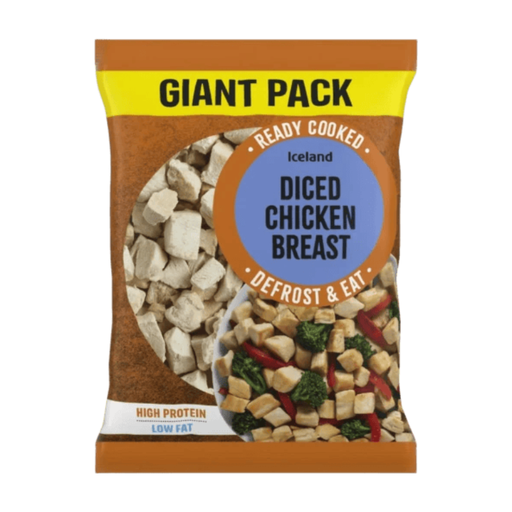
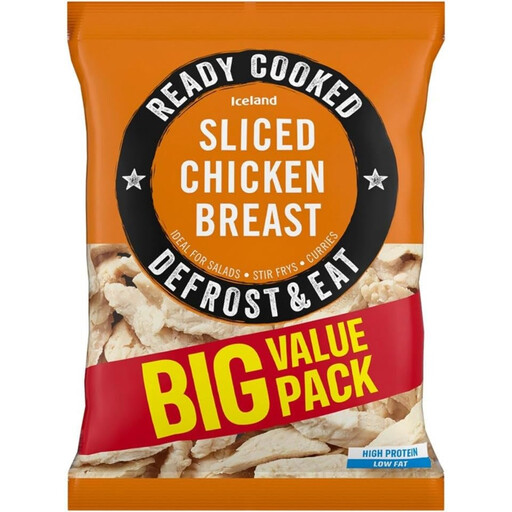
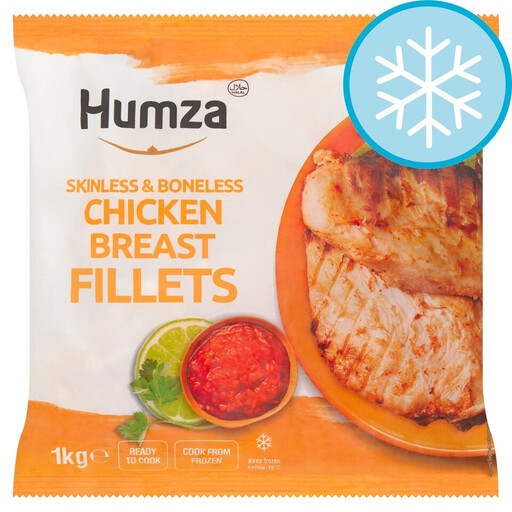
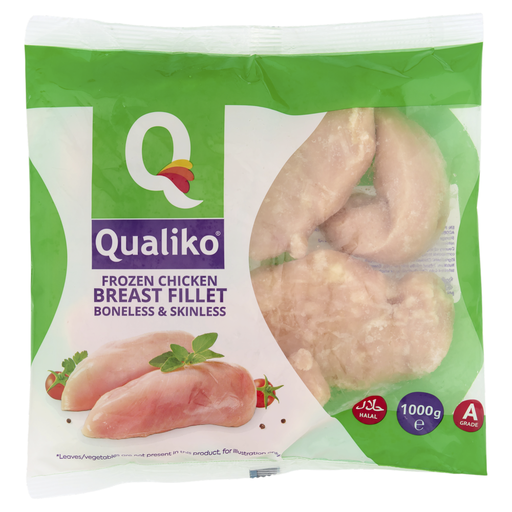
These Joybuy options cover cooked diced chicken, sliced breast, plain fillets and breast strips for different weekly meal plans. Check each pack’s nutrition and preparation directions before deciding which suits yours.
 No image available
The cooked, diced format may suit meals where you want less raw-chicken preparation across the week. Follow the pack’s defrosting and heating directions, and check its fat and saturates per 100g against other options.
 No image available
Pre-sliced breast in a 2.1kg pack may suit several planned meals. Treat it as raw poultry and follow the pack’s defrosting, cooking and post-thaw storage directions; compare its per-100g nutrition with the other packs you are considering.
 No image available
These plain fillets offer a breast format for meals you season and prepare yourself. Check the pack’s fat and saturates per 100g, and allow for thorough defrosting and cooking as directed.
 No image available
This frozen fillet format may suit meals planned around whole pieces of chicken. Check the current pack’s chicken percentage before choosing it: the supplied product details give conflicting composition descriptions. Also follow its cooking directions and make sure the chicken is thoroughly cooked.
 No image available
The strip format may be useful when planning meals that call for pre-cut chicken. Before use, check the pack to establish whether the strips are raw or cooked and follow its defrosting and cooking directions; use the per-100g label to compare fat and saturates.
No. Business Companion’s UK Trading Standards guidance says a reduced-fat claim requires at least 30% less fat than a similar product, whereas the NHS describes 3g fat or less per 100g as low for food. Read the pack’s per-100g figure to see whether it meets that reference.
Compare total fat and saturates per 100g of the finished products. The NHS describes 3g fat or less and 1.5g saturates or less per 100g as low; once you have compared packs on that basis, use serving information to plan the amount you will eat.
Yes, if the particular pack’s figures meet the reference you are using. Waitrose lists 1.6g fat and 0.5g saturates per 100g for its Frozen Chicken Breast Fillets; the Ocado listing for M&S Oakham Gold Frozen Diced Chicken Breast gives 0.9g fat and 0.3g saturates per 100g. Both fall within the NHS low reference figures, but check the product you buy.
No. Birds Eye lists chicken breast at 50% in its Crispy Chicken Breasts in Tempura Batter and explains that ‘100% chicken breast’ refers to the type of meat used. Read the ingredients and nutrition table for the whole product.
Follow the directions on the individual pack, including whether the chicken is raw or cooked and when it must be used after thawing. The Waitrose frozen-breast listing says to defrost fully and not refreeze; the M&S diced-breast listing says to refrigerate at 0°C to 4°C after defrosting, cook within 24 hours and not refreeze.