What should you check?
Decide whether you want a carved whole bird or individual portions, then compare labels and cooking instructions for the format you choose.
| Priority |
What to check |
Your needs |
| Fat and saturates |
Read both values per 100g. Compare figures only when the labels use the same preparation basis; an oven-cooked value and a value without a stated basis do not establish a precise order. |
I want to compare the chicken I will serve, not choose by a claim on the front of the pack. Plain, skinless breast is a useful starting format; I will check the finished product’s figures. |
| Roast format |
Check whether the pack contains a whole bird, intact fillets, slices or strips, and whether its quantity suits the meal. For a whole bird, consider the NHS advice to remove the skin before eating. |
If carving at the table matters, a whole bird fits that plan. For individual roast portions, I would look at breast fillets rather than assume slices or strips will give the same presentation. |
| Ingredients |
Read the full ingredient list, not just “chicken breast” in the name. Look for coating, oil or butter filling, and compare salt per 100g if formulations differ. |
I want plain chicken for the roast, so I need to distinguish an unbreaded breast portion from a coated or filled product. |
| Cooking plan |
Check whether this exact pack permits oven cooking from frozen or requires full defrosting. Follow its stated method and doneness instructions. |
If I cannot defrost chicken ahead of Sunday lunch, I need a pack with an explicit cook-from-frozen method. |
Brand and product-line references
These examples show why ingredients, nutrition and cooking directions matter more than a brand name alone.
Waitrose
Waitrose Frozen Chicken Breast Fillets are a skinless, unbreaded option for a portioned roast.
- Waitrose lists chicken breast fillet as the ingredient, with 1.6g fat and 0.5g saturates per 100g.
- Waitrose instructs cooks to defrost these fillets fully before use; its stated nutrition basis should be checked before comparing the figures with oven-cooked labels.
Sainsbury’s
Sainsbury’s British Skinless Chicken Fillets are boneless frozen portions for a roast served without a whole bird.
- Sainsbury’s lists 1.8g fat and 0.6g saturates per 100g oven-cooked.
- The product is not suitable for cooking from frozen: Sainsbury’s instructs cooks to defrost it in the refrigerator overnight and cook it the same day.
Tesco
Tesco Chicken Breast Fillet 1Kg is a skinless frozen breast portion with an oven-from-frozen method.
- Tesco specifies 50 minutes for its oven-from-frozen method and lists 2.6g fat and 0.7g saturates per 100g when cooked according to instructions.
- The ingredients include water, dextrose and salt alongside chicken breast. Tesco lists 0.26g salt per 100g.
Asda
Asda Chicken Breast Fillets 1.2kg are frozen portions with cook-from-frozen directions.
- Asda specifies 40–45 minutes from frozen and lists 3.0g fat and 0.9g saturates per 100g oven-cooked.
- Asda lists 82% chicken breast alongside water, stabilisers, glucose syrup and salt; its stated salt figure is 0.54g per 100g.
Birds Eye
Birds Eye Crispy Chicken Dippers illustrate why a coated chicken-breast product needs its own label check.
- The Sainsbury’s listing identifies chicken breast as 50% of the finished dippers.
- The same listing includes batter and rapeseed oil and states 13g fat and 1g salt per 100g; “100% chicken breast” describes the type of chicken meat, not the whole product.
Joybuy chicken-breast options
These frozen chicken-breast options include fillets, slices and strips for portioned meals. Check which format suits your roast and follow the cooking directions on the pack.
 No image available
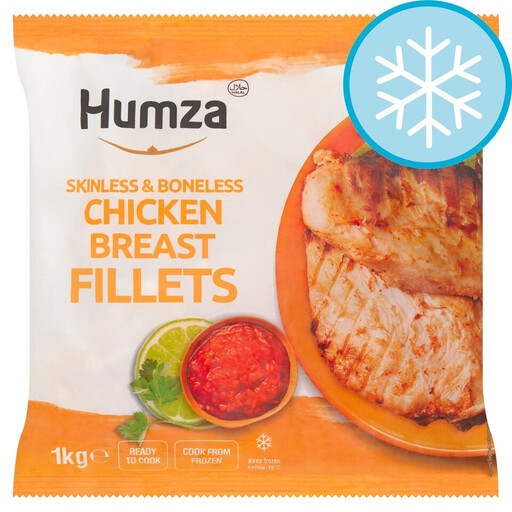
Humza Skinless & Boneless Chicken Breast Fillets 1kg
The skinless, boneless fillet format suits a roast served in individual portions. Plan ahead for full defrosting before cooking, and check the pack’s nutrition basis before comparing per-100g figures with other chicken.
View on Joybuy
 No image available
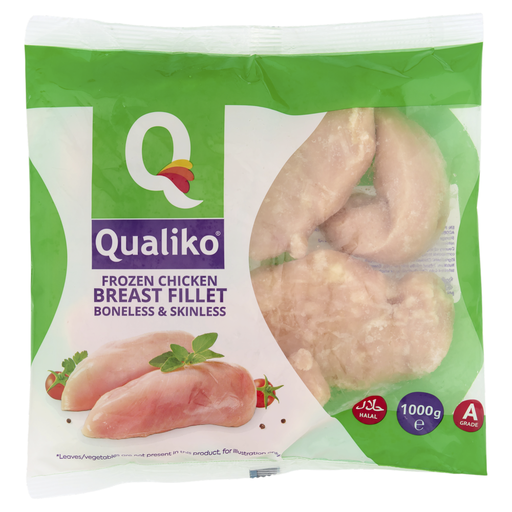
Qualiko Frozen Boneless & Skinless Chicken Breast Fillet 1kg
These skinless, boneless breast fillets suit a portioned roast when advance defrosting is inconvenient. The product information describes an oven-from-frozen method; follow the pack’s directions and check its nutrition basis before making per-100g comparisons.
View on Joybuy
 No image available
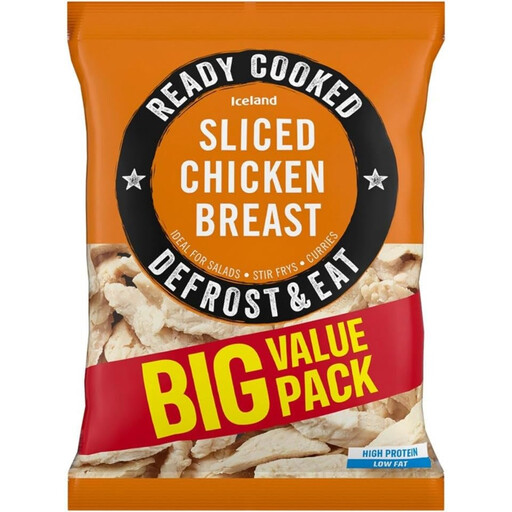
Iceland Sliced Chicken Breasts 2.1kg
Sliced breast suits a meal served as portions rather than intact roast fillets. If skinless chicken is important to your choice, check the pack; also confirm its preparation method and nutrition basis before planning the roast.
View on Joybuy
 No image available
Morrisons Chicken Breast Strips 500g
The strips format is worth considering for a portioned chicken meal, but it will not give the presentation of intact roast fillets. Check the pack for skinless status, its nutrition basis and the cooking method before choosing it for Sunday lunch.
View on Joybuy
Questions before you cook
Does “reduced fat” tell me enough about frozen chicken?
No. Read the fat and saturates values per 100g, check whether they describe the product before or after cooking, and look at the ingredients. A coated or butter-filled chicken product needs to be assessed as a finished product, even if its meat is chicken breast.
Can frozen breast fillets go straight into the oven?
Only when the exact pack permits it. Tesco specifies an oven-from-frozen method of 50 minutes for its Chicken Breast Fillet 1Kg, and Asda specifies 40–45 minutes for its Chicken Breast Fillets 1.2kg. The specified Sainsbury’s and Waitrose frozen fillets instead require defrosting before cooking; always follow your own pack’s directions.
How should I handle chicken after defrosting it?
Do not wash raw poultry. Keep it separate from cooked or ready-to-eat food, wash your hands after handling it, and use separate utensils and surfaces or wash them thoroughly between uses. Follow the pack’s defrosting and cooking instructions.
What should I check before serving the chicken?
Follow the time, temperature and doneness instructions for the exact product. Sainsbury’s directions for its British Skinless Chicken Fillets call for chicken that is piping hot throughout, with clear juices and no pink meat; Tesco and Asda also instruct cooks to ensure their specified fillets are thoroughly cooked.


