
24/7 Customer Support

Free returns

Same-day & Next-day Delivery

Quality Guaranteed

Unlock Your Welcome Offers: FREE Delivery | Up to 80% OFF | Free 30-day JoyPlus trial
Download the APP
As a Joybuy Product Recommendation Officer, my role is to help you navigate the crowded online marketplace. When it comes to buying frozen Chinese buns online in the UK, it's easy to be swayed by appealing pictures only to be met with disappointment. A few common pitfalls can lead to a less-than-satisfying meal. This guide will help you understand what to look for, ensuring the fluffy, flavourful buns you expect are the ones that arrive at your door.
Let's look at the frequent issues shoppers face:
By understanding a few key details, you can easily avoid these problems and choose the perfect frozen dim sum for your needs.
To ensure you get exactly what you want, focus on these three core parameters. They are the most reliable indicators of quality and suitability, cutting through any marketing fluff.
First, identify the type of bun you're buying. This is the most crucial step to matching the product to your meal plans.
To avoid the "all dough, no filling" pitfall, look for the Quantitative Ingredient Declaration (QUID) on the ingredients list. UK food labelling regulations require manufacturers to state the percentage of key ingredients.
For a pork bao, the label should specify the percentage of pork in the filling (e.g., "Pork (45%)"). For a sweet bun, it might state "Taro (20.3%)". This number is a far more accurate guide to what's inside than the picture on the front of the packet. A higher percentage generally indicates a more generous and flavourful filling.
Frozen Chinese buns are suitable for every part of a meal, from a savoury main to a sweet dessert. Thinking about when you'll eat them can help narrow your choice:
Based on these practical criteria, here are a few recommendations from our catalogue, matched to different needs and preferences.

Why This Fits Their Persona: This user wants to replicate an authentic, restaurant-quality dim sum experience at home. These soup dumplings, or Xiao Long Bao, with their delicate wrappers and rich, soupy filling, offer a more refined and skillful preparation than standard buns.
The ingredient list clearly states a 12% crab meat content and 45% pork, providing assurance of a premium, flavour-packed filling, not just dough. The specific cooking instructions for steaming soup dumplings ensure the delicate wrapper doesn't break.
Features a genuine soup-filled centre for an authentic experience. The combination of pork and real crab meat provides a rich umami flavour.
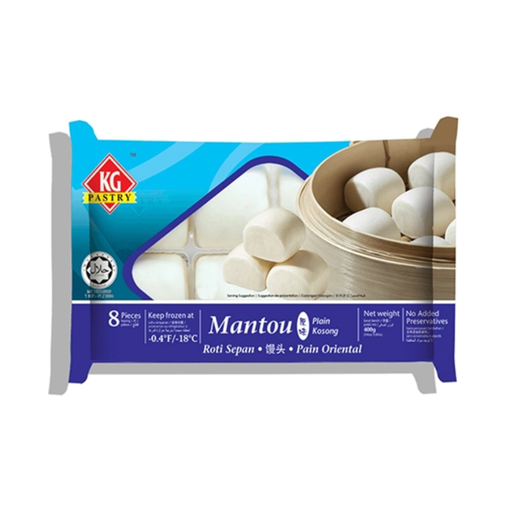
Why This Fits Their Persona: A family needs versatile, quick and crowd-pleasing options. Plain mantou are the perfect freezer staple. They can be served as a side with a stir-fry, used to mop up sauces or even pan-fried for a crispy breakfast treat that appeals to all ages.
This product clearly avoids the "bun identity" confusion. It is marketed as a Plain Mantou, so buyers know they are getting a versatile, unfilled bun, not a filled baozi. There is no risk of being disappointed by a lack of filling.
Extremely versatile: can be steamed, toasted or deep-fried. The simple, mildly sweet flavour pairs well with a huge range of savoury and sweet accompaniments.
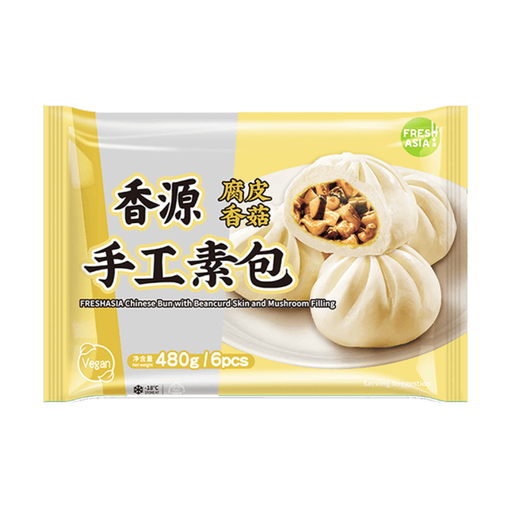
Why This Fits Their Persona: This user is looking for interesting and satisfying vegetarian options beyond simple vegetable fillings. The combination of beancurd skin (tofu skin) and shiitake mushrooms provides a savoury, "meaty" texture and deep umami flavour.
This bun avoids the trap of a bland vegetable filling. By using flavour-rich ingredients like shiitake mushroom, soybean skin and sesame oil, it delivers a complex and satisfying taste profile that stands on its own as a delicious vegetarian baozi.
Offers a rich, savoury flavour and satisfying texture without meat. The filling is a classic combination in Chinese vegetarian cooking, providing an authentic taste.
We have compiled a complete, real-time list of products that fully satisfy these strict selection criteria and UK safety regulations.
Here are answers to a few common queries about preparing frozen buns at home.
You don't need special equipment. You can place a metal steamer basket or even a heatproof colander inside a large pot with an inch or two of boiling water at the bottom (ensure the water doesn't touch the buns). To prevent sticking, line the basket or colander with baking parchment or a few cabbage leaves. Place the frozen buns on top, cover the pot with a lid, and steam according to the package directions.
While steaming produces the softest, fluffiest texture, you can use a microwave for speed. Place one or two buns on a microwave-safe plate, sprinkle them with a little water, and cover them with a damp paper towel. This creates steam and prevents the dough from becoming hard. Microwave on high for 60-90 seconds, but check the package for specific timings as they can vary. Be aware that the texture may be slightly chewier than with steaming.
A properly cooked bun will be soft, plump and hot all the way through. The dough should not have any dense, cold or hard spots. The most reliable way to check is to carefully test the very centre of the filling to ensure it is piping hot. Always follow the recommended cooking time on the package as a primary guide.