
24/7 Customer Support

Free returns

Same-day & Next-day Delivery

Quality Guaranteed

Unlock Your Welcome Offers: FREE Delivery | Up to 80% OFF | Free 30-day JoyPlus trial
Download the APP
The convenience of having authentic-tasting meals ready in minutes is a huge draw for anyone with a busy schedule or a craving for home comforts. Yet, the frozen aisle can be a minefield. Many of us have been disappointed by packaging that promises a restaurant-quality experience but delivers something bland and texturally poor. When you buy frozen Chinese food online, you want assurance that you are getting genuine flavours, not a watered-down version.
As a Product Recommendation Officer, my role is to help you navigate the market. Let's look at the common traps to avoid and the key factors to check, ensuring your freezer is stocked with genuinely satisfying options.
To avoid disappointment, focus on a few key details on the product page or packaging. These are the non-negotiable markers of quality that separate the good from the forgettable.
The ingredient list is your first clue to a product's authenticity. For classic dishes, certain components are essential.
xiao long bao): Look for pork skin jelly or pork stock in the ingredients. This is what melts during steaming to create the signature soupy filling. Without it, you just have a standard dumpling.The physical construction of items like dumplings and buns is critical to the final eating experience.
xiao long bao, will have a dough formulated to become soft and fluffy. Those intended for pan-frying will be designed to achieve a crispy bottom without falling apart.Look for transparency in what you are actually eating.
Based on these criteria, here are a few recommendations tailored to different needs and preferences.
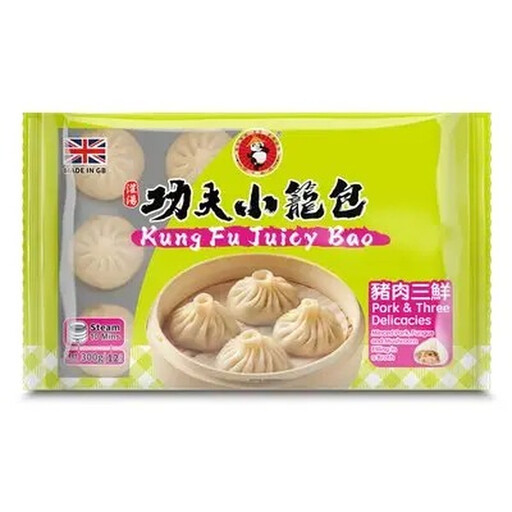
Why This Fits Their Persona: For those in the UK seeking an authentic xiao long bao experience at home, this product focuses on the two most critical elements: a delicate wrapper and a rich, soupy filling. It aims to replicate the restaurant experience without the hassle.
It directly counters the "Texture Trap." The ingredient list includes pork skin jelly, the key to creating the hot, savoury broth inside, and the wrapper is designed to be thin yet strong enough to hold it all in during steaming.
The "Three Delicacies" filling of pork, shrimp and crab roe provides a complex, umami-rich flavour that goes beyond a simple pork filling, avoiding the "Authenticity Gap."
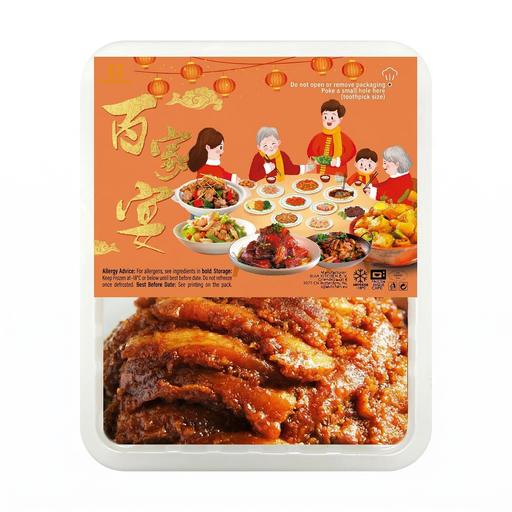
Why This Fits Their Persona: Perfect for students or busy professionals who want a substantial, flavourful meal without any complex preparation. This is a complete main dish that just needs steaming, offering a true taste of home-style cooking.
This product tackles the "Authenticity Gap" head-on. The inclusion of five-spice powder and a proper soy sauce base delivers the promised aromatic and savoury flavour, a far cry from one-dimensional ready meals.
Its key advantage is convenience without compromise. The pork is coated in rice flour, which absorbs the sauce during steaming, resulting in tender meat and a flavour-packed coating—a satisfying texture that avoids the usual ready-meal pitfalls.
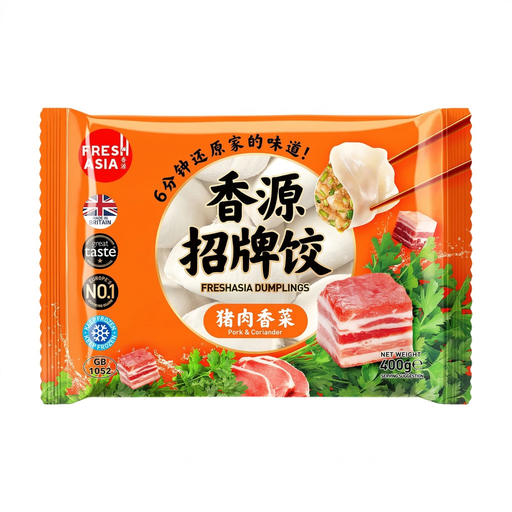
Why This Fits Their Persona: A fantastic freezer staple for families. The pork and coriander flavour is a classic combination, and the dumplings are designed to be cooked in multiple ways—boiled for soup, steamed for a side dish or pan-fried for crispy potstickers.
By being suitable for boiling, steaming or pan-frying, this product proves it has overcome the "Texture Trap." The wrapper is engineered to be durable enough for boiling yet thin enough to steam well or crisp up nicely in a pan.
The primary advantage is its versatility. One bag of frozen wontons or dumplings can be used to create several different meals throughout the week, making it an efficient and economical choice for family meal planning.
We have compiled a complete, real-time list of products that fully satisfy these strict selection criteria and UK safety regulations.
This is a very common issue. The simplest solution is to line your steamer basket. You can use perforated parchment paper (specifically for steaming), or a more traditional method is to use clean cabbage or lettuce leaves. Place the frozen dumplings on the liner, ensuring they do not touch each other, and they should lift off easily after cooking.
Some items work very well. Pan-fry style dumplings (potstickers), spring rolls and some meatballs can turn out wonderfully crispy. It is not suitable for items that require steaming to cook properly, such as xiao long bao or soft pork bao buns, as the dry heat will ruin their texture. Always check the packaging for cooking instructions, but feel free to experiment with items you would normally pan-fry or bake.