People planning several office lunches
Frozen portions can be kept until needed, but check the number of servings and whether you have room for the whole pack. A snack, side or share pack may not cover the lunch you intend to make.


Choose an individual frozen meal for a quick desk lunch when its portion suits you and its pack gives cooking instructions you can follow at work. A multi-pack is worth considering if you can store and use every portion; check whether each item is a complete meal rather than a snack or side. Read the exact pack for nutrition, allergens and heating directions.
Frozen portions can be kept until needed, but check the number of servings and whether you have room for the whole pack. A snack, side or share pack may not cover the lunch you intend to make.
For a short break, check that the exact pack permits microwave cooking and that its instructions fit the equipment available at work. A microwaveable label on another product in the range does not establish how this meal should be heated.
Read the exact pack’s ingredients, allergen information and nutrition declaration. Per-100g figures help compare similar foods; where a per-portion figure is shown, check whether that portion matches the amount you will eat.
Start with the appliance and time available at work, then check the serving size, storage needs and label of the exact product.
| Priority | What to check | Your needs |
|---|---|---|
| Cooking method | Look for microwave instructions on the exact pack if that is your workplace appliance. Check any standing time and follow the stated heating directions. | I need a lunch I can heat with the equipment available during my break. |
| Lunch portion | Check the stated servings and pack weight. Tesco Groceries’ frozen easy-meals-and-snacks section includes sides and snacks as well as meal-like products, so confirm what the item contains. | A side or snack alone may not be the lunch I had in mind. |
| Pack quantity | Check how many portions you will need to store and whether you will use them. For a product marked freezable, follow its storage instructions rather than assuming it was sold frozen. | I have limited freezer room, or I only need lunch for one day. |
| Nutrition and ingredients | Compare similar meals on the same per-100g basis and use per-portion figures where shown. The NHS lists energy, fat, saturates, carbohydrate, sugars, protein and salt among the information on prepacked-food nutrition labels. | I want to compare the meal I will eat, rather than judge its nutrition from the category name. |
| Allergens | Read the exact ingredients list, including when changing flavour or pack size. GOV.UK says specified allergens present as ingredients in prepacked food must be clearly labelled there. | If I need to avoid an ingredient, I cannot rely on a retailer range or a dish name to tell me what is in the pack. |
Frozen convenience sections can place snacks and components alongside ready meals. The pack you choose may require other food to make the lunch you want.
Check its description, stated servings and contents before comparing it with a meal for one.
A multi-pack needs enough freezer space and a plan for each portion; its quantity alone does not make it practical for desk lunches.
Check the pack count against your available space and the number of lunches you expect to make.
GOV.UK food-hygiene guidance says to follow packet instructions and check that food is steaming hot throughout. Its guidance for reheated food says to reheat it only once.
Use the method and any standing time on the exact pack, then check the centre before eating.
Ingredients and nutrition need to be checked for the individual product. GOV.UK’s allergen-labelling guidance concerns allergens present as ingredients in the exact prepacked food.
Read the ingredients, allergen and nutrition panels when choosing a different recipe, flavour or pack size.
These retailer listings point to different formats to examine; the exact pack determines whether a product works as a frozen desk lunch.
Iceland describes frozen food and convenience as focuses of its business and lists a value ready-meal range.
Waitrose lists meals for one marked microwaveable, with some also marked freezable.
M&S lists frozen dishes including fish pies and seafood bakes.
Tesco Groceries’ frozen easy-meals-and-snacks section mixes meal-like items with potato products, bakes, gyoza and snacks.
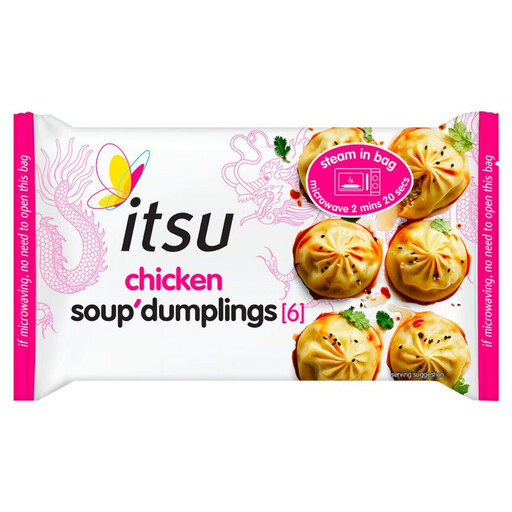
These frozen dumplings are an option to examine if you have a workplace microwave. Check the pack contents and serving count before comparing them with an individual ready meal.
 No image available
For a microwave-equipped lunch break, check the exact pack’s heating directions and how many portions it contains. The filling can become very hot; allow the stated three-minute standing time before eating.
First check whether each is a complete meal, a side or a snack, and whether you can cook it at work. Then compare the stated servings, pack contents and nutrition on the same basis. Tesco’s frozen convenience listing includes different product types, while Waitrose’s microwaveable listing includes meals that may be chilled and freezable rather than sold frozen.
No. Follow the microwave method only if it is given on the exact pack. GOV.UK food-hygiene guidance says to follow packet instructions and ensure food is steaming hot throughout; it says reheated food should be reheated only once.
Compare similar products using their per-100g declarations, then check per-portion information where it is shown against the amount you plan to eat. The NHS identifies energy, fat, saturates, carbohydrate, sugars, protein and salt as information on prepacked-food nutrition labels.
Read the ingredients and allergen information on the exact pack each time, including when changing flavour or pack size. GOV.UK says specified allergens present as ingredients in prepacked food must be clearly labelled in the ingredients list; a dish name or retailer category is not a substitute for checking it.