Who is a frozen dessert practical for?
The deciding factor is whether the dessert can stay at its required storage temperature throughout the trip, not whether the journey to the campsite is short.
Short-trip campers with dependable cold storage
A frozen treat can be part of a planned meal if transport, storage and serving all meet its pack instructions. The Food Standards Agency says a cool box can be used on short trips, but that does not establish that it will maintain a frozen dessert’s required temperature.
Families and groups sharing a dessert
Individual portions avoid scooping and cutting. A tub or larger dessert may suit a group meal when there is suitable cold storage, space and serving equipment, and a plan to finish it.
Campers without dependable refrigeration
A frozen dessert is a poor choice when its storage instructions cannot be followed for the whole trip. For extended camping, the Food Standards Agency warns against relying on a cool box to keep food chilled; a shelf-stable dessert avoids that frozen-storage requirement.
What should you check before choosing?
Start with the pack’s storage instructions and the length of the trip, then choose a format the group can serve and finish. The Food Standards Agency’s advice to store chilled food below 5°C is not a substitute for a frozen product’s own storage instructions.
Individual sticks, cones and small portions
Choose when: You can maintain frozen storage and want to serve dessert without a scoop or knife.
Bear in mind: Separate portions simplify serving, but each still needs the cold conditions stated on its pack.
Ice-cream or gelato tubs
Choose when: A group can share a tub during a planned serving, with suitable storage and a scoop and bowls or cones.
Bear in mind: Serving takes more equipment, and leftovers need to be handled according to the pack instructions.
Larger tarts and frozen desserts
Choose when: A planned group meal has enough cold-storage space and the equipment needed to serve the dessert.
Bear in mind: Check the particular product’s thawing and serving directions before packing it.
| Priority | What to check | Your needs |
|---|
| Cold storage |
Read the exact pack temperature and thawing instructions. Check whether transport and campsite storage can meet them until serving; do not assume a passive cool box works as a freezer. |
I want dessert after a short trip, but only if I can keep it as cold as its pack requires all the way to serving. |
| Serving format |
Check the number and size of portions and whether serving needs a scoop, knife, bowls or plates. Plan what happens if the group does not finish it. |
For an uncomplicated campsite meal, I would rather hand out portions than cut or scoop a shared dessert. |
| Trip setup |
Allow space for the pack in the cold-storage equipment and follow any product-specific serving directions. For a longer trip, establish whether the required temperature can be maintained throughout. |
A larger dessert appeals for a group meal, provided our storage space and serving plan can accommodate it. |
| Dietary requirements |
Read the exact product’s ingredients and allergen statement, including any precautionary wording. Recheck the pack before serving. |
If someone in the group has an allergen or dietary requirement, I need information for the particular flavour and pack, not just its range or category. |
Which ranges offer relevant formats?
These retailer ranges show the formats available to consider; inclusion here does not mean a particular product will suit your campsite storage.
M&S
Marks & Spencer lists frozen cheesecakes, roulades, pies and tarts for shoppers considering a shared dessert.
- The range provides larger formats for a planned group serving.
- Check the chosen dessert’s storage, space and serving requirements before taking it camping.
Tesco Finest
Tesco Groceries lists Finest ice creams and gelato alongside tarts, cheesecakes, roulades and individual ice creams.
- The range allows a choice between individual and shared formats.
- Select by the particular pack’s storage and serving instructions, rather than the range label.
Waitrose No.1
Waitrose & Partners lists No.1 ice-cream tubs and larger frozen desserts, including tarts and meringata.
- Tubs and larger desserts offer formats for a planned shared meal.
- Neither format removes the need for dependable cold storage throughout the trip.
Sainsbury’s frozen-dessert range
Sainsbury’s groups cones, sticks, lollies, tubs, mini treats and larger desserts in its frozen range, which also includes Taste the Difference products.
- The listed formats allow shoppers to consider individual portions as well as shared desserts.
- Check dietary information on the exact item; a category filter does not establish suitability for every pack.
Joybuy options for individual portions
These Joybuy products are individually sized frozen treats to consider for a short camping trip with storage that meets each pack’s frozen-temperature instructions. They are not substitutes for dependable cold storage.
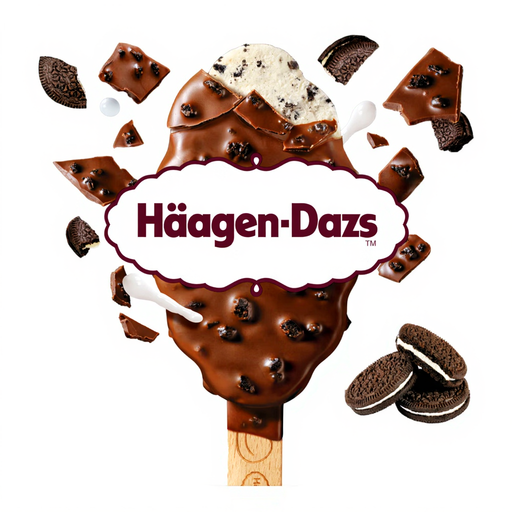 Image unavailable
Häagen-Dazs Crunchy Cookies & Cream Ice Cream Bars, 3 x 192g pack
Three bars provide individual portions without scooping. The pack is 192g in total; keep it frozen below -18°C and do not refreeze once thawed. Check the pack’s allergen information before serving, particularly for milk, soya and wheat.
View on Joybuy
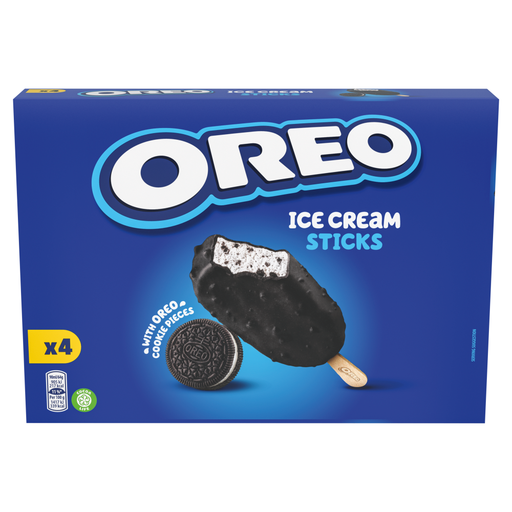 Image unavailable
Oreo Ice Cream Sticks, 4 x 90ml
Four sticks can be served individually without cutting or scooping. Keep frozen at -18°C or below and do not refreeze once thawed. Check the exact pack for allergens, including milk, wheat and soya.
View on Joybuy
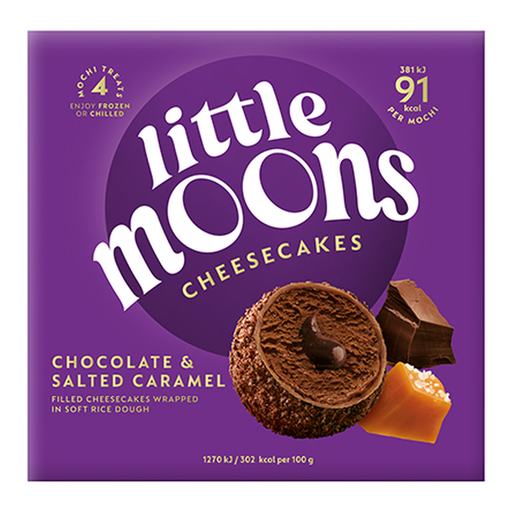 Image unavailable
Little Moons Mochi Ice Chocolate & Salted Caramel Cheesecake, 4 x 30g
Four small mochi portions avoid cutting a larger dessert. Keep frozen below -18°C; the serving directions call for about five minutes of softening. Check the pack’s directions for handling after defrosting and its allergen statement, including milk, soya and possible nuts, peanuts and egg.
View on Joybuy
 Image unavailable
Cornetto MAX Hazelnut & Chocolate Ice Cream, 4 x 90ml
Four individual cones can be served without a scoop or plates. Keep frozen at -18°C or below, and do not melt and refreeze them. Check the pack’s full allergen statement, particularly for hazelnuts, milk and wheat.
View on Joybuy
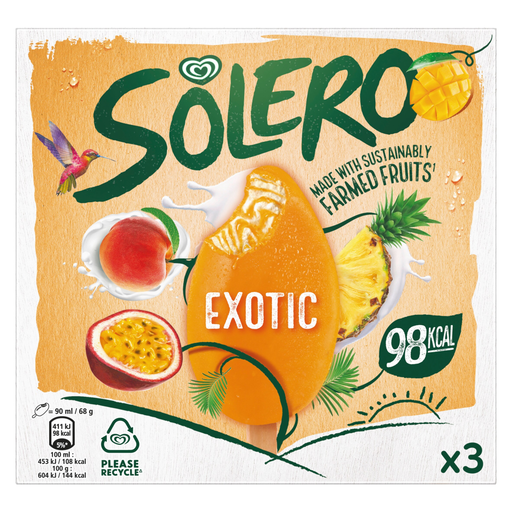 Image unavailable
Solero Exotic Ice Cream Sticks, 3 x 90ml
Three individual sticks avoid scooping a shared tub. Keep frozen at -18°C or below and do not refreeze once thawed. Check the current pack for its fruit ingredients, flavour details and allergen information, including milk.
View on Joybuy
Camping frozen-dessert questions
Can I take a frozen dessert camping?
Yes, if you can meet the particular product’s frozen-storage instructions throughout transport and the stay until serving. The Food Standards Agency says a cool box can be used for short trips but is unlikely to keep food chilled for an extended period; check the dessert’s own temperature requirement rather than assuming chilled storage is enough.
Is a tub or large frozen dessert practical for a weekend in a tent?
Only if you have storage that meets its pack instructions and can manage serving and leftovers. Tubs need scooping equipment, while larger desserts may need cutting and plates. For an extended trip, the Food Standards Agency warns that a cool box is unlikely to keep food chilled.
Which format is simplest to serve at a campsite?
Individual sticks, cones and small portions avoid scooping or cutting, making them straightforward to hand out. They still require the frozen storage stated on their packs until serving.
How should I check whether everyone can eat the dessert?
Read the exact product’s ingredients and allergen information before buying and check its pack again before serving. A retailer’s free-from category or a familiar flavour name does not establish the suitability of every variant.
What if I cannot keep a dessert frozen for the whole trip?
Choose a shelf-stable dessert whose own storage instructions suit the trip. The Food Standards Agency advises considering predominantly dry foods when sufficient food storage is not possible throughout a camping stay.


