For a large family shop, compare the fat, saturated fat and salt shown per 100g on similar frozen meals, then check pack weight and stated servings before deciding how many to buy. A calorie-controlled category does not establish a reduced-fat claim, and a larger pack does not necessarily provide enough portions for your household.
Who is this choice for?
Households buying for several people
If you want the convenience of frozen meals without relying on one small pack to feed everyone, compare the stated servings with the number of people eating. Pack weight and nutrition per portion help you plan the full meal.
Shoppers comparing fat claims
If you are replacing a familiar meal, look at the exact claim and the nutrition panel. “Reduced fat”, “low fat” and “calorie controlled” describe different things; a range name alone cannot tell you how two meals compare.
Families with different food requirements
Several individual meals may be more practical than one shared dish when preferences differ. Check each pack’s ingredients, allergens, nutrition and cooking directions rather than relying on a dietary category filter.
What should you check?
Start with comparable nutrition figures, work out how many portions the shop needs, then check each chosen meal against the household’s dietary and cooking requirements.
| Priority |
What to check |
Your needs |
| Fat and meal claims |
Compare total fat, saturated fat and salt per 100g on similar meals. Read any reduced-fat claim on the individual pack rather than treating a calorie-controlled range name as the claim. |
I want to compare the food I would actually buy, not assume a meal has less fat because it appears in a lighter-eating category. |
| Enough portions |
Check pack weight, stated servings and nutrition per portion. Work out how many packs would be needed for everyone eating. |
A single-serving meal might suit one person, but our household meal may call for several packs or a sharing format. |
| Dietary fit |
Read the exact ingredients and allergen information. Check nutrition on each product even when a free-from, vegetarian or calorie-counted filter helped you find it. |
Different people may need different dishes, and a category label cannot settle every requirement for us. |
| Storage and cooking |
Check freezer space and follow each pack’s storage instructions, cooking method and time. Do not transfer directions between different meals or pack sizes. |
If I am buying several frozen meals at once, I need room to store them and a workable way to prepare the portions required. |
What can go wrong?
-
Reading different meal labels as the same claim
“Reduced fat” describes a comparison, while a calorie-controlled description concerns calories. Neither a retailer’s lighter-eating category nor a general range name establishes the fat content of every meal in it.
Compare the exact products’ nutrition per 100g and read any claim on the pack. Then check the portion you expect to serve.
-
Counting a single meal as a family pack
Tesco Groceries and Sainsbury’s Groceries list 350g meals in lighter-positioned ranges, while retailer frozen listings also include larger packs. Pack weight alone does not establish how many people a meal serves.
Decide how many portions you need, then check the stated servings and quantity required across all the packs you plan to buy.
-
Treating a dietary filter as a product guarantee
A frozen dietary category can contain meals selected for different reasons. Being listed there does not establish lower fat or suitability for a particular allergy.
Read the ingredient, allergen and nutrition information for each selected product or its physical pack.
-
Overlooking storage and cooking directions
A larger frozen shop takes freezer space, and different meals can have different preparation instructions.
Check available freezer space before buying and follow the storage and cooking directions on each pack.
Which retailers offer useful starting points?
These retailer listings can help you find formats to compare; their category names and pack sizes do not establish that an individual meal is reduced fat.
Tesco
Tesco Groceries lists frozen Under 500cal Meals separately from Frozen Family Meals.
- The listings give you separate starting points for calorie-controlled meals and larger-format options, including a 700g paella.
- An under-500-calorie category or family-meal listing does not establish a reduced-fat claim for an individual product.
Sainsbury’s
Sainsbury’s Groceries lists frozen Diet & Freefrom meals, including 350g calorie-counted and Be Good to Yourself examples.
- The category offers a starting point when household members are looking for different types of meals.
- Its examples include individual meals; check each pack’s servings and nutrition rather than treating the category as a reduced-fat family range.
M&S
Marks & Spencer lists frozen ready meals in several pack sizes and describes its separate Count On Us range as calorie controlled.
- The frozen listing includes 650g, 700g and 1kg products that a household can assess for the portions it needs.
- The larger frozen packs are not established as reduced fat by their size, and the Count On Us description does not establish that a chosen dish is frozen.
Waitrose
Waitrose & Partners lists individual frozen ready meals alongside 800g meals labelled for two.
- A meal for two may form part of a larger household meal when its stated servings suit your plan.
- An 800g pack or meal-for-two description does not establish lower fat; compare the individual products’ labels.
Iceland
Iceland Foods lists frozen ready meals and a separate Slimming World range.
- The ranges offer different starting points for browsing frozen meals.
- A range name does not establish a chosen meal’s fat content, saturated fat or number of servings.
A Joybuy option for this shop
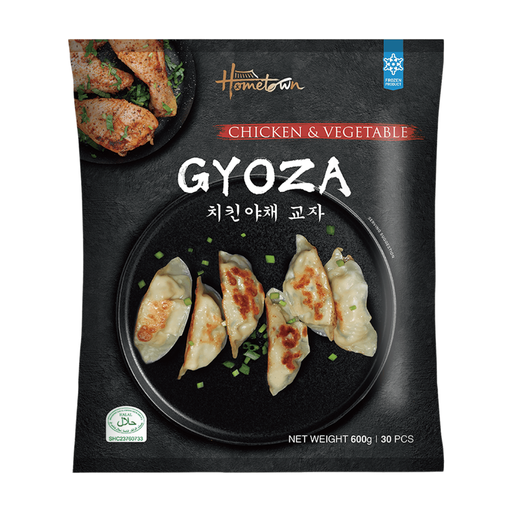
This gyoza pack is an option to consider as part of a larger household meal, rather than a confirmed reduced-fat, complete family ready meal. Check its nutrition and servings against the meal you intend to make.
 No image available
Hometown Chicken & Vegetable Gyoza (Halal) 600g
For a household meal, check how many servings the 600g pack provides and what else you would serve with the gyoza. Compare the nutrition panel with similar products before treating it as a lower-fat choice.
View on Joybuy
Frequently asked questions
Are “reduced fat” and “low fat” the same thing?
No. “Reduced fat” describes a comparison with a similar product, while “low fat” refers to the product’s fat content. Read the exact claim and compare the nutrition panels per 100g; neither phrase tells you how many portions a pack provides.
Should I compare frozen meals per portion or per 100g?
Use both. Nutrition per 100g helps you compare similar meals on the same basis; the stated portion and pack weight help you work out what each person would actually be served. The NHS notes that a manufacturer’s portion may differ from yours.
Does “calorie controlled” mean a frozen meal is reduced fat?
No. Use a calorie-controlled range to find possible meals, then check the individual product’s fat, saturated fat and salt, as well as its serving size and any reduced-fat claim on the pack.
What should I check before cooking several frozen meals?
Check the storage and cooking directions on every pack, including the specified method and time. Do not assume that instructions for one meal or pack size apply to another, and make sure you have freezer space for the shop.


