Carers preparing one toddler dinner
A single-portion meal can simplify serving, but check the actual pack for ingredients, nutrition and preparation instructions before deciding whether it fits the child.


A toddler-specific frozen meal may be simpler when you need one child-sized portion, but its ingredients and nutrition still need checking. A family-size meal is an option only if its label and an appropriate portion meet the child’s needs; the NHS advises limiting salt for young children and names ready meals among salty foods to avoid. If a complete ready meal does not fit, separately chosen frozen components offer another way to put dinner together.
A single-portion meal can simplify serving, but check the actual pack for ingredients, nutrition and preparation instructions before deciding whether it fits the child.
A larger meal can feed adults or older children too. Check the label before setting aside a toddler portion rather than assuming the family-size format makes the meal suitable.
When a child has an allergy, intolerance or other dietary restriction, the individual pack’s ingredients and allergen information matter more than the retailer’s category filter.
Choose when: You need a meal sold as a child’s individual portion; Tesco Groceries lists frozen kids’ and toddlers’ meals in 200g packs.
Keep in mind: A toddler category does not replace checks of the particular meal’s label and preparation instructions.
Choose when: Others will eat the same dish and its ingredients, nutrition and serving format also work for the toddler.
Keep in mind: The NHS names ready meals among salty foods to avoid for young children, so family sizing alone is not a reason to serve one.
Choose when: You want to select the toddler’s vegetables and other foods separately rather than rely on one complete ready meal.
Keep in mind: Putting the components together takes more preparation than serving one ready meal.
| Priority | What to check | Your needs |
|---|---|---|
| Nutrition | Read the pack’s nutrition declaration, particularly its salt figure. Compare the stated per 100g and per-serving values on the same basis; use front-of-pack traffic lights where shown. | I need to assess the actual meal, not assume that a child-sized or family-sized pack has the right nutrition for a toddler. The NHS advises that young children should not eat much salt. |
| Ingredients and allergens | Check the full ingredient list and highlighted allergens on the individual pack. Read its storage and cooking directions, especially if the recipe or packaging has changed. | If my child has a relevant allergy or dietary exclusion, a retailer filter helps me narrow the search but cannot make the decision for me. |
| Portion and format | Look at pack weight, stated servings and how much can be served appropriately to the child. A 200g toddler meal and a larger dish for sharing serve different household plans. | On an evening when only the toddler needs dinner, one portion may be practical. If everyone is eating, I need to consider the toddler’s portion separately. |
| The rest of dinner | Consider what the dish contains and whether separately chosen vegetables or other suitable foods are needed. The NHS advises offering toddlers a variety of foods and including fruit or vegetables at meals. | I want to plan the whole dinner rather than treat one ready meal as the entire answer every time. |
Family sizing describes a serving format, not the meal’s suitability for a young child. The NHS cautions that young children should not eat much salt and includes ready meals among salty foods to avoid.
Check the individual meal’s ingredients and nutrition before deciding whether to serve an appropriate toddler portion.
A kids’ or free-from category helps locate products but does not tell you everything about an individual meal’s ingredients, allergens or preparation.
Read the current pack, particularly when managing an allergy or dietary exclusion, and follow its storage and cooking directions.
An adult serving does not establish an appropriate toddler portion, and repeating one ready-meal format leaves less room to vary the foods offered.
Serve a portion appropriate to the child and consider vegetables or other suitable foods alongside it. NHS guidance encourages variety in toddlers’ meals.
Retailer categories are starting points for finding a format; check each product’s current pack before choosing it for a toddler.
Tesco Groceries has separate frozen ready-meal categories for family meals and kids’ and toddlers’ meals.
Waitrose & Partners lists frozen ready meals in shared formats, including dishes described as meals for two.
M&S lists larger dishes in its frozen ready-meal range and has a separate kids’ category in its broader ready-meal catalogue.
Iceland Foods includes ready meals within its wider frozen-food catalogue.
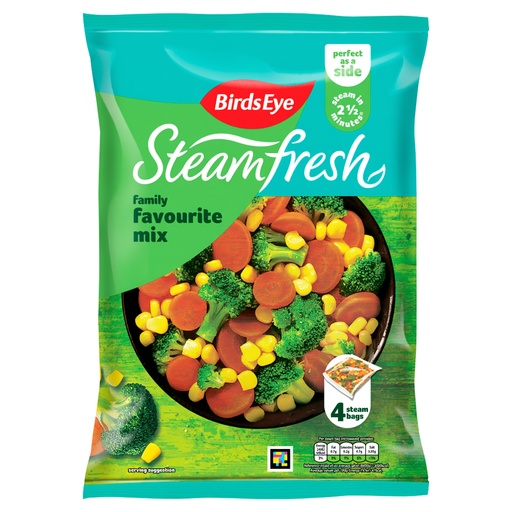
This option is a frozen vegetable side for assembling a toddler dinner, not a complete family ready meal.
 No image available
This frozen vegetable side can be paired with separately chosen foods for dinner; it is not a complete meal. The pack contains four steam bags and weighs 540g. Check the current pack’s ingredients, allergens, salt information and preparation directions, then serve a portion appropriate to the child.
Only if the individual meal and the portion are appropriate for that child. Check its ingredients, allergens and nutrition before serving it; the NHS advises limiting salt for young children and names ready meals among salty foods to avoid.
Frozen vegetables can be one component of dinner when prepared and served in a suitable texture and portion for the child. The NHS encourages a variety of foods and fruit or vegetables at meals; vegetables alone are not a complete dinner.
Compare the nutrition declarations on the individual packs, using the same per 100g or per-serving basis for each meal. Front-of-pack traffic lights, where present, can help you compare labelled nutrients, but they are not a toddler-specific suitability label.
No. Use the filter to narrow your choices, then check the specific pack’s ingredients and highlighted allergens for the child’s relevant allergy or dietary exclusion. Check again when buying a pack with changed packaging or a different recipe.
Follow the exact pack’s storage, cooking and any leftover directions. Do not assume that directions for a different ready meal apply to this one.