Families hosting a relaxed Valentine’s meal
A family ready meal can keep assembly simple. If children and adults want different dishes, separate frozen sharing items give you more choice, but each item needs its own portion and cooking check.


For a Valentine’s Day meal involving more than two people, choose a frozen family ready meal if you want one principal dish with little assembly; choose a meal-in-a-bag or separate sharing foods if you are prepared to plan several components. A large pack does not establish how many people it serves or whether it makes a complete dinner, so check the serving statement, cooking instructions and allergens on each item. For two people, a family-size pack makes more sense when you have a plan for the leftovers.
The useful distinction is whether you need one main dish, a flexible spread or deliberately planned extra portions.
A family ready meal can keep assembly simple. If children and adults want different dishes, separate frozen sharing items give you more choice, but each item needs its own portion and cooking check.
A family-size meal can work for two if you intend to keep the extra portions and can follow the pack’s storage and reheating instructions. Otherwise, check a smaller meal or sharing format.
When a meal combines several frozen products, check the current ingredients and allergen information on every pack. A suitable main does not establish that its sides are suitable too.
Choose when: You want one principal dish for the group with little assembly.
Allow for: The stated portions may not match your guest numbers, and a main dish may still need sides.
Choose when: You want to put together dishes for different tastes rather than serve one shared main.
Allow for: More preparation and a check that your equipment can cook everything in time.
Choose when: A casual spread of items such as pizza and other sharing foods suits the occasion.
Allow for: Sharing foods do not necessarily provide the main dish or number of portions you expect.
| Priority | What to check | Your needs |
|---|---|---|
| Meal and portions | Read the product description and stated servings. Check whether a larger pack is a ready-made main, a set of components, an ingredient or a side. | I want enough food for the group without mistaking a sharing bag or vegetable pack for a complete dinner. |
| Menu flexibility | Check the exact dishes and labels rather than assuming a category suits every diner. If using larger ingredient packs, plan the dish you will make from them. | One shared tray may not suit everyone; separate items let me plan different flavours or dietary options, with more work before serving. |
| Cooking schedule | Compare each pack’s appliance, temperature and timing instructions. Check that the available oven, microwave, hob or air fryer can accommodate the combination. | I need the components ready together, not a menu that requires the same appliance for incompatible cooking schedules. |
| Ingredients and allergens | Check the current physical packaging for each item, including ingredients and any precautionary allergen information. The Food Standards Agency says the 14 regulated allergens must be emphasised in the ingredients list of prepacked food. | With an allergy or intolerance in the household, I cannot rely on an old listing or on the ingredients of the main dish alone. |
| Frozen storage | Follow each pack’s storage and defrosting instructions, then its cooking directions. Food Standards Agency research identifies storage at significantly higher temperatures after thawing as a condition that facilitates microbial growth. | I want to plan preparation without leaving thawed food waiting while other dishes cook. |
Frozen ranges place ready meals alongside ingredients, sides and sharing foods. Pack size alone cannot tell you which role an item plays.
Check its description and stated servings, then note any other dishes you need for your planned menu.
A main item may still call for separately chosen sides, vegetables or dessert.
Several frozen components can need different appliances or cooking schedules, complicating a meal intended to be served together.
Compare the instructions on every pack before choosing the combination, including the capacity of the equipment you will use.
Recipes and product information can change; Sainsbury’s advises checking product packaging before purchasing or consuming its items.
For each item you serve, read the ingredients and allergen information on the current physical pack.
Food Standards Agency research says storage at significantly higher temperatures after defrosting facilitates microbial growth.
Follow the exact pack’s storage, defrosting and cooking instructions when scheduling the meal.
These retailer categories offer starting points for comparing meal formats; check the individual product before counting on its portions or contents.
Tesco’s frozen ready-meal navigation includes Family Meals as well as other meal categories.
M&S describes frozen pizzas, garlic bread, flatbreads and doughballs as sharing foods.
Waitrose has a frozen bulk-and-bigger-packs category for larger portions and ingredients.
Iceland distinguishes Family Ready Meals from Meal in a Bag in its frozen-food navigation.
Sainsbury’s frozen ready-meal navigation covers several cuisines and diet or free-from categories.
Asda divides its frozen ready-meal navigation into categories including traditional, Italian, Indian and children’s meals.
These options are a pizza for casual sharing, vegetable gyoza to combine with other dishes, and a vegetable side. Check portions and the rest of your menu before relying on any one of them as dinner for the group.
 No image available
A pizza to consider for a casual sharing spread. Check its stated servings and cooking instructions, and decide what else the group will need. Read the current pack for allergen information.
 No image available
Vegetable gyoza can form part of a meal assembled from separate dishes. Check how many portions the pack states, what you will serve alongside it and how the pack directs you to cook it. Check the current packaging for allergens.
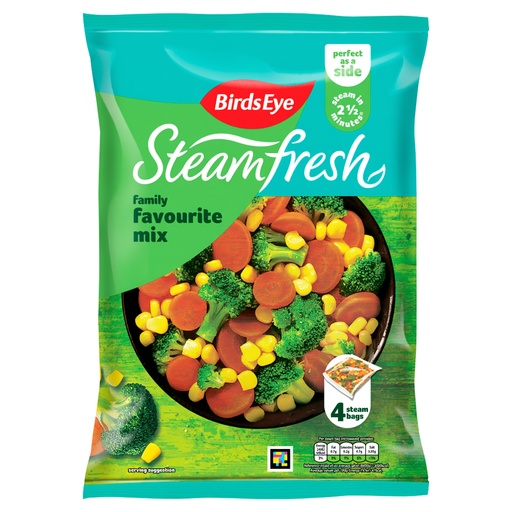 No image available
Four vegetable steam bags can accompany a separate main; they are not a complete dinner on their own. Check the pack’s portion and cooking directions when scheduling the meal, and read its current allergen information.
Not necessarily: a large pack can contain a ready-made main, components, an ingredient or a side. Check its stated servings and contents against the meal you plan to serve, then add other dishes where needed.
It can if you deliberately want extra portions and can follow the pack’s storage and reheating instructions. If you want little surplus, compare the stated servings with a smaller meal or sharing format.
Read the current physical packaging for every item, including sides. The Food Standards Agency says the 14 regulated allergens must be emphasised in the ingredients list of prepacked food; do not rely only on an earlier purchase or online description.
Follow each pack’s storage and defrosting instructions rather than leaving food out as a general preparation method. Food Standards Agency research says storage at significantly higher temperatures after thawing facilitates microbial growth.