Cooks using fish across several recipes
Plain frozen fillets let you choose the seasoning, sauce and portion size for dishes such as fish pies or pasta. A coated product is less adaptable when the recipe needs an uncoated ingredient.


For batch recipes that need different seasonings and sauces, start by comparing plain frozen fillets; coated portions suit planned meals where you want the coating to remain part of the dish. For wild-caught fish, the blue Marine Stewardship Council (MSC) ecolabel is a useful sourcing signal, but also check the named species and available catch details. Farmed fish calls for its own sourcing and production checks rather than an MSC fisheries label.
Plain frozen fillets let you choose the seasoning, sauce and portion size for dishes such as fish pies or pasta. A coated product is less adaptable when the recipe needs an uncoated ingredient.
For wild-caught fish, look for the blue MSC ecolabel on the product. The Marine Conservation Society’s Good Fish Guide also considers the species, where it was caught or farmed, and how.
Breaded portions can fit meals built around a coated fish product. Check the exact pack’s ingredients, allergens and cooking directions before adding it to a meal plan.
Choose a format that works in your planned recipes, then check its sourcing information and the pack directions that affect preparation.
| Priority | What to check | Your needs |
|---|---|---|
| Sourcing | For wild fish, look for the blue MSC ecolabel on the pack. Check the species, source area and catch method where stated; for farmed fish, check the farming and sourcing information instead. The Marine Conservation Society’s Good Fish Guide assesses seafood by species, place and method. | I want to identify the fish I am buying and understand the sourcing claim on this particular pack. |
| Fish format | Compare plain fillets with coated portions against the recipes you intend to make. Read the fish percentage and ingredient list on coated products rather than treating the pack weight as all fish. | Several sauces and seasonings call for an uncoated ingredient; a meal built around a breaded portion calls for a different format. |
| Portions | Check the number of pieces and the stated net weight, including whether an ice glaze is excluded. Tesco lists its plain Haddock Fillets as 360g excluding glaze. | I need to know how much fish is available for the number of meals I plan to prepare. |
| Ingredients and storage | Read the current allergen declaration, cooking directions and any instruction about defrosting or refreezing. Coatings can add ingredients that a plain fillet does not have. | Ingredients must fit my household’s requirements, and the pack directions need to work with my cooking schedule. |
A broad name can obscure the species. The Marine Conservation Society’s Good Fish Guide assesses seafood using its species, source and catch or farming method, so the name alone cannot settle the sourcing question.
Look for the named species and available source details on the pack; use the Good Fish Guide for a closer check.
A company-wide sourcing statement and certification on an individual product are different things. Asda’s reported 2024 figure, for example, includes wild-caught fish working towards MSC certification as well as certified fish.
Check the product’s own label for its certification and species, alongside the ingredients and storage instructions you need.
Coating changes how a product fits into a sauce or fish pie. Tesco’s listing for Birds Eye Breaded Cod Fish Fillets, for example, states 51% cod; the remainder is not interchangeable with plain fish in a recipe.
Compare uncoated fillets for recipes that need a neutral fish ingredient. Choose coated portions when the coating is intended to stay in the meal.
The reviewed coated-fish listings say not to refreeze after defrosting. That instruction affects how you divide raw fish between cooking sessions.
Check the exact pack before thawing, separate portions while still frozen where practical, and follow its cooking and storage directions.
Offers coated frozen-fish products as well as a UK wild-fish sourcing commitment.
Lists natural frozen fillets alongside prepared fish products.
Its frozen-fish listings include both plain fillets and coated products.
A supermarket to consider when looking for MSC-labelled seafood.
Publishes information about its wild-caught seafood sourcing.
Publishes seafood sourcing standards covering fish and shellfish in frozen products.
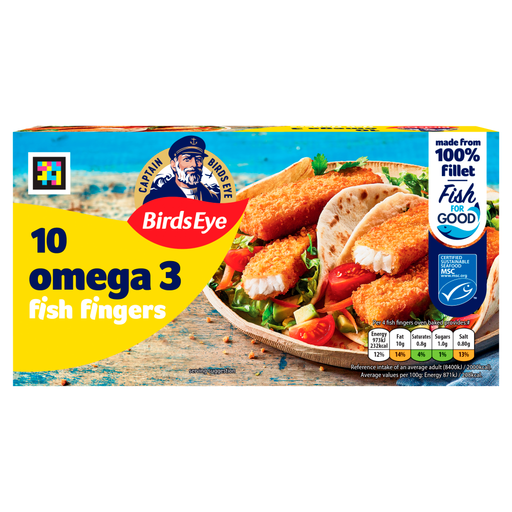
This coated fish-finger option suits planned meals built around ready-shaped portions rather than recipes that need plain fillets.
 No image available
These ten coated fish fingers fit a fixed-format meal more readily than a batch recipe needing plain fish. Check the individual pack for MSC labelling, current ingredients and allergens, cooking directions and its warning that bones may remain.
Yes, depending on its sourcing; freezing alone does not establish sustainability. For wild-caught fish, check for the blue MSC ecolabel on the product, then read the species and available catch information when choosing between packs.
No. The MSC label identifies a certified wild-capture fishery, while the Marine Conservation Society’s Good Fish Guide provides a way to examine a fish choice by species, source and catch or farming method. An MSC fisheries label is not a label for farmed fish.
Choose plain fillets when the fish needs to take different seasonings or go into sauces and pies. Breaded portions suit meals where the coating stays on; compare the fish percentage, ingredients, allergens and cooking directions on the exact pack.
Follow the exact product’s directions: the reviewed coated-fish listings instruct shoppers not to refreeze after defrosting. A Food Standards Agency review published in 2021 also cites consumer guidance to use defrosted food within 24 hours. Plan how much to thaw for each cooking session before you start.
Check the current pack for fish and any coating ingredients or precautionary allergen statements. Tesco’s listing for Birds Eye Breaded Cod Fish Fillets identifies a possible milk warning; declarations can differ between products, so read the label of the pack you intend to cook.