Home cooks making a fish pie or traybake
A plain white-fish fillet leaves the sauce, seasoning and sides up to you. Check whether the particular fillet needs thawing and cooking before it goes into your recipe.


Choose a plain white-fish fillet if you want to make your own pie, sauce or traybake; choose salmon or another oily fish when that is the type of fish you want to serve. Battered or breaded fish offers a more prepared supper, but check the exact pack for ingredients, allergens, bones and cooking instructions rather than treating every frozen fish product alike.
A plain white-fish fillet leaves the sauce, seasoning and sides up to you. Check whether the particular fillet needs thawing and cooking before it goes into your recipe.
Battered or breaded fish can provide the centre of a familiar winter meal with less preparation. Birds Eye gives cook-from-frozen directions for selected products; the method and timing still depend on the individual pack.
Salmon or kippers make sense when you specifically want oily fish rather than a white-fish base for a pie. Check whether your chosen product is plain, seasoned or otherwise prepared before planning the rest of the dish.
Start with the dish you intend to make, then check the particular fish product’s preparation and pack information.
| Priority | What to check | Your needs |
|---|---|---|
| Meal format | Choose between plain fish and a coating or sauce. Check which parts of the meal you will prepare yourself and whether the pack gives a suitable cooking method. | I want to build a pie or traybake around plain fish; for a prepared centrepiece, I would choose a coated or sauced product instead. |
| Fish type | Read the named species and distinguish white fish from oily fish. Check the whole product, not just the fish species, when comparing plain and prepared formats. | If I am planning a salmon meal, a white-fish fillet does not serve the same purpose. NHS guidance distinguishes oily fish from white fish, with different advice applying to some groups. |
| Ingredients and bones | Read the current ingredient and allergen declarations, especially for coatings or sauces. Look for a bone warning even when the product is called a fillet. | I need to know what else comes with the fish. M&S British Hake Fillets, for example, list fish as an allergen and warn that bones may be present. |
| Cooking and storage | Check whether the exact pack permits cooking from frozen or requires thawing. Follow its storage temperature, cooking method and instructions after thawing. | For a freezer-to-oven supper, I would pick a product whose own pack gives that method, rather than applying another fish product’s directions. |
| Pack size | Compare the stated weight and number of fillets or steaks with the number of people eating. Check whether the pieces suit the portions your recipe requires. | A pack for a shared supper needs to fit the dish I am making; a single steak may be a better fit for one plate. |
Plain raw fish, oily fish and coated or sauced products bring different ingredients and preparation steps to a winter meal. A battered fillet will not give you the same control over a homemade pie as an uncoated fillet.
Decide on the dish first, then choose the fish format and check its pack directions.
M&S British Hake Fillets warn that bones may be present, while a coating or sauce can change the ingredient and allergen information you need to read.
Use the current physical pack for the final allergen and bone check, particularly when buying a different product or variant.
A cook-from-frozen direction for one fish product does not apply to another. The Food Standards Agency’s research identifies refrigerator thawing as a way to keep defrosting food at microbiologically safer temperatures than room-temperature thawing.
Follow the chosen pack’s thawing and cooking directions. M&S British Hake Fillets specify refrigerator defrosting, use within 24 hours after thawing and no refreezing after thawing.
Birds Eye describes battered and breaded frozen fish suited to a prepared fish supper.
Young's describes Natural Fish Fillets alongside coated and other prepared seafood formats.
Tesco’s frozen fish listings include white-fish fillets and prepared formats such as fish in sauce.
M&S lists plain and lightly dusted frozen fish, including British Hake Fillets.
Asda lists Icelandic Cod Loins as a frozen-fish product.
These options cover prepared fish for a coated-fish supper, salmon for an oily-fish meal, plain hake for your own recipe and a miso-marinated fish steak. Their different formats call for different ingredient and cooking checks.
 No image available
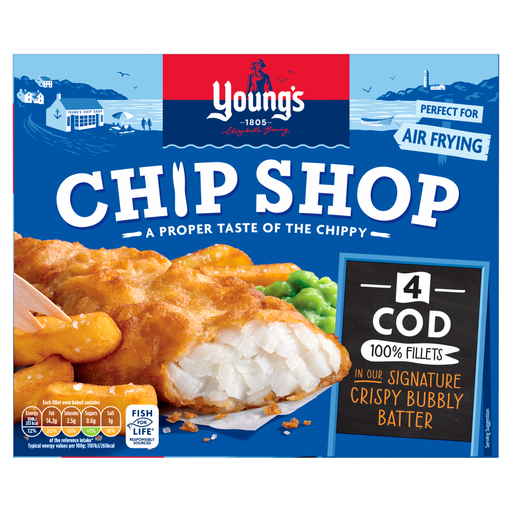
Four cod fillets offer a coated-fish format for a shared supper. Check the pack’s cooking directions, allergen declaration and bone warning before serving.
 No image available
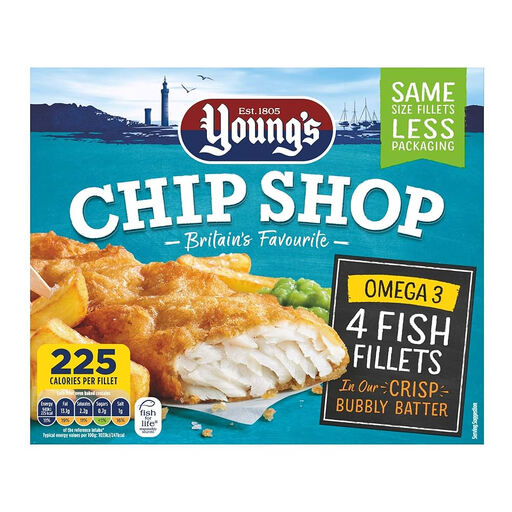
This four-fillet pack is another prepared-fish option for a shared meal. Read its own pack for the fish species, coating ingredients, allergens, bone warning and oven directions; the product name alone does not establish its nutrition.
 No image available
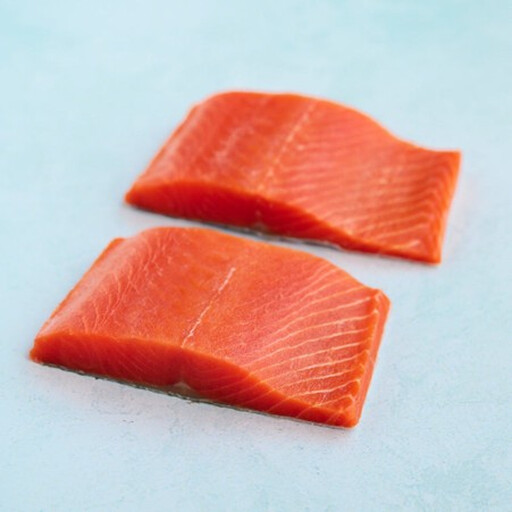
Choose these salmon steaks when the meal calls for oily fish rather than a coated white-fish fillet. The supplied product information calls for thawing before cooking; follow the current pack and check its allergen warning.
 No image available
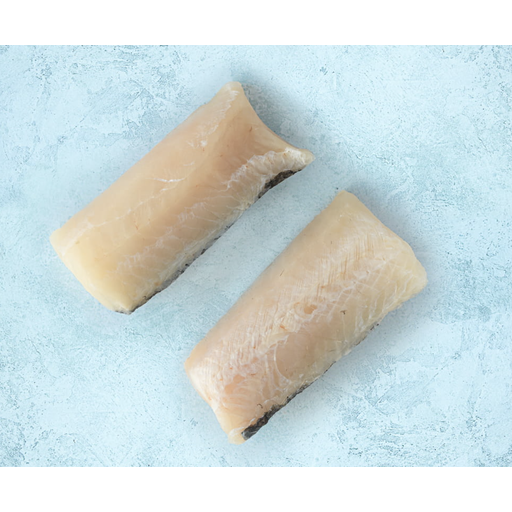
These hake loin steaks leave the seasoning and accompaniments to you, making them an option for a scratch-cooked supper. They are raw fish: check the pack for thawing and cooking directions rather than assuming they can be cooked from frozen.
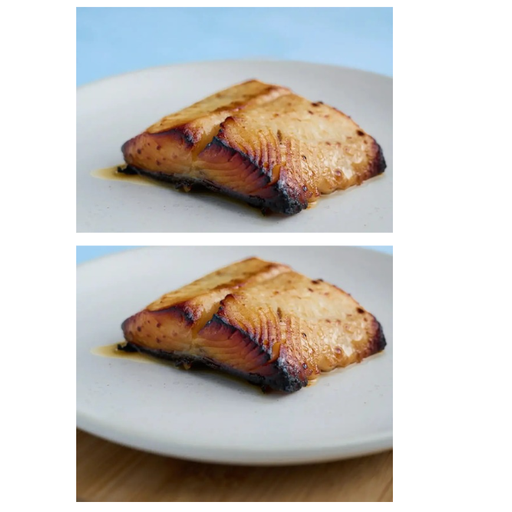 No image available
This single miso-marinated steak is a seasoned option, not a plain fillet for a homemade sauce. The supplied product information calls for defrosting before cooking; check the pack’s directions and its fish and soy allergen information.
Yes, when the exact product’s instructions permit it. Birds Eye provides cook-from-frozen directions for selected battered and breaded fish, and Young's describes its Natural Fish Fillets range as cook-straight-from-frozen; use the method and timing on the pack you have bought.
Choose plain white fish such as cod or haddock if you want to add your own sauce or pie topping; choose salmon or another oily fish when that is the type of fish you intend to serve. NHS guidance distinguishes the two fish types, so do not assume they are interchangeable when planning the meal.
Yes. Read the current pack even for an uncoated fillet: M&S British Hake Fillets list fish as an allergen and warn that bones may be present. Coatings and sauces also have their own ingredient declarations to check.
Follow the selected pack’s directions; do not assume every product requires thawing. M&S British Hake Fillets specify refrigerator defrosting, use within 24 hours and no refreezing after thawing. Food Standards Agency research identifies refrigerator thawing as keeping defrosting food at microbiologically safer temperatures than room-temperature thawing.