Holiday-cottage cooks reducing total fat
If you are planning simple self-catered meals, uncoated white-fish fillets are a starting point. The NHS describes white fish as low in fat; check the exact pack for added ingredients and cooking directions.


For a holiday cottage meal where reducing total fat is the priority, start with uncoated frozen white fish rather than assuming every fish product is alike: the NHS describes white fish as low in fat, and Marks & Spencer lists 1.2g fat per 100g for its British Hake Fillets. Coated fish and oily fish offer different meal options, but compare each pack’s fat per 100g, salt and ingredients before choosing. Check that the cottage has suitable frozen storage and the equipment needed for the pack’s cooking instructions.
If you are planning simple self-catered meals, uncoated white-fish fillets are a starting point. The NHS describes white fish as low in fat; check the exact pack for added ingredients and cooking directions.
Oven-ready portions can simplify a cottage meal, but a breaded or battered fillet is not equivalent to a plain one. Compare fat, salt, allergens and the cooking method before selecting a pack.
If your plans include salmon as well as white fish, treat them as different choices rather than interchangeable lower-fat options. Compare the labelled fat values for the products you intend to cook.
Choose a fish format for the meal you want to make, then compare the exact packs on a per-100g basis and check whether you can store and cook them at the cottage.
| Priority | What to check | Your needs |
|---|---|---|
| Total fat | Compare fat per 100g and read the ingredients for coating or sauce. Check whether the pack permits baking, grilling or steaming; the NHS contrasts these methods with frying. | For a lower-fat cottage meal, I would start with uncoated white fish and compare the exact packs, rather than rely on the word “fish” alone. |
| Coating | Check the fat value and ingredients even when a pack says “lightly dusted”. Marks & Spencer lists 8.3g fat per 100g for Lightly Dusted Yellowfin Sole and 1.2g for its British Hake Fillets. | I might choose a coated fillet for a familiar oven-cooked supper, but the coating description would not tell me how its fat value compares with plain fish. |
| Salt | Compare salt per 100g alongside fat, particularly for smoked or seasoned fish. Marks & Spencer lists 0.7g fat and 1.40g salt per 100g for its 4 Smoked Haddock. | If I am watching salt as well as fat, a smoked option needs a separate label check. |
| Fish type | Identify whether the pack contains white or oily fish, then compare its fat per 100g. Marks & Spencer lists 17.8g fat per 100g for Scottish Salmon Portions; that figure is specific to this product. | I could plan a salmon meal for variety, while choosing white fish for a meal where lower total fat matters more. |
| Storage and preparation | Check the pack’s freezer temperature, thawing and cooking instructions, portion size and allergens against the cottage’s facilities. Coatings can add ingredients: Marks & Spencer lists wheat-containing gluten in its Lightly Dusted Yellowfin Sole. | Before buying, I need to know whether there is room to keep the fish frozen and whether I can prepare it safely for everyone eating. |
Coating, sauces and cooking method can change the finished meal, while oily fish differs from white fish in total fat. The NHS describes white fish as low in fat and contrasts baked, grilled or steamed fish with fried fish.
Compare the exact pack’s fat per 100g and follow a suitable cooking method in its instructions.
Marks & Spencer lists 0.7g fat per 100g for its 4 Smoked Haddock, but also lists 1.40g salt per 100g.
If salt matters to your choice, compare both figures with those on an unsmoked option.
Marks & Spencer’s British Hake Fillets list 1.2g fat per 100g, while its Lightly Dusted Yellowfin Sole lists 8.3g. A range label or the word “lightly” does not replace a comparison of the individual products.
Read the nutrition and ingredient panels before deciding which format suits the meal.
Frozen fish needs storage and preparation that match its pack instructions. Marks & Spencer’s British Hake Fillets, for example, specify frozen storage at −18°C and defrosting in a refrigerator.
Confirm freezer and refrigerator space, cooking equipment and a manageable pack size before you shop.
Marks & Spencer provides product-level nutrition information for several different frozen-fish formats.
The Birds Eye frozen-fish range includes fillets, steamed fish products and fish fingers.
Young’s appears among the coated frozen-fish options listed by Tesco Groceries.
Tesco Groceries lists own-label breaded and battered frozen fish alongside branded coated products.
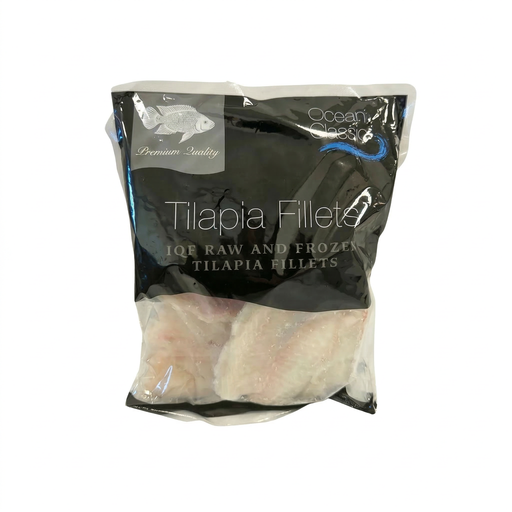
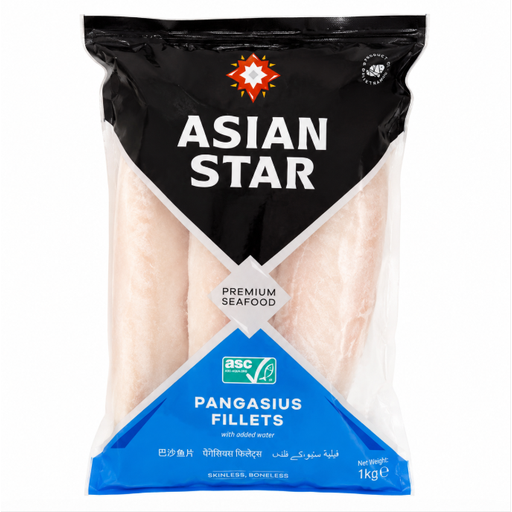
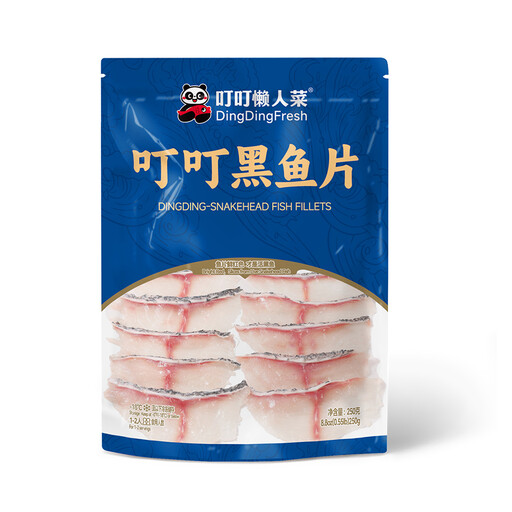
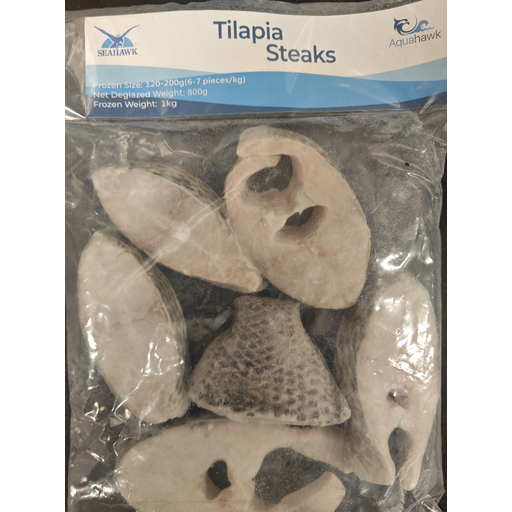
These options include tilapia and pangasius fillets, snakehead fillets and tilapia steaks for planned cottage meals. Check each pack’s nutrition, ingredients and storage directions when choosing for a lower-fat meal.
 No image available
For a cottage meal built around tilapia fillets, check the pack’s fat per 100g and cooking directions. The title identifies individually quick-frozen fillets and distinguishes the 800g net weight from the 1kg pack weight; make sure the pack suits your freezer space and length of stay.
 No image available
This pangasius fillet is an option to compare for planned cottage meals. Its title distinguishes the 800g net weight from the 1kg pack weight; check the current fat and salt values, ingredients, and thawing and cooking directions before deciding.
 No image available
The individually quick-frozen format may help when planning separate cottage meals; confirm the storage and thawing directions on the pack. The title specifies skinless, boneless fillets, 170/200g sizing and an 800g net weight within a 1kg total weight. Compare its nutrition and ingredients with other fillets on a per-100g basis.
 No image available
The 250g pack is a different portion-size option for a planned meal. Check its seasoning ingredients, fat and salt per 100g, and cooking directions before choosing it for a lower-fat cottage meal.
 No image available
If steak portions suit your cottage meal plan, this title specifies 6/7 tilapia steaks and an 800g net pack. Compare the pack’s fat and salt per 100g, and check its freezer, thawing and cooking directions against the facilities available.
Start by comparing uncoated white-fish fillets: the NHS describes white fish as low in fat. Check each pack’s fat per 100g and ingredients, then use a cooking method permitted by its instructions.
No conclusion follows from that wording alone. Marks & Spencer lists 8.3g fat per 100g for its Lightly Dusted Yellowfin Sole, compared with 1.2g per 100g for its British Hake Fillets; compare the exact products’ nutrition panels.
Yes, if an oily-fish meal suits your plans, but do not assume it has the same total-fat value as white fish. Marks & Spencer lists 17.8g fat per 100g for its Scottish Salmon Portions, so compare it with the particular white-fish pack you are considering.
Follow the instructions on the exact pack and confirm that the cottage has suitable freezer and refrigerator space. For example, Marks & Spencer instructs buyers of its British Hake Fillets to keep them frozen at −18°C, defrost them in a refrigerator, use them within 24 hours and not refreeze them after thawing.
Yes. The NHS advises pregnant people not to eat more than two portions of oily fish a week, including salmon, trout, mackerel, sardines and herring. That is an oily-fish limit, not a limit applied to every white-fish product.