Who is each format for?
The course and serving style help narrow the choice before you compare individual packs.
Hosts serving a plated fish main
Plain, skinless and boneless fillets leave room for your own seasoning, sauce and sides. Tesco Haddock Fillets 360G is one documented example with an MSC-certified-fishery statement; check the label and catch details on the pack you choose.
Hosts planning a seafood starter or sharing dish
Frozen prawns can be portioned for a starter, canapé or shared course. If farmed-seafood certification matters to you, look for the ASC label on the specific pack and check its preparation state before planning the cooking.
Hosts serving a casual fish supper
Battered or breaded fish fits a less formal menu. Check the individual product’s species, sourcing information, ingredients and cooking directions: a certification statement on one product does not cover every item from the same brand.
What should you check before buying?
Decide whether the fish is the plated main, part of a starter or a coated supper; then compare the sourcing and preparation details of products in that format.
Plain wild-fish fillets
Choose when: You want to season and plate individual portions as the main course.
Keep in mind: The Marine Conservation Society assesses seafood by species, origin and capture method, so a familiar species name is not enough.
Farmed prawns
Choose when: A prawn starter or shared dish suits the menu.
Keep in mind: Check the pack’s ASC label, quantity and preparation state before deciding how many packs and how much cooking time you need.
Coated fish
Choose when: You are planning a casual, crisp fish supper rather than a plain fillet main.
Keep in mind: Batter or breadcrumbs change the ingredients and may introduce allergens; check sourcing separately for the exact product.
| Priority |
What to check |
Your needs |
| Certification |
Look for the blue MSC ecolabel on wild-caught fish or an ASC label on farmed seafood. The Marine Stewardship Council and Aquaculture Stewardship Council describe these labels as indicators of assessment against their respective standards. |
I want sourcing information tied to the product I am serving, rather than relying on a broad brand or retailer claim. |
| Species and source |
Read the named species, catch area or farm origin, and method where stated. The Marine Conservation Society uses what the seafood is, where it came from and how it was caught or farmed in its Good Fish Guide ratings. |
If I am choosing cod, haddock or another familiar fish, I need enough detail to assess this source rather than assuming every catch is alike. |
| Serving format |
Check whether the product is a plain fillet, peeled prawn or coated portion, and whether the pack quantity fits your planned servings. Tesco’s cited haddock fillets are skinless and boneless; Birds Eye’s cited battered fillets contain Alaska pollock. |
For a plated main, I want control over the sauce and sides. For a starter or informal supper, a different format may fit the menu. |
| Ingredients |
Read the current ingredient and allergen declarations, particularly on coated seafood. Birds Eye lists wheat flour in the batter of its cited Alaska pollock fillets. |
Guests’ dietary requirements affect which product I can serve, regardless of its sourcing label. |
| Cooking plan |
Follow the exact pack’s frozen-cooking or thawing instructions. The Food Standards Agency advises using food immediately, within one day, once it has been defrosted. |
I need a method that fits the time and equipment available when guests arrive, without thawing fish earlier than necessary. |
Which brands offer useful reference points?
These examples illustrate details to look for on individual products; a brand’s wider range needs its own pack-by-pack checks.
Tesco
Its Haddock Fillets 360G provide an example of plain frozen fish for a plated main.
- Tesco describes these fillets as skinless and boneless and states that they come from an MSC-certified fishery.
- That statement concerns this product, not every Tesco frozen-fish pack; read the catch information on the one you buy.
M&S
Its frozen Breaded Cod 500g is a coated option for a casual fish course.
- M&S describes this product as wild-line caught from sustainable fisheries in Norway.
- This is M&S’s sourcing claim, not an MSC certification shown in the cited product information. M&S also warns that the product must be cooked and may contain bones.
Sainsbury’s
Its frozen range lists raw and cooked peeled king prawns with ASC in their product names.
- The listings give hosts farmed-seafood products to examine for a starter or shared dish.
- Check the ASC label and preparation instructions on the exact pack; a retailer-wide sourcing statement does not establish every product’s status.
Birds Eye
Its frozen range includes coated fish formats for an informal supper.
- Birds Eye’s cited battered Alaska pollock fillets have oven-from-frozen directions; a separate cited fish-finger product carries an MSC statement.
- The fish fingers’ certification does not establish the status of the battered fillets. The cited batter contains wheat.
Young’s
Its natural frozen fillets offer another format to consider for a fish main.
- Young’s describes its cited flaky white-fish fillets as suitable for cooking from frozen.
- Check the pack for the fish species, origin and any certification before making a sustainability judgement about those fillets.
Joybuy options for a seafood starter
These coated king prawns are options for a starter or sharing course, not plain fish fillets for a plated main. Check each current pack for its ASC label, allergens and cooking directions before choosing.
 No image available
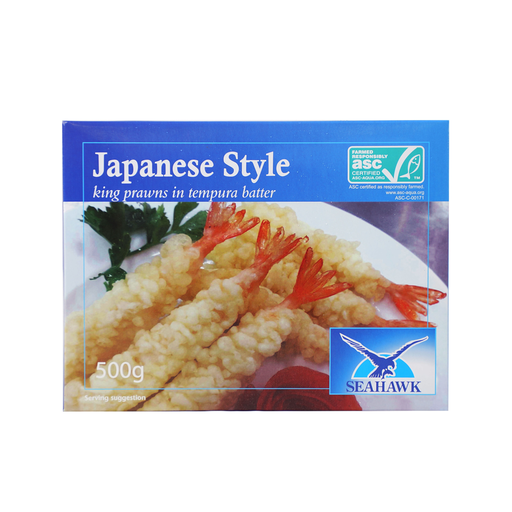
Seahawk Tempura Battered King Prawns 500g
A tail-on, tempura-battered prawn option for a starter or sharing dish rather than a plain fish main. Check the pack for its ASC label and allergens, including crustaceans, wheat and soya; follow its cooking directions and ensure the raw prawns are fully cooked.
Joybuy
 No image available
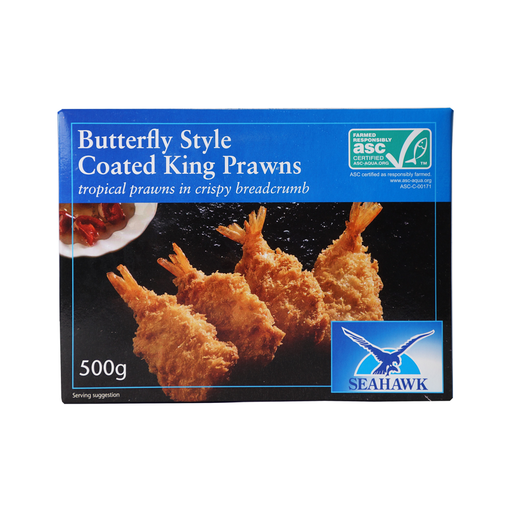
Seahawk Crumbed Butterfly King Prawns 500g
A crumbed butterfly-style prawn option for a starter or shared course rather than a plain fish main. Check the current pack for its ASC label, crustacean and wheat allergens, and cooking directions; the raw prawns need to be fully cooked.
Joybuy
Common questions
How can I check the sourcing of wild frozen fish?
Look for the blue MSC ecolabel on the exact pack, then read the species and catch information. The Marine Stewardship Council says its label identifies wild-caught fish from practices assessed against its environmental sustainability requirements; the Marine Conservation Society also considers where and how seafood was caught.
Is cod automatically a sustainable choice?
No. The Marine Conservation Society reported no recommended UK-caught cod choices in its April 2026 Good Fish Guide update. Check the origin and sourcing evidence for the particular cod product rather than relying on its species name.
What does an ASC label on frozen prawns tell me?
The Aquaculture Stewardship Council says seafood carrying its label has been verified as coming from ASC-certified farms and feed mills. Look for the label on the exact prawn pack; a claim in a product name or a retailer’s general policy is not a substitute for checking it.
Must frozen fish be thawed before guests arrive?
Not if the exact product instructs you to cook it from frozen: the cited Tesco haddock and Birds Eye battered fillets provide cook-from-frozen directions. Follow your pack’s instructions; if you thaw food, the Food Standards Agency advises using it immediately, within one day.
What should I check when serving guests with allergies?
Read the current pack’s ingredients and allergen declaration for every product you plan to serve. For example, Birds Eye lists wheat flour in its cited battered fish, while the coated Joybuy prawn options call for checks for crustaceans and wheat; also follow any bone warnings on fish packs.


