When buying frozen fish for several lower-fat meals, start with uncoated portions and compare the exact packs: Sainsbury’s Stamford Street Co. white-fish steaks and M&S frozen cod listed by Ocado each contain 0.7g fat per 100g, while Tesco’s battered pollock lists 10.3g. Check the number of usable portions, net weight and storage directions alongside the nutrition panel; a larger pack or an uncoated appearance alone does not settle the choice.
Who is buying for several meals?
Meal planners buying several portions
If you plan to use one pack across multiple meals, compare fat per 100g, the number of portions and the cooking directions. Plain white fish is a useful format to examine: the NHS identifies cod, haddock and pollock as white fish that is low in fat, while the finished dish also depends on what you add.
Households choosing convenient freezer meals
Check whether the pack provides enough usable pieces and whether its cooking instructions fit your routine. Convenience and fat content are separate considerations: Tesco’s battered pollock and Ocado’s M&S coated cod listings show higher fat per 100g than the plain-fish examples.
Shoppers choosing different kinds of fish
If your shopping includes both white and oily fish, check which kind each pack contains rather than treating them as interchangeable. The NHS discusses oily fish separately from lower-fat white fish.
What matters when choosing a larger pack?
Compare nutrition on the same per-100g basis, then work out whether the pack supplies portions you can store and cook as intended.
| Priority |
What to check |
Your needs |
| Fat and coating |
Compare fat per 100g on the exact nutrition panels. Read the ingredients and distinguish plain fish from breaded or battered products. |
I’m choosing fish for lower-fat meals, so the finished product matters more than the species name alone. Sainsbury’s plain white-fish steaks list 0.7g fat per 100g; Tesco’s battered pollock lists 10.3g. |
| Usable portions |
Check net fish weight, piece or serving count, and whether pieces can be removed individually. Compare the current price per kilogram when judging packs of different sizes. |
A large pack is useful to me only if I can divide it across the meals I intend to make and have room to keep it frozen. |
| Cut and preparation |
Check whether you are buying formed steaks or fillets, plus the pack’s cooking method and any thawing instructions. Account for ingredients you plan to add. |
I may prefer a whole fillet to a formed steak, or need a product that fits the way I normally cook. The pack’s fat figure does not describe a dish after I add oil or sauce. |
| Storage and ingredients |
Read the stated freezer temperature and instructions for fish that has thawed. Check the current allergen declaration and coating ingredients where relevant. |
Before stocking up, I need to know that the pack fits my freezer and that everyone eating it can use the listed ingredients. |
What can go wrong when stocking up?
-
Assuming every frozen-fish product is similarly low in fat
Coating changes the comparison. Sainsbury’s uncoated white-fish steaks list 0.7g fat per 100g, whereas Tesco’s battered pollock lists 10.3g per 100g.
Use the fat-per-100g line on the exact pack rather than choosing by the word “fish” on the front.
-
Choosing the largest pack by appearance alone
Total pack weight does not tell you how many portions you can use, particularly when pack descriptions distinguish total weight from net fish weight.
Check net weight, piece count and current price per kilogram, then consider whether you can store and use the portions.
-
Reading an omega-3 message as a low-fat claim
Joybuy’s listing for Young’s Chip Shop Omega 3 Fish Fillets describes battered pollock and gives 13.1g fat per 100g. An omega-3 message does not establish that a coated product is low in fat.
Check fat per 100g separately from any omega-3 wording, and confirm the type of fish in the ingredients.
-
Overlooking thawing and refreezing directions
Ocado’s listings for M&S frozen cod and battered cod both state that the products should not be refrozen after thawing. That matters if a multi-pack thaws before you have used it.
Plan freezer space before buying and follow the storage, thawing and cooking directions on the exact pack.
Which brands illustrate the different formats?
Sainsbury’s / Stamford Street Co.
Its White Fish Steaks x6 520g are an uncoated bulk-pack example made from formed Alaska pollock steaks.
- Sainsbury’s lists six servings and 0.7g fat per 100g for this product.
- These are formed steaks, not whole cod or haddock fillets; check the cut if that distinction matters to you.
M&S
Its frozen cod listings provide an example of why plain and coated products need separate nutrition checks.
- Ocado lists at least five pieces and 0.7g fat per 100g for M&S Wild Icelandic Cod Fillets Frozen.
- Ocado lists 6.0g fat per 100g for M&S breaded cod and 10.1g for its battered chunky cod; those figures do not describe the plain fillets.
Young’s
Young’s describes natural frozen fillets as well as coated Chip Shop products.
- The brand says its Natural Fish Fillets range includes options that cook from frozen.
- Joybuy’s Young’s Chip Shop Omega 3 Fish Fillets listing describes battered pollock and lists 13.1g fat per 100g. Check the particular range rather than relying on the brand name.
Tesco
Tesco Battered Pollock 4 Fillets 600g illustrates a larger coated-fish pack.
- The Tesco listing specifies four fillets and a 600g pack.
- It lists 10.3g fat per 100g and 59% Alaska pollock; compare it with plain fish if keeping fat lower is the priority.
Birds Eye
Birds Eye describes a frozen range that includes fish fillets and coated formats such as fish fingers.
- The range gives shoppers different formats to compare for cooking and portion needs.
- Check each product’s nutrition panel; the range description does not establish a fat figure for an individual pack.
Joybuy plain frozen-fish options
These Joybuy listings are for plain frozen fillets to consider when planning several meals. Compare each current pack’s nutrition, net fish weight and portion details before deciding how it fits your lower-fat aim.
 No image available
Ocean Classic Skinless & Boneless Pangasius Fillet IQF 170/200g, 1kg (800g net)
The 800g net weight gives you a basis for planning several meals. The title identifies skinless, boneless IQF fillets and a 170/200g size designation; check the current pack for its fat per 100g and the number of fillets.
View on Joybuy
 No image available
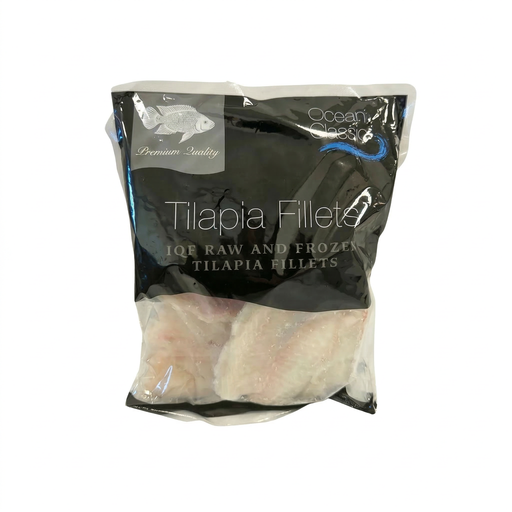
Ocean Classic Tilapia IQF Fillets, 1kg (800g net)
For meals spread across more than one occasion, compare the 800g net weight with the portions you intend to cook. The title identifies IQF tilapia fillets; follow the pack’s thawing directions and check its fat-per-100g figure.
View on Joybuy
 No image available
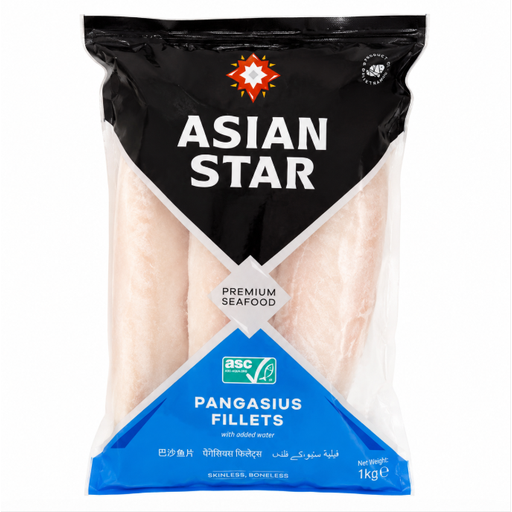
Asian Star White Pangasius Fillet, 1kg (800g net)
The title distinguishes 800g net weight from the 1kg pack weight, which matters when planning several portions. Check the current nutrition and ingredients panels, along with the fillet count, before choosing it for your meals.
View on Joybuy
Questions before buying
How should I compare fat across frozen-fish packs?
Use the fat-per-100g figure for the exact products, then consider how you will cook them. Sainsbury’s Stamford Street Co. white-fish steaks and Ocado’s M&S plain frozen cod each list 0.7g per 100g; Tesco’s battered pollock lists 10.3g per 100g.
Does a larger battered or breaded pack suit a lower-fat purchase?
Not on size alone: check the coating and nutrition panel. Ocado lists 6.0g fat per 100g for M&S breaded cod and 10.1g for M&S battered chunky cod, compared with 0.7g for its listing of M&S plain frozen cod.
Can I refreeze fish from a bulk pack after it thaws?
Follow the directions on that pack rather than assuming all frozen fish has the same instructions. Ocado’s listings for M&S frozen cod and battered cod both say not to refreeze after thawing, so plan how you will transport, store and use the portions.
What ingredients should I check in coated fish?
Check the current pack’s full ingredient and allergen declarations, including the coating. Fish is an allergen, and a coating can introduce others; the relevant ingredients depend on the particular product and recipe.


