Families planning a quick tea
Portioned fish fingers suit a meal where a familiar shape and clear cooking directions matter. Check the chosen pack’s method against the oven, grill or air fryer you intend to use.


Choose fish fingers when easy portioning and a familiar shape matter most; choose plain fillets when you want to decide how to season or coat the fish, or coated fillets for a larger plated portion. Before cooking, check the exact pack for the named fish, allergens, possible bones and appliance instructions. An omega-3 label on pollock fingers does not make them an oily-fish meal.
Portioned fish fingers suit a meal where a familiar shape and clear cooking directions matter. Check the chosen pack’s method against the oven, grill or air fryer you intend to use.
Fish is an allergen, and coatings can introduce others. Birds Eye lists wheat in its Omega 3 Fish Fingers and wheat, milk and mustard in its crispy battered fingers, so check the current pack for the particular variant being served.
Look past the format to the named species. Pollock fingers offer a white-fish meal; a clearly identified salmon product is a different choice when the plan is to serve oily fish.
Start with the portion and texture that will work for tea, then check the species, label and cooking method on that product.
| Priority | What to check | Your needs |
|---|---|---|
| Format and portions | Compare the number and size of fingers or fillets, the named fish and any coating. A fillet may need dividing for a smaller serving. | For an easy-to-portion tea, I’d consider fingers; for a plated fish meal, a fillet may suit us better. |
| Fish species | Read the species rather than relying on an omega-3 claim. Birds Eye identifies its Omega 3 Fish Fingers as Alaska pollock; NHS fish guidance distinguishes white fish from oily fish. | If the plan is specifically an oily-fish meal, I’d look for a named oily species such as salmon rather than assume pollock fingers qualify. |
| Allergens and bones | Check ingredients and precautionary statements on the exact pack. Coatings vary: Birds Eye declares wheat in its Omega 3 Fish Fingers, while its crispy battered fingers also declare milk and mustard. Read any bone warning. | I need to know what is in this particular variant before serving it, especially if someone must avoid an ingredient. |
| Cooking and storage | Match the pack’s oven, grill or air-fryer directions to your appliance. Check whether it says to cook from frozen or thaw first, and follow its storage instructions. | A freezer-to-oven option fits a short tea-time routine; a product that needs thawing takes more planning. |
| Meal components | Check whether you are buying plain fish, a lightly coated fillet or a breaded or battered product. Compare ingredients for the specific products rather than assuming their coatings are alike. | I might choose plain fish to add our own seasoning and sides, or a coated option when that texture suits the meal. |
Birds Eye names Alaska pollock in its Omega 3 Fish Fingers. An omega-3 claim does not, by itself, tell you that the fish is an oily species.
If you are planning an oily-fish meal, read the species name and choose a product that identifies an oily fish such as salmon.
Ingredients differ even within one brand’s fish-finger range: Birds Eye’s Omega 3 fingers list wheat, while its crispy battered fingers list wheat, milk and mustard.
Check the ingredient list and any precautionary allergen statement on the current pack of the exact product you intend to serve.
M&S warns that its 10 Fish Fingers contain raw fish and may contain bones; Birds Eye also gives a possible-bones warning for its crispy battered fingers. A portioned shape does not remove the need to read the instructions.
Follow the pack’s cooking method and check fish for bones before serving it to younger children.
These ranges illustrate the formats available to compare; ingredients and directions belong to the individual product, not the brand as a whole.
Its fish-finger range includes breadcrumb-coated and battered variants.
Young's lists standard and chunky fish fingers alongside other fish products.
Tesco’s frozen range lists fish fingers and coated-fish formats.
M&S Food lists frozen fish fingers and other frozen-fish options.
These options cover coated fish fillets for a plated tea and salmon fillet steaks for a meal built around oily fish. Check each product’s pack for serving and cooking details.
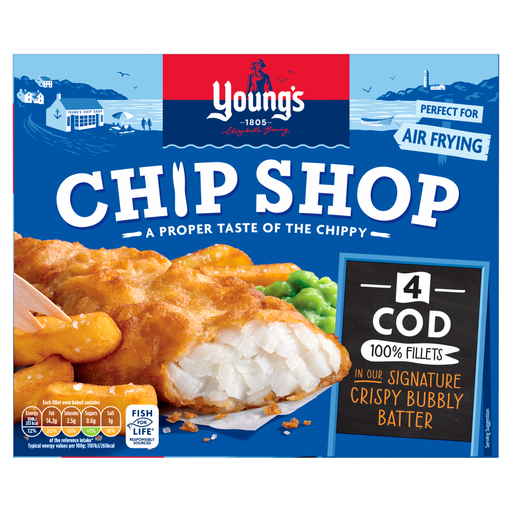 Image unavailable
Four coated cod fillets suit a tea served as individual plated portions. Check the current pack’s allergens, bone warning and cooking directions before serving, particularly if you plan to use an air fryer.
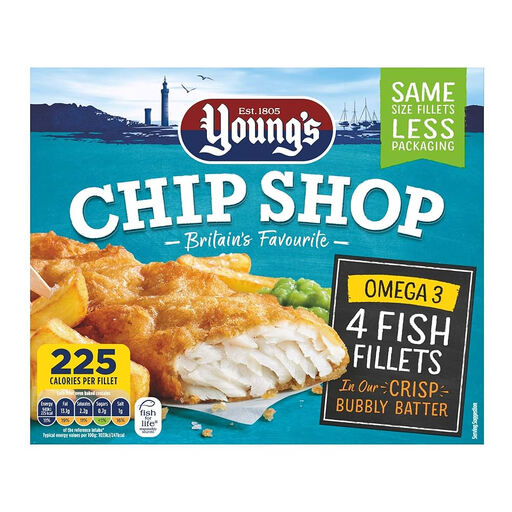 Image unavailable
This four-fillet coated option is for a plated fish tea, rather than the finger format. Check the named species instead of treating “Omega 3” as an oily-fish classification, and read the pack for allergens, possible bones and cooking directions.
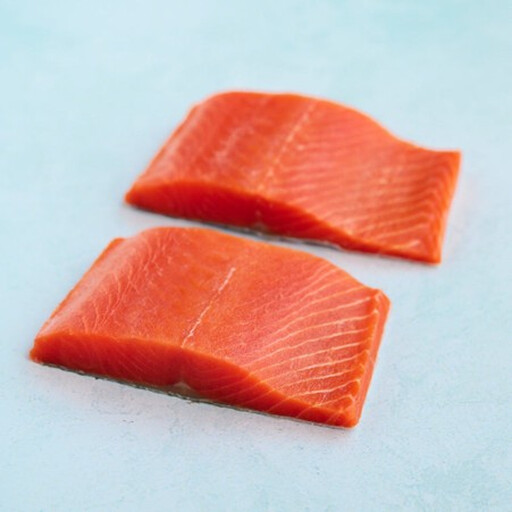 Image unavailable
These sockeye salmon fillet steaks offer a named oily-fish option for a meal with sides. The product directions call for thawing before cooking, so plan ahead and check the current pack’s allergen, bone and cooking information before serving children.
No. Birds Eye’s Omega 3 Fish Fingers contain Alaska pollock, which the NHS identifies as white fish. If you intend to serve oily fish, check for a named oily species such as salmon rather than relying on the front-of-pack omega-3 wording.
Check fish and every ingredient in the coating, plus any precautionary allergen statement on the exact pack. Birds Eye lists wheat in its Omega 3 Fish Fingers and wheat, milk and mustard in its crispy battered fingers; other variants need their own label check.
No. M&S warns that its 10 Fish Fingers may contain bones, and Birds Eye gives a similar warning for its crispy battered fingers. Read the warning on your chosen pack and check portions before serving younger children.
Use an air fryer when the exact product gives an air-fryer method and your appliance meets its conditions. Birds Eye provides one for its Omega 3 Fish Fingers, but that does not establish directions for other fingers or fillets.
Follow the handling instructions on the exact pack. Birds Eye states not to refreeze its Omega 3 Fish Fingers or crispy battered fingers after defrosting; do not assume the same directions apply to every frozen-fish product.