If a child already eats the same fish-finger format regularly, a multipack can make sense when there is freezer space for repeat meals. If that format is untried, start with a smaller pack; the NHS advises offering foods repeatedly without pressuring a child to eat, and the exact pack still needs checking for storage, cooking instructions and allergens.
Who is this decision for?
The useful pack size depends less on the number of meals you hope to make than on whether the eater already accepts that particular fish format.
Parents of toddlers trying unfamiliar foods
If a child may refuse a new taste or texture, a small portion offers a way to try it without committing the freezer to many servings. The NHS advises continuing to offer a variety of foods without pressure.
Families planning weekday fish meals
Fish fingers and fillets give different meal formats. Check the chosen pack for its cooking-from-frozen directions rather than assuming every product uses the same method.
Households with limited freezer space
A multipack needs room and commits you to repeated servings of one product. A smaller pack leaves more flexibility while you learn which format is eaten.
What should you check before stocking up?
Larger fish-finger multipack
Choose when: the same breaded format is already a repeatable meal and there is space to store the pack.
Trade-off: more servings mean a longer commitment to one taste and texture.
Smaller pack or separate fillet option
Choose when: acceptance is uncertain or you want to try a different fish format.
Trade-off: a fillet, whether plain or coated, may be less familiar to a child who currently accepts only fish fingers.
| Priority |
What to check |
Your needs |
| Familiarity |
Compare the shape, coating and fish type with a meal the child already eats. For an unfamiliar format, try a small portion without pressuring them to finish it, in line with NHS advice on fussy eating. |
Will a familiar finger shape help me offer fish, or am I trying a new taste or texture? |
| Pack size |
Count the pieces or servings and check that the pack fits the freezer. Sainsbury's lists 30 fingers and 10 servings for its cited 900g pack; Tesco lists 10 fingers in its cited 300g pack. |
If this meal is still untested, I would rather store a smaller pack than plan repeated servings of it. |
| Storage and cooking |
Read the exact pack's freezer temperature, thawing directions and appliance-specific cooking instructions. The cited Tesco and Birds Eye packs specify storage at -18°C or colder and say not to refreeze after defrosting. |
I need a pack that fits my freezer and cooking routine, with instructions I can follow for that product. |
| Fish and coating |
Read the species and ingredients rather than treating every fish finger or fillet as interchangeable. A plain fillet and a breaded or battered product offer different formats. |
Am I keeping to a familiar coating, or do I want to offer a different fish format alongside accepted meals? |
| Allergens and bones |
Check the current label for declared allergens and bone warnings. The cited Birds Eye, Tesco and Sainsbury's fish-finger examples declare fish and wheat; their product information also warns that bones may remain. |
Before serving a child, I want to check the exact variant's label and examine the portion where bones are a concern. |
What can go wrong when buying ahead?
-
Buying many servings before trying the exact format
A child who accepts one fish meal may still refuse a different coating, shape or flavour. A larger pack then leaves more of that untried product in the freezer.
Try a smaller pack or a small portion first. The NHS advises offering foods again without forcing a child to eat them; consider a multipack once the same format is reliably accepted.
Repeated refusals can leave servings unused while they occupy freezer space.
-
Treating every frozen fish format as the same choice
A breaded white-fish finger, a battered fillet and a plain fillet differ in ingredients and presentation. Familiarity with one does not establish acceptance of another.
Read the species, coating and ingredients on the exact pack, then choose the format you intend to serve rather than relying on the broad description “frozen fish”.
-
Overlooking instructions on a familiar-looking pack
The cited Tesco and Birds Eye products specify freezer storage at -18°C or colder and say not to refreeze after defrosting. The cited fish-finger examples also declare allergens and warn that bones may remain.
Check the current pack before buying and follow its storage and cooking directions. Read its allergen and bone information again before serving.
Which brand and own-label examples help?
These examples illustrate different pack sizes and fish formats; a brand name alone does not tell you whether a particular product will be accepted.
Birds Eye
Birds Eye's cited eight-pack of cod fish fingers is an example of a breaded, finger-shaped option.
- The Birds Eye product instructions specify freezer storage at -18°C or colder.
- Its instructions say not to refreeze after defrosting; check the exact pack's ingredients and cooking directions.
Young's
Young's lists fish-finger products as well as natural fish fillets, giving households a choice of formats.
- Young's says its natural fillets can be cooked straight from frozen.
- Check the selected fillet pack's instructions; a statement about the range does not specify how every variant should be cooked.
Tesco
Tesco's cited 10-pack of cod fish fingers weighs 300g, offering a smaller pack to consider for a trial.
- Tesco specifies frozen storage at -18°C or colder for the cited product.
- Its storage instructions say not to refreeze if the product has thawed; use the current pack for full ingredients and cooking directions.
Sainsbury's
Sainsbury's cited Omega 3 fish-finger pack contains 30 fingers in 900g, with 10 servings stated on its listing.
- The stated serving count helps a household judge whether repeat meals fit its plans.
- Thirty fingers are a substantial commitment to one format if the eater has not tried that product.
Joybuy options for a smaller trial
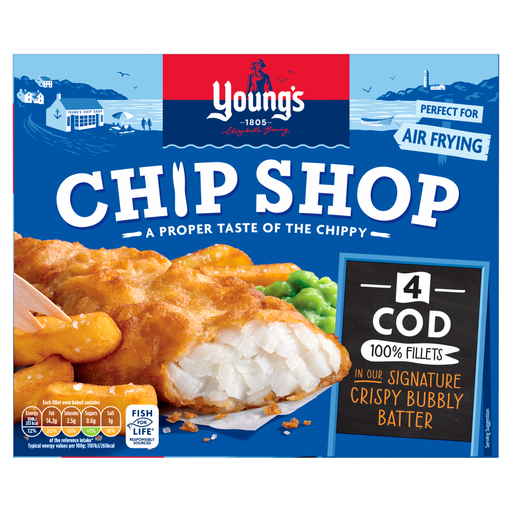
This four-fillet battered cod pack is an option for trying a smaller quantity than a large fish-finger multipack. It is a different format from both breaded fingers and plain fillets, so acceptance of either does not establish acceptance of this pack.
 No image available
Young's Chip Shop 4 Cod Fillets 400g
Four battered cod fillets offer a smaller quantity to try while acceptance of this format is uncertain. The product information specifies oven cooking from frozen until piping hot; follow the current pack's instructions rather than assuming it can be air-fried. It lists fish, wheat and mustard, with storage at -18°C or colder and no refreezing after defrosting. Check the pack for any bone warning before serving.
View on Joybuy
Questions about frozen fish meals
Should I buy a large fish-finger pack before my child has tried it?
Start with a smaller quantity if that exact format is untried. The NHS advises offering small amounts and continuing to offer foods without pressure; a larger pack makes more sense when repeated servings of the same product fit your household's meals and freezer space.
Are fish fingers and other frozen fish formats interchangeable?
No: check the species, coating and ingredients of the product you plan to serve. A child's acceptance of breaded fingers does not establish that they will eat a plain or battered fillet, and the formats need not have the same ingredients.
How should I store and cook frozen fish fingers?
Follow the directions on the exact pack. The cited Tesco and Birds Eye fish fingers specify freezer storage at -18°C or colder and say not to refreeze after defrosting; check that product's cooking method and instructions before serving it.
What should I check before serving fish fingers to a child?
Read the current variant's allergen information, cooking directions and bone warning. The cited Birds Eye, Tesco and Sainsbury's examples declare fish and wheat and warn that bones may remain; use the pack in hand rather than assuming another product has the same ingredients or warnings.


