Households serving familiar fish meals
If an eater accepts a particular finger shape, fish type or coating, check those details before switching products. Piece count and the stated cooking method can also help you plan repeat meals.


For repeat meals, start with a fish shape and coating the eater already accepts, then check whether the pack size fits the meals you plan to make. A familiar branded recipe may matter more than pack size for some households; if gluten or wheat avoidance is required, choose a product specifically labelled for that need and check its full allergen declaration. Fish type and cooking instructions also vary between products.
If an eater accepts a particular finger shape, fish type or coating, check those details before switching products. Piece count and the stated cooking method can also help you plan repeat meals.
Compare pack weight and piece count with the portions your household usually serves. A larger pack is useful only if its format suits those meals and you expect to use it within its stated storage period.
Look for a product specifically labelled for the dietary requirement and read its current allergen declaration. A gluten-free fish finger can still contain fish.
Choose the format first, then check the pack and instructions for the meals you intend to serve.
| Priority | What to check | Your needs |
|---|---|---|
| Repeat meals | Compare pack weight and piece count. Check the stated storage instructions and whether the pieces fit your usual servings. | I want enough of an accepted fish meal for the occasions I have planned, without choosing a larger pack solely for its size. |
| Familiar format | Check whether the product is fingers or fillets, which fish is named, and whether the coating is breaded or battered. | If a particular shape or coating is already accepted, I would rather check it than assume another frozen fish product will be similar. |
| Dietary fit | Read the current ingredients and full allergen declaration. Check for explicit gluten-free or wheat-free labelling when required; that does not mean fish-free. | For someone avoiding wheat or gluten, I need a product labelled for that requirement and must still check for other relevant allergens. |
| Cooking routine | Check the methods listed for the exact product and whether its instructions say to cook from frozen, turn it or avoid refreezing after defrosting. | On a busy evening, the pack needs instructions for an appliance I can use, and I will follow its directions for cooking the fish thoroughly. |
Birds Eye identifies Alaska pollock in its Omega 3 Fish Fingers. The NHS classifies pollock, cod and haddock as white fish and distinguishes them from oily fish.
Check the named fish species rather than treating the product name as a description of oily fish.
Birds Eye’s Omega 3 Fish Fingers contain wheat flour. M&S Made Without Cod Fish Fingers are labelled gluten free and wheat free, but still contain fish.
Read the current full allergen declaration for the exact product whenever a dietary restriction matters.
Birds Eye provides oven, grill and air-fryer instructions for its Omega 3 Fish Fingers, while M&S gives product-specific instructions and states that its fish fingers contain raw fish.
Follow the method and handling directions on the pack you are serving, and cook it until piping hot where instructed.
Tesco’s frozen fish-finger listing includes own-label options in different pack sizes, including a 30-finger Omega 3 pack.
Birds Eye offers fish-finger formats including Omega 3 products.
Young’s lists cod, battered and Omega 3 fish-finger variants for familiar meal formats.
M&S has both a haddock fish-finger product and a separately labelled Made Without cod option.
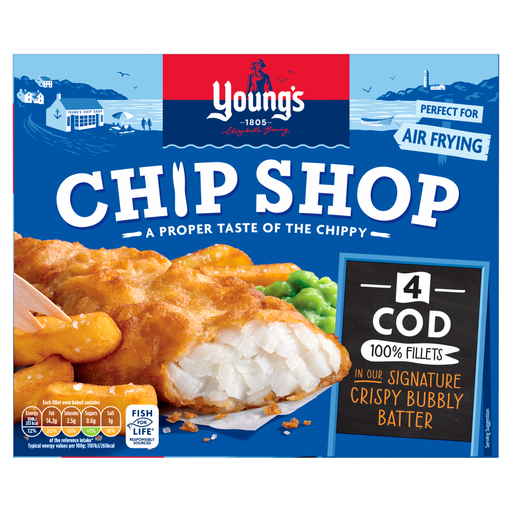
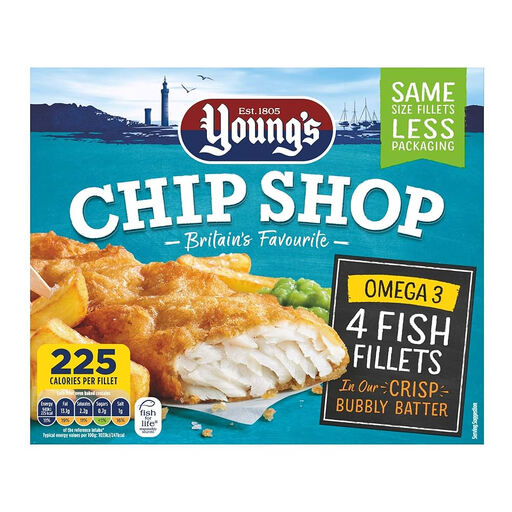
These Young’s options are battered fish fillets for households considering a fillet meal rather than the familiar fish-finger shape. Check whether that change in format suits the eater before choosing a pack.
 No image available
A battered cod-fillet option if the eater accepts fillets instead of fish fingers. The pack contains four fillets and gives oven-cooking guidance. Check the current declaration for fish, wheat and mustard before serving anyone with an allergy or dietary restriction.
 No image available
A battered Alaska pollock-fillet option for an oven meal, rather than a fish-finger pack. It contains four fillets and has instructions for cooking from frozen. Check the current allergen declaration for fish, wheat, milk and mustard; the product information also cautions that bones may remain.
It can if the eater accepts its fish and coating and you expect to use the pack within its stated storage period. Compare the piece count and weight with the servings you usually make rather than choosing by pack size alone.
No. Check the named fish: Birds Eye specifies Alaska pollock for its Omega 3 Fish Fingers, and the NHS classifies pollock as white fish, distinct from oily fish.
Not if they contain fish. M&S Made Without 9 Cod Fish Fingers are labelled gluten free and wheat free, but their ingredients and allergen information state that they contain fish. Check the full current label for every relevant allergy.
Follow the instructions for the exact product and appliance. Birds Eye says to cook its Omega 3 Fish Fingers until piping hot and not to refreeze them after defrosting; check the pack you have for its own cooking and handling directions.
Yes, particularly when an allergy or dietary restriction matters. Tesco notes that reformulation can change ingredients, nutrition information and allergens, so check the current pack rather than relying on a previous purchase.