Shoppers seeking lower-fat, low-carbohydrate fish
Plain cod or haddock gives you a fish base to consider without choosing a fatty fillet. If you follow a ketogenic eating plan, assess the whole meal rather than treating the fish alone as the answer.


Choose plain cod or haddock when you want a frozen fish base that is low in both fat and carbohydrate; that does not make the fish a complete high-fat ketogenic meal. Plain salmon is the higher-fat alternative if reducing fat is not your priority. For breaded or lightly dusted fish, check the exact pack’s carbohydrate declaration rather than assuming the coating fits your plan.
Plain cod or haddock gives you a fish base to consider without choosing a fatty fillet. If you follow a ketogenic eating plan, assess the whole meal rather than treating the fish alone as the answer.
If carbohydrate matters but reducing fat does not, plain salmon offers a different choice from lean cod. Compare the fat declaration on the exact products you are considering.
Breaded or lightly dusted fish may suit the way you want to cook, but its carbohydrate declaration needs checking separately from that of a plain fillet.
Decide whether lower fat or a higher-fat meal is the priority, then compare carbohydrate, ingredients and preparation details on the packs.
| Priority | What to check | Your needs |
|---|---|---|
| Carbohydrate | Compare carbohydrate per 100g on the same preparation basis. Read the ingredients of breaded, battered, dusted or sauced fish rather than relying on the product description. | I want a low-carbohydrate fish base, so I need to know what the coating or sauce adds. Marks & Spencer lists 6.2g carbohydrate per 100g for Lightly Dusted Cod and 12.8g for Breaded Cod, compared with less than 0.1g for its plain Wild Icelandic Cod Fillets. |
| Fat | Compare fat per 100g and distinguish plain cod or haddock from salmon. Assess the fish as part of the meal, not as a complete ketogenic meal on its own. | If I am trying to reduce fat, plain cod is the relevant starting point: Marks & Spencer lists 1.2g fat per 100g for Wild Icelandic Cod Fillets, against 17.8g for its Scottish Salmon Portions. If I follow a medically prescribed ketogenic diet, I need to use my specialist team’s plan; NHS Specialist Pharmacy Service describes these diets as very high in fat and very low in carbohydrate. |
| Salt | Check salt per 100g when considering smoked fish as well as its carbohydrate and fat declarations. | Smoked haddock might meet my preference for a lean fillet, but salt also matters to me. Marks & Spencer lists 1.40g salt per 100g for its smoked haddock. |
| Handling | Read the current pack’s allergen, freezer, defrosting and cooking instructions. Check whether cooking from frozen is specified for that product. | I need a fish product I can store and cook according to its own instructions. Tesco Groceries specifies oven cooking from frozen and storage at −18°C or cooler for its haddock fillets; those directions should not be assumed for every pack. |
Plain lean fish can be low in carbohydrate and fat, while a medically prescribed ketogenic diet has different requirements. The fat content of one fillet cannot establish whether a whole meal fits that plan.
Decide which matters for your meal: reducing fat, keeping carbohydrate low, or following a prescribed ketogenic plan. For the latter, use your specialist team’s instructions.
Marks & Spencer lists 6.2g carbohydrate per 100g for Lightly Dusted Cod and 12.8g for Breaded Cod; its plain Wild Icelandic Cod Fillets list less than 0.1g.
Compare the per-100g carbohydrate declaration and ingredients of the exact coated product with a plain fillet.
Marks & Spencer’s smoked haddock lists 0.7g fat and 1.40g salt per 100g. A low fat figure does not tell you the salt content.
If salt matters to your choice, compare its declaration alongside fat and carbohydrate before choosing smoked haddock.
Cooking-from-frozen directions apply to the named product: Tesco Groceries specifies oven cooking from frozen for its haddock fillets.
Check the current pack for its own storage, defrosting, cooking and allergen information before use.
Its reviewed frozen-fish products include plain cod and salmon alongside lightly dusted and breaded cod.
Its reviewed frozen cod loins offer a plain-fish option.
Its reviewed skinless and boneless frozen cod fillets are a plain-fish option.
Its reviewed frozen haddock fillets provide an alternative to cod for a plain fish meal.
Young’s Seafood identifies natural fish fillets in its range, including Atlantic cod and Pacific pink salmon.
Its reviewed lightly dusted fish fillets are a coated option for shoppers considering convenience.
These products are ordered around the reduced-fat question, with salmon included as a higher-fat alternative; this is not a published third-party ranking. Figures below belong to the named products and should be compared on their stated per-100g bases.
| Rank | Product | Main specifications | Reasons to consider | Platform |
|---|---|---|---|---|
| 1 | Morrisons 4 Skinless & Boneless Cod Fillets 360g | Joybuy lists 0.6g fat and nil carbohydrate per 100g. | A plain cod choice for reducing fat while keeping carbohydrate low. The Joybuy product declaration does not make the fillets a complete high-fat ketogenic meal. | Joybuy |
| 2 | M&S Wild Icelandic Cod Fillets 380g | Marks & Spencer lists 1.2g fat and less than 0.1g carbohydrate per 100g. | Another plain cod option when lower fat and low carbohydrate are both priorities; plan the rest of the meal according to your own requirements. | M&S |
| 3 | Morrisons 4 Wild Pink Salmon Fillets 360g | Joybuy lists 10.1g fat and nil carbohydrate per 100g. | A higher-fat contrast to the cod fillets for shoppers who want low carbohydrate but are not seeking the lower-fat route. | Joybuy |
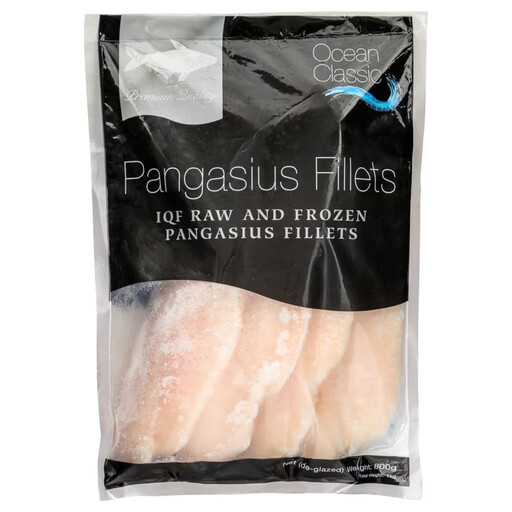
This plain frozen pangasius option is for shoppers considering a fish base without a breadcrumb coating. Check its current pack to decide whether its fat and carbohydrate declarations fit the meal you are planning.
 No image available
Consider these frozen fillets if you want a plain fish base, then compare the current pack’s fat and carbohydrate declarations with your meal requirements. The stated total weight is 1kg and the net weight is 800g; check the pack’s weight and nutrition bases when comparing products.
No. Plain lean cod or haddock can be low in carbohydrate as well as fat, but that alone does not establish whether the whole meal fits your plan. NHS Specialist Pharmacy Service describes medically prescribed ketogenic diets as very high in fat and very low in carbohydrate; follow your specialist team’s individual instructions if you are on one.
No: it describes a coating, not a carbohydrate level. Marks & Spencer lists 6.2g carbohydrate per 100g for its Lightly Dusted Cod. Compare the exact product’s nutrition declaration with that of a plain fillet.
Check the current pack for fish and any additional allergens in the coating. GOV.UK lists fish and cereals containing gluten among the 14 allergens covered by UK food-allergen guidance; the ingredients of a particular coated product determine what else needs your attention.
Follow the instruction on the specific pack rather than assuming the same direction applies to every frozen fish product. Check its defrosting, storage and cooking directions before preparing the fillets.