What to check before choosing
Compare the nutrition panel for the whole product first, then consider whether its preparation, portion size and ingredients work for your meal.
| Priority |
What to check |
Your needs |
| Carbohydrate |
Read carbohydrate per 100g and calculate it for your portion. Marks & Spencer lists less than 0.1g per 100g for its wild Icelandic cod, versus 6.2g for lightly dusted cod and 12.8g for breaded cod. |
I want to know what the fish dish contributes to my carbohydrate allowance, including any coating or sauce. |
| Meal format |
Compare the fat and saturated-fat lines as well as carbohydrate. Marks & Spencer lists 1.2g fat per 100g for its cod and hake, while its butter-finished Dover sole lists 10.1g fat and 6.0g saturated fat per 100g. |
Would I rather season a plain fillet and choose the rest of the meal myself, or buy fish with a butter-based finish? |
| Portion size |
Check the weight you will cook, not just the pack weight. For glazed fish, distinguish the total weight from the stated net fish weight. |
One pack may cover several meals; I need a carbohydrate calculation for the portion I will actually eat. |
| Ingredients and handling |
Read allergen declarations and instructions for cooking, thawing and refreezing. Butter preparations can contain milk, while dusted or breaded fish can contain wheat ingredients. |
I need the finished dish to suit everyone eating it, and I want to follow the storage and cooking directions for that pack. |
Brands and product ranges
A brand name cannot establish whether an individual frozen fish product fits your carbohydrate allowance; compare the exact pack and its preparation.
M&S
Its frozen-fish range includes plain fillets, butter-finished fish and coated products.
- Marks & Spencer’s product panels allow a direct comparison: its wild Icelandic cod lists less than 0.1g carbohydrate per 100g, while its breaded cod lists 12.8g.
- Check the particular preparation: its butter-finished Dover sole contains milk, and its breaded cod contains wheat ingredients.
Birds Eye
A frozen-fish brand with information about how it freezes its fish and seafood.
- Birds Eye says its fish and seafood are frozen within 4–8 hours.
- That brand-wide statement does not establish the carbohydrate content of a particular pack; use its own nutrition and ingredient panel when choosing.
Young’s
Its range includes natural fish fillets as well as prepared fish formats.
- The natural-fillet range offers a way to choose fish without selecting a coating by default.
- Check carbohydrate and ingredients on the individual pack before deciding whether it fits your plan.
Tesco
Its frozen-fillet listings include wild salmon, hake and Finest cod loins.
- These different fish and pack formats give shoppers options to compare for their intended meal.
- Use the selected product’s nutrition panel rather than assuming that products in the same category have the same carbohydrate figure.
Sainsbury’s
Its frozen-fillet listings include salmon, skinless and boneless cod, and basa.
- Plain fillet listings provide starting points for shoppers who prefer to prepare the rest of the meal themselves.
- Confirm the nutrition and ingredient details of the exact pack, particularly when choosing a prepared or coated format.
Frozen fish options on Joybuy
These options cover sliced king fish and pangasius fillets for preparing your own meal. Compare each pack’s carbohydrate figure and the amount of fish you intend to serve.
 No image available
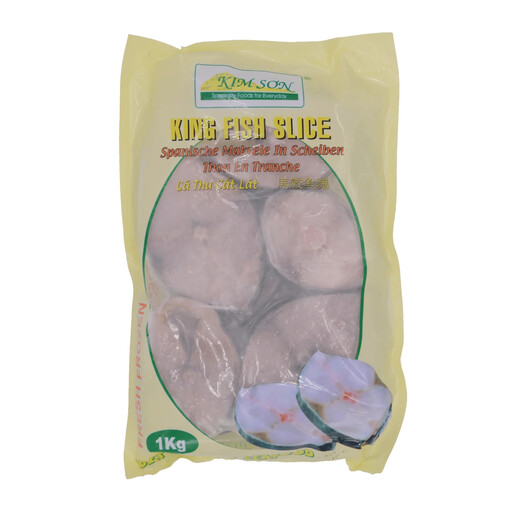
Kim Son King Fish Slice 1kg
King fish slices are an option if you want to prepare and season the fish yourself. Check the carbohydrate figure for your intended portion, and cook the raw fish thoroughly according to the pack instructions.
View on Joybuy
 No image available
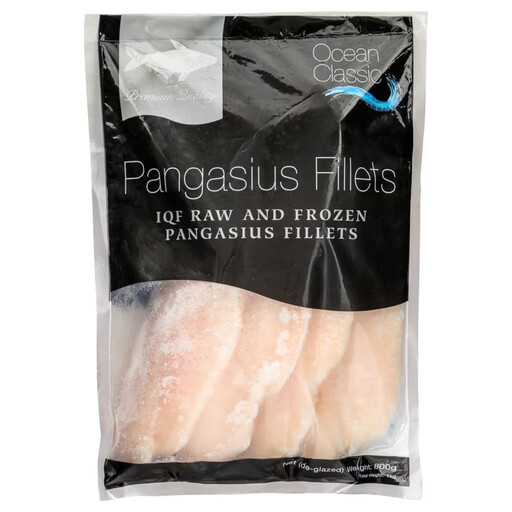
Ocean Classic Skinless & Boneless Pangasius Fillet IQF 170/200g, 1kg (800g net)
The IQF fillets offer portions you can prepare as needed; the named 1kg total weight includes 800g net fish. Use the pack’s carbohydrate figure for the portion you choose, and follow its refrigerator-thawing and no-refreezing instructions.
View on Joybuy
 No image available
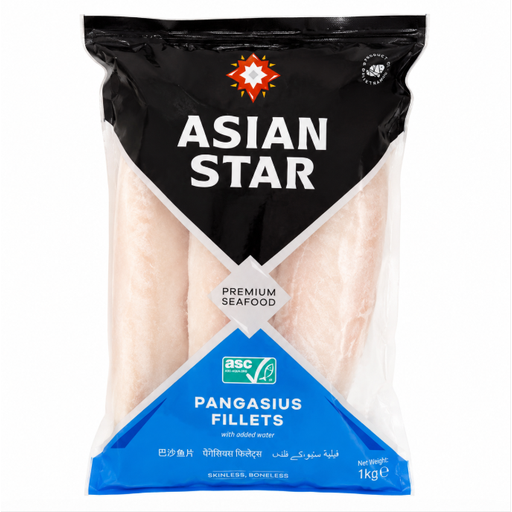
Asian Star White Pangasius Fillet 1kg (800g net)
This fillet pack is another option for a meal you season yourself. The stated net fish weight is 800g within a 1kg pack; plan portions using the net weight, check carbohydrate for the amount served and follow the pack’s cooking instructions.
View on Joybuy
Questions about choosing frozen fish
Is plain frozen fish a better starting point than breaded fish for a keto-style meal?
Plain fish is a useful starting point when you are keeping carbohydrate intake tightly controlled, but check the exact pack. Marks & Spencer lists less than 0.1g carbohydrate per 100g for its plain wild Icelandic cod, compared with 6.2g for lightly dusted cod and 12.8g for breaded cod.
Can butter-finished frozen fish fit my meal plan?
It can if the finished product’s carbohydrate figure fits your own allowance and its ingredients suit everyone eating it. Marks & Spencer lists 1.0g carbohydrate, 10.1g fat and 6.0g saturated fat per 100g for its butter-finished Dover sole, which contains milk.
Is general keto shopping advice enough for a prescribed diet or type 1 diabetes?
No: use the individual plan given by your clinical team rather than a generic product threshold. University Hospitals Sussex NHS Foundation Trust advises adults with type 1 diabetes to speak to a dietitian before starting a very-low-carbohydrate diet.
Do frozen fish fillets need cooking?
Follow the instructions on the pack you buy. Marks & Spencer identifies its wild Icelandic cod as raw fish that must be cooked; do not assume a frozen fillet is ready to eat.
Do allergens matter if the carbohydrate figure fits?
Yes. The Food Standards Agency identifies fish as an allergen, and prepared fish can add other ingredients: Marks & Spencer’s butter-finished Dover sole contains milk, while its dusted and breaded cod products contain wheat ingredients. Check the exact pack’s allergen declaration.


