What should you compare?
Choose the fish format for the meal you intend to make, then compare its nutrition and handling instructions with other packs on the same basis.
| Priority | What to check | Your needs |
|---|
| Total fat |
Compare fat per 100g before comparing portions. Marks & Spencer lists 1.2g for British Hake Fillets, 5.9g for Lightly Dusted Cod and 10.0g for Battered Cod; these figures describe those products, not every fish in each format. |
I want a fish base for repeated meals with less total fat than the coated products I am considering. I will also check how much fish goes into each meal. |
| Salt |
Read salt alongside fat, particularly on smoked fish. Marks & Spencer lists 0.7g fat and 1.40g salt per 100g for its smoked haddock, compared with 1.2g fat and 0.15g salt for its British hake. |
Smoky flavour would work in my planned dishes, but I also want to account for salt in the fish and the other ingredients. |
| Coating and allergens |
Check whether the fillet is plain, dusted, breaded or battered, and read the ingredients and allergen declaration for the exact variant. A light-sounding coating is not the same product as an uncoated fillet. |
I may want a coating for some meals, but I do not want to substitute a coated pack for plain fish without checking its nutrition and ingredients. |
| Prep instructions |
Check frozen-storage temperature, whether to cook from frozen or defrost first, the defrosting method and any use-by or no-refreezing instruction. Marks & Spencer directs shoppers to defrost its British hake in a refrigerator and use it within 24 hours. |
My batch-cooking schedule needs to fit the instructions for the portions I will actually prepare, rather than a general rule applied to every pack. |
| Fish type |
Decide whether this meal calls for white fish or oily fish. Marks & Spencer lists 17.8g fat per 100g for its Scottish Salmon Portions; NHS guidance recommends including an oily-fish portion among at least two weekly fish portions. |
Some meals are intended to use a lower-fat white-fish option; I may plan an oily-fish meal separately rather than expecting one product to fulfil both aims. |
Relevant brand ranges
These examples show why the product and format matter more than the brand name alone; their inclusion does not mean that every product in a range has the same nutrition values.
M&S
The Marks & Spencer frozen-fish products considered here include plain hake, smoked haddock, lightly dusted cod, battered cod and salmon portions.
- Its product listings allow direct per-100g checks: British Hake Fillets list 1.2g fat, Lightly Dusted Cod 5.9g and Battered Cod 10.0g.
- Its smoked haddock lists 0.7g fat but 1.40g salt per 100g. Check the precise product rather than treating a low fat figure as a complete comparison.
Young's
Young's has distinct breaded and battered frozen-fish products, so the format and variant name matter when comparing packs.
- A coated format is an option when that texture is part of the meal you plan to make.
- The Young's Chip Shop Omega 3 Fish Fillets listed by Joybuy state 13.1g fat and 1.0g salt per 100g. Those figures must not be applied to the separate Simply Breaded product.
Birds Eye
Birds Eye frozen-fish examples include fish fingers and other coated formats.
- Fish-finger portions offer a different format from a plain fillet when planning a meal.
- Joybuy’s Birds Eye Crispy Batter Fish Fingers listing states 12g fat per 100g and declares fish, wheat/gluten, milk and mustard. Read the exact variant’s label rather than assuming coated products match plain fish.
Plain frozen fish options on Joybuy
These uncoated frozen fillets are options to examine if you want a plain fish base for batch meals. Compare the nutrition panel and portion you intend to use, and follow the directions on the pack you receive.
 No image available
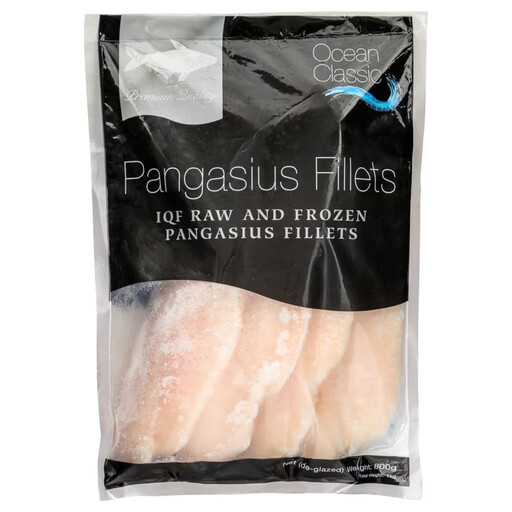
Ocean Classic Pangasius Fillets, Skinless & Boneless IQF, 1kg (800g Net)
An uncoated fillet to consider when you want to add your own seasoning and sides to batch meals.
The title states 170/200g, 1kg total weight and 800g net. Compare the pack’s fat and salt figures using the portion you plan to cook, and follow its thawing and cooking instructions.
Joybuy
 No image available
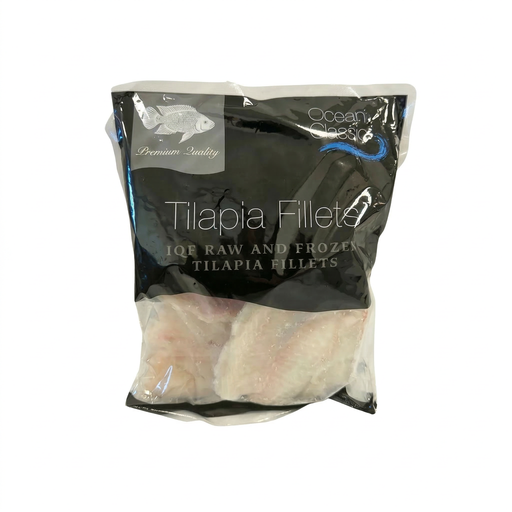
Ocean Classic Tilapia IQF Fillets, 1kg (800g Net)
These plain frozen fillets are an option for meals where you will choose the seasoning and accompaniments.
The title states a 1kg pack with 800g net. Check the nutrition panel per 100g and for your planned portion, alongside the pack’s storage and cooking directions.
Joybuy
 No image available
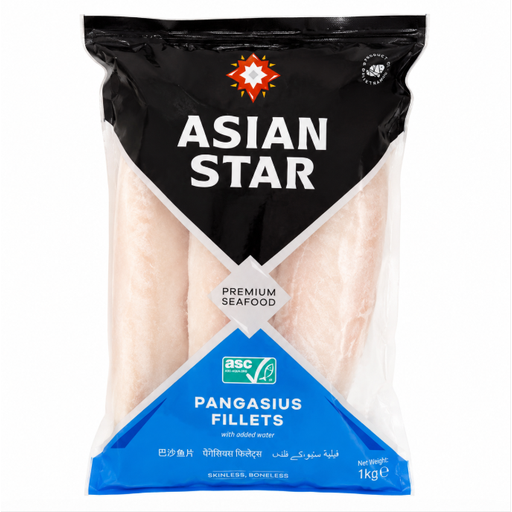
Asian Star White Pangasius Fillets, 1kg (800g Net)
This plain frozen-fish option may suit a batch recipe in which you provide the sauce and other ingredients.
The title distinguishes its 1kg total weight from its 800g net weight. Read both fat and salt per 100g on the pack, then check its defrosting and cooking directions before preparing several meals.
Joybuy
Frozen fish meal-prep questions
Which frozen fish should I compare first if total fat is my main concern?
Start with plain white-fish fillets, then compare the exact packs per 100g and for the portion you will use. Marks & Spencer lists 1.2g fat per 100g for its British Hake Fillets, against 5.9g for its Lightly Dusted Cod and 10.0g for its Battered Cod; those product-specific figures do not describe every plain or coated fish.
Does low-fat smoked haddock also have less salt?
Not necessarily. Marks & Spencer lists 0.7g fat but 1.40g salt per 100g for its smoked haddock, compared with 1.2g fat and 0.15g salt for its British hake. Compare both nutrients and consider the other ingredients in the meal.
Why consider salmon if I am comparing lower-fat fish?
Salmon is an oily-fish choice rather than a substitute selected for the lowest total fat. NHS guidance recommends at least two fish portions a week, including one oily-fish portion; Marks & Spencer lists 17.8g fat per 100g for its Scottish Salmon Portions. You can make the oily-fish and lower-fat white-fish decisions separately.
How should I defrost fish for several planned meals?
Follow the directions for the exact product and defrost only the portions needed for your plan. Marks & Spencer directs shoppers to defrost its British hake in a refrigerator and use it within 24 hours. Food Standards Agency research identifies higher temperatures during thawing and subsequent storage as conditions that facilitate microbial growth; do not apply one pack’s timeframe to another fish.
What should I read beyond the fat figure?
Check salt, portion size, ingredients, allergens and the storage and cooking instructions for the exact frozen-fish product. Where a traffic-light label is displayed, GOV.UK says it indicates high, medium or low amounts of fat, saturated fat, sugars and salt; the detailed label remains useful when comparing two particular packs.


