Shoppers comparing protein and fat
Plain frozen white-fish fillets are a useful starting point if you want to compare the protein and fat declared per 100g, rather than assume every frozen-fish product has the same composition.


When lower fat is the priority, start by comparing plain, uncoated white-fish fillets: NHS guidance describes white fish as low in fat, and the listed protein and fat values for individual products vary. Salmon offers a different reason to choose fish—long-chain omega-3—but has more fat in the M&S example; coatings and seasoning also make the nutrition and ingredient labels important.
Plain frozen white-fish fillets are a useful starting point if you want to compare the protein and fat declared per 100g, rather than assume every frozen-fish product has the same composition.
Cooking instructions matter if you need a convenient portion: some fish can be cooked from frozen, while other packs require refrigerator defrosting.
If long-chain omega-3 is part of the decision, oily fish such as salmon serves a different purpose from choosing the lower-fat white-fish examples. NHS guidance identifies salmon as an oily fish.
Identify the fish and any coating or seasoning first, then compare nutrition figures on the same stated preparation basis where possible.
| Priority | What to check | Your needs |
|---|---|---|
| Protein and fat | Read both values per 100g and note whether they describe fish as sold or after cooking. Tesco lists 22.9g protein and 1.0g fat per 100g for its Skin On Cod Fillets when oven cooked; M&S lists 20.2g protein and 1.2g fat per 100g for its British Hake Fillets. | I want to compare protein and fat together, without treating figures stated on different preparation bases as a precise ranking. |
| Fish and format | Check the named fish and whether the portion is plain or coated. NHS guidance describes white fish as low in fat and oily fish such as salmon as particularly high in long-chain omega-3. Tesco lists 11.9g fat and 11.2g protein per 100g oven baked for Young's Breaded Cod Fillets. | For a lower-fat meal, I would start with an uncoated white-fish fillet. If I am choosing salmon for omega-3 or breaded fish for its format, I need to judge that product on its own label. |
| Salt and ingredients | Compare salt per 100g as well as fat, especially on smoked or seasoned fish. Read the ingredient and allergen declarations on coated products; Tesco's Young's Breaded Cod listing includes wheat and mustard. | A low fat figure alone will not settle my choice if salt or additional ingredients matter to me. |
| Preparation | Follow the exact pack's cooking and defrosting instructions. UK government guidance advises keeping a freezer around -18°C and following label directions; M&S says to defrost its British Hake Fillets in a refrigerator and use them within 24 hours. | I need a preparation method that fits when I plan to cook, and I will check any thawing and refreezing directions before buying. |
Product format changes the comparison. M&S lists 20.2g protein and 1.2g fat per 100g for its British Hake Fillets; Tesco lists 11.2g protein and 11.9g fat per 100g, oven baked, for Young's Breaded Cod Fillets.
Check the protein, fat and preparation basis on the exact pack before substituting a coated product for a plain fillet.
Retailer nutrition panels may describe fish as sold or after a specified cooking method. Figures with different bases do not make a precise like-for-like ranking.
Compare products on the same stated basis where possible, and check the pack when a shortlist mixes preparation methods.
Smoking and seasoning introduce another label check, even when a fish product has a low declared fat value.
If salt matters to your choice, compare its per-100g value alongside protein, fat and the ingredient list.
Cooking and defrosting directions differ between products. M&S instructs buyers to defrost its British Hake Fillets in a refrigerator, use them within 24 hours and not refreeze after thawing.
Follow the directions on your pack, including its storage and refreezing warnings, and check for possible bones where warned.
These examples show why the exact product label matters; a figure for one fish or format does not describe a whole range.
Its listed plain cod, haddock and hake fillets offer product-specific nutrition figures for comparison.
Its Skin On Cod Fillets provide an example with nutrition stated for oven-cooked fish.
Its Frozen Basa Fillets ASC 500g have a stated ingredient and nutrition listing.
Just Essentials White Fish Fillets are identified as basa in the product listing.
Compare its natural fillets and coated products as different formats rather than treating them as interchangeable.
Its frozen-fish range includes different preparations, including breaded and battered products.
These options include plain frozen fillets and a seasoned basa skewer product. Compare the format, current pack label and cooking directions against your protein-and-fat priorities.
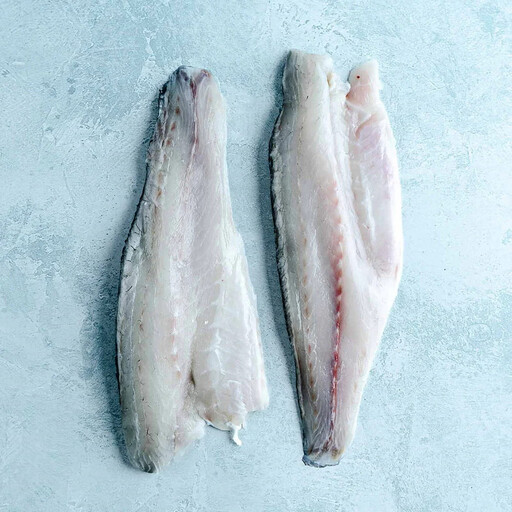 No image available
A fillet option for comparing protein and fat without choosing a coated format. Check salt particularly carefully: the product information states 7g per 100g, a figure to confirm on the current pack before buying. Follow the pack's storage and preparation directions.
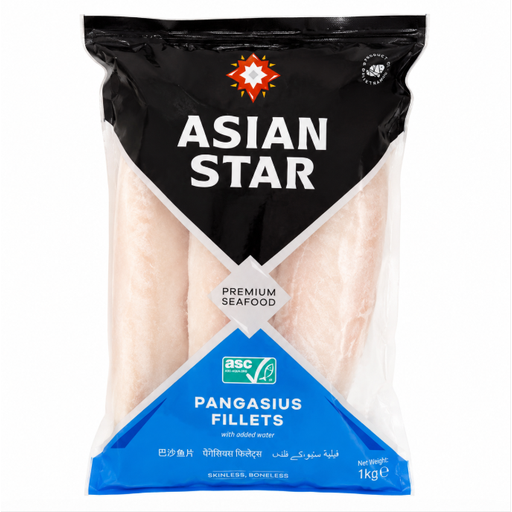 No image available
A plain-fillet format to consider if you want to prepare and season the fish yourself. Compare the current pack's protein as well as its fat value per 100g; a low fat figure alone does not establish how much protein a portion provides.
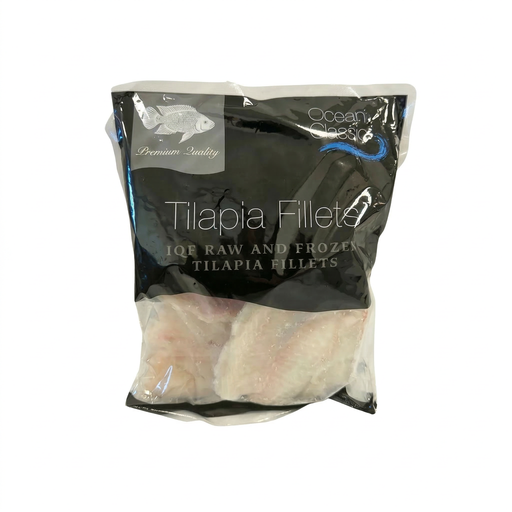 No image available
Frozen tilapia fillets for a meal you can plan around the pack's thawing directions. Check the current ingredient panel before choosing: the product information gives conflicting accounts of whether stabiliser E322 is present. Check the nutrition panel's preparation basis too.
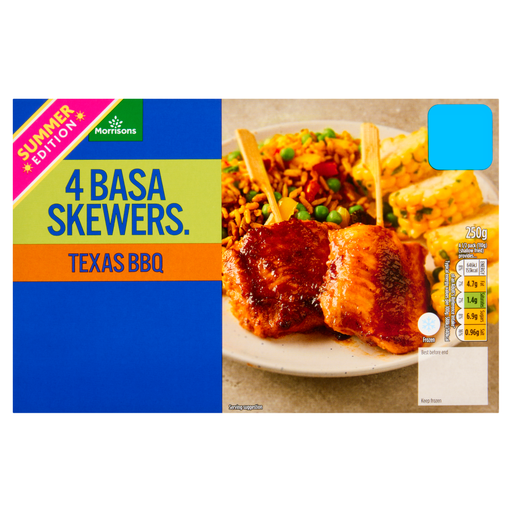 No image available
A seasoned skewer product, not a plain fillet: compare its nutrition using the stated shallow-fried basis rather than assuming the same figures for another cooking method. The product information identifies barley; check the current allergen label and take care with hot wooden skewers.
 No image available
A plain pangasius option if you can plan ahead for refrigerator thawing. Its instructions specify use within 24 hours after thawing and say not to refreeze; follow the current pack and compare its protein and fat values with your other fillet options.
Yes, if lower fat is your main fish-selection priority: NHS guidance describes white fish as low in fat. Choose by the exact pack rather than the fish name alone, because coatings, sauces and added oils change the product you are comparing.
Not solely on that basis. NHS guidance identifies salmon as an oily fish particularly high in long-chain omega-3, while M&S lists 17.8g fat and 18.6g protein per 100g for its Scottish Salmon Portions. It serves a different choice from prioritising the lowest-fat fillet.
Follow the directions for the exact product. Young's describes its Natural Fish Fillets as cook-from-frozen, whereas M&S directs buyers to defrost its British Hake Fillets in a refrigerator. Do not transfer one pack's method to another fish.
Check the pack's refrigeration, use-by-after-thawing and refreezing directions. M&S says to use its British Hake Fillets within 24 hours of refrigerator defrosting and not to refreeze them; Asda gives a 24-hour refrigerated-use instruction for its Just Essentials White Fish Fillets once defrosted.
Check the current pack for fish and any additional ingredients in the coating or seasoning. Tesco's listing for Young's Breaded Cod Fillets includes wheat and mustard; the Joybuy listing for Young's Chip Shop Omega 3 Fish Fillets declares gluten, milk and mustard alongside fish.