Older adults planning straightforward fish meals
Frozen portions may suit someone who wants to keep fish available between shopping trips. Check the portion size, preparation method and nutrition label for the meal being planned.


Choose plain frozen salmon when an oily-fish portion is the priority, or plain cod when a mild, uncoated white fish is preferred. Coated fillets offer a different preparation option, but check their fish content, salt and allergens rather than treating them as interchangeable with plain fish. For anyone with a swallowing plan, the required food texture takes priority over these general choices.
Frozen portions may suit someone who wants to keep fish available between shopping trips. Check the portion size, preparation method and nutrition label for the meal being planned.
Look beyond the word “fillet”: species, coating, allergens, bone warnings and cooking instructions can all change how a portion is prepared and served.
Salmon offers an oily-fish option; cod offers a mild, uncoated white-fish option. Choose according to the meal and check the details of the particular pack.
Decide whether the meal calls for oily fish, plain white fish or a coated fillet, then check the exact pack for preparation and serving details.
Choose when: An oily-fish portion fits the meal and the person can manage an ordinary fish fillet.
Bear in mind: Skin, bones and preparation instructions vary by product; check the particular portion before serving.
Choose when: A mild, uncoated white-fish fillet is preferred.
Bear in mind: Cod does not take the place of an oily-fish portion in NHS fish guidance, and a boneless label does not rule out every bone.
Choose when: A breaded or battered fillet suits the planned meal and its ingredients are suitable for the person eating it.
Bear in mind: The coating changes the ingredient and allergen list, so compare the exact pack with plain fish.
| Priority | What to check | Your needs |
|---|---|---|
| Meal preparation | Check portion size, the protein declaration if relevant, and whether the pack calls for thawing or cooking from frozen. Confirm that the required cooking equipment is available. | I want portions I can store and prepare without adding too many steps to the meal. |
| Fish type | Read the species and ingredient list. The NHS distinguishes an oily-fish portion from other fish in its weekly fish advice; check the particular salmon pack for any declared EPA and DHA values. | If I am planning an oily-fish meal, I need to distinguish salmon from white fish rather than rely on a front-of-pack claim. |
| Coating and allergens | For breaded or battered fish, compare fish content, ingredients and salt on the exact labels. Use matching per-100g preparation bases where possible, and read the allergen statement. | A coated fillet may be convenient, but I need to know whether its ingredients and declared salt suit the person eating it. |
| Bones and texture | Read residual-bone warnings and check the cooked portion. If the person has an assessed swallowing or texture plan, follow that plan; GOV.UK guidance says expert advice is essential to establish an appropriate texture for someone with dysphagia. | I need the served fish to match the person’s chewing and swallowing requirements, not just a “boneless” description. |
Plain salmon, plain cod and coated fish differ in species and ingredients. A coated product may contain a smaller proportion of fish than a plain fillet.
Start with the species and ingredient list, then compare the nutrition information for the products you are considering.
Sainsbury’s salmon and ASDA cod product information warns that some bones may remain despite skinless and boneless descriptions.
Check portions before serving. If swallowing is a concern, follow the person’s professional texture guidance rather than relying on packaging wording.
The Young’s breaded fish product listed by ASDA contains wheat and mustard. Coated products also need their own salt and ingredient checks rather than being treated as plain fish.
Read the allergen statement and compare the declared per-100g values on a like-for-like preparation basis.
Frozen fillets do not all have the same thawing or cooking instructions, so the method can affect when and how the meal is made.
Check the current pack for its storage, thawing, cooking and reheating directions before preparing the fish.
These examples show different types of frozen fish; the details apply to the named product lines, not every item from each brand or retailer.
Sainsbury’s Salmon Fillets 360g are described by the retailer as individually frozen, skinless and boneless wild Pacific salmon portions.
ASDA lists plain frozen cod fillets and cod loins for shoppers who want uncoated white fish.
Young’s Breaded Omega 3 Fish Fillets provide a coated-fish example rather than a plain fillet.
Birds Eye Breaded Cod Fish Fillets are a coated cod option listed by Tesco.
Tesco’s frozen salmon and tuna category lists Tesco Wild Salmon Fillets in 500g and 330g packs.
These options include frozen pangasius fillets, a coated cod product and skin-on salmon steaks. Check each product’s format against the meal you intend to make; they are not all plain, skinless fillets.
 No image available
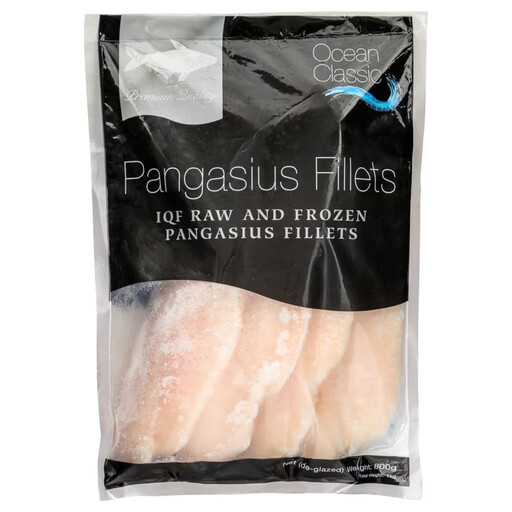
A frozen pangasius option for a white-fish meal. The listed ingredients include water and additives, so check the current pack if you want a fish-only ingredient list. Follow its thawing and cooking directions, and inspect portions for bones before serving.
 No image available
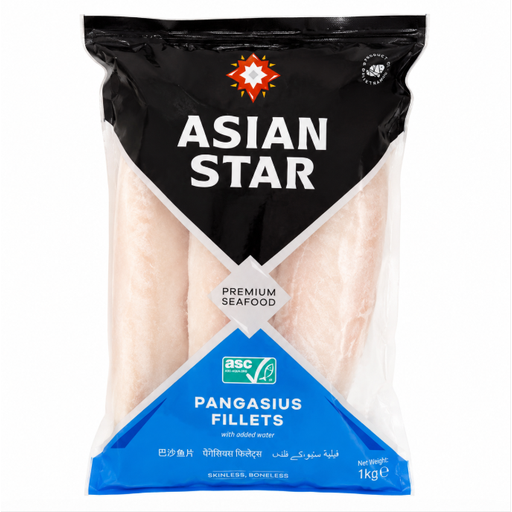
Another frozen pangasius option. If salt or added ingredients matter for the meal, compare the current label with other fillets. Check its thawing and cooking directions and inspect portions before serving.
 No image available
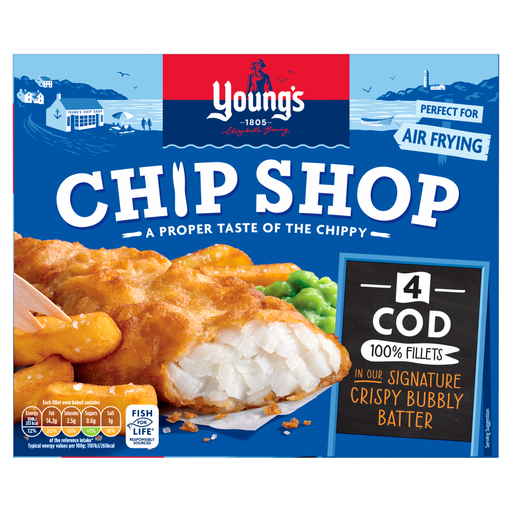
This is a battered cod option for a meal planned around oven cooking from frozen, not a plain cod fillet. Its listed allergens include wheat and mustard. Check the current pack for cooking directions and nutrition values on the basis you need to compare.
 No image available
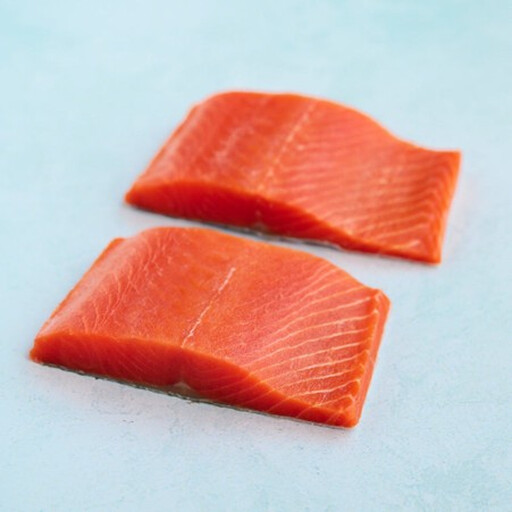
A salmon option for an oily-fish meal. These are skin-on steaks rather than skinless portions, so consider whether that preparation suits the person eating them. Check the current pack for thawing, cooking and nutrition details, and inspect the cooked fish for bones.
Choose salmon when the meal calls for oily fish; choose plain cod when a mild, uncoated white fish is preferred. The NHS distinguishes an oily-fish portion in its fish guidance, so cod does not serve the same role. Check the exact pack for ingredients, preparation and nutrition details.
They are an alternative format, but not an ingredient-for-ingredient substitute. Check the species, proportion of fish, salt and allergens on the exact pack; coated products listed here include examples with wheat and mustard.
No. Sainsbury’s salmon and ASDA cod product information warns that some bones may remain. Check the portion before serving, especially when chewing or swallowing is difficult.
Follow the person’s assessed swallowing and texture plan rather than assuming an ordinary fillet is suitable. GOV.UK guidance says expert advice is essential to establish an appropriate food texture for someone with dysphagia.
Do not assume so. Follow the directions on the exact pack for thawing, cooking and reheating, and check that the required method suits the household’s equipment.