Solo cooks building their own fish dinner
A plain fillet or loin leaves you free to choose the seasoning and sides. Before choosing a multi-pack, check its total weight, number of pieces and whether you can remove just one while frozen.


For a meal for one, choose a plain fillet if you want to add your own seasoning and sides, a coated fillet if its ingredients and cooking method suit your meal, or a prepared fish dinner if you want the sides included. Check the number of pieces and whether you can remove one while frozen before relying on a multi-pack for single portions. Follow the cooking and storage directions on the exact pack.
A plain fillet or loin leaves you free to choose the seasoning and sides. Before choosing a multi-pack, check its total weight, number of pieces and whether you can remove just one while frozen.
A coated fillet or prepared fish meal may reduce the ingredients you need to assemble separately. Check what comes with it and follow that product’s cooking instructions; do not assume every frozen fish product cooks straight from frozen.
If independent assessment of a wild-caught fishery matters to you, look for the blue MSC ecolabel on the specific product. The Marine Stewardship Council says the label identifies wild-caught seafood from fisheries assessed against its requirements; it does not tell you whether the pack suits one meal.
Decide whether you want to assemble the meal yourself, then check how the pack divides into portions and how the fish must be prepared.
| Priority | What to check | Your needs |
|---|---|---|
| Portion fit | Check the total pack weight, number of pieces and stated servings. Confirm whether a piece can be removed while the rest stays frozen. | I want to cook one portion without having to thaw the whole pack. A two-fillet pack is not automatically two equally sized meals. |
| Meal format | Compare a plain cut, a dusted or coated fillet, and a meal that includes sauce or sides. Check what is included rather than comparing pack weights alone. | If I want to choose the seasoning and sides, a plain fillet fits that plan. For a meal with sides already included, I would look at a prepared dinner instead. |
| Cooking method | Read the exact pack for defrosting, cooking and storage directions. UK government food-hygiene guidance says food should be fully defrosted before cooking unless the manufacturer instructs you to cook it from frozen. | On a busy evening, I need to know whether this particular fish can go straight from freezer to oven or needs time to defrost first. |
| Ingredients and allergens | Read the ingredients and allergen declaration for the exact variant. A crumb, batter or sauce adds ingredients that a plain fillet may not contain. | I need to know what accompanies the fish, especially when choosing between a plain cut and a coated or sauced product. |
| Wild-catch certification | Look for the blue MSC ecolabel on the individual product if this certification matters to you. It concerns assessed wild-caught seafood, not portion size or cooking results. | I want a product-specific sourcing signal rather than assuming every fish item in a brand’s range carries the same certification. |
Frozen fish comes as individual cuts, multi-packs and complete meals. A range name does not tell you whether you can take out one piece without thawing the others.
Check the piece count, weight, stated servings and storage directions. If you want the fish and sides portioned together, consider a meal explicitly presented as a dinner for one.
Batter, crumbs and sauces change the ingredients and what you need to add to the plate. Total pack weights therefore do not describe identical fish portions.
Choose the format that fits your intended meal first, then compare the weights, ingredients and cooking directions of products in that format.
Some products specify cooking from frozen; others require defrosting. The method for one variant should not be carried over to another.
Keep the packaging until you have cooked the fish and follow its cooking, defrosting and storage instructions.
Species, sourcing information and certification can differ between products sold under the same brand.
If MSC certification is important to your choice, look for its blue ecolabel on the specific pack you intend to buy.
These examples show how fish cuts and prepared formats differ; check the individual pack when deciding what works for one meal.
Tesco lists Finest skinless and boneless cod loins as a plain-fish option.
Sainsbury’s lists coated two-fillet options, including breaded cod loins, beer-battered hake and lightly dusted yellowfin sole.
Young’s lists prepared fish options and a Salmon Fillet Dinner with potatoes, carrots and peas in sauce.
Birds Eye lists battered fish fillets with directions to oven-cook that product straight from frozen.
M&S lists plainly described frozen fish fillets, including British hake and wild Icelandic cod.
These plain-fish options leave the seasoning and sides to you. The smaller salmon pack and larger pangasius pack call for different portion checks when cooking for one.
 No image available
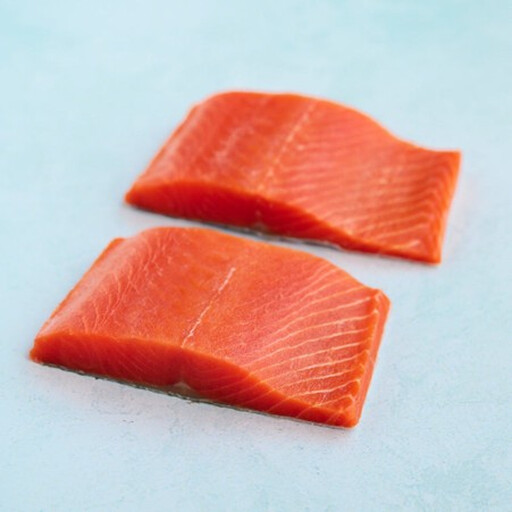
For a fish main with your own sides, these wild sockeye salmon fillet steaks come in a 220g pack. Check how many steaks it contains, whether you can remove one while frozen and the pack-specific cooking directions before planning a single meal.
 No image available
These plain, skinless and boneless pangasius fillets offer a fish main to season and serve with your own sides. The listed format is IQF 170/200g, with 1kg total weight and 800g net. For one meal, check the piece count and whether you can remove only the amount needed; follow the pack’s thawing and storage directions.
Check details that affect your meal: the named fish and cut, piece count, pack weight, ingredients and cooking method. A plain cod loin, a coated two-fillet pack and a prepared fish dinner serve different purposes, regardless of the range name.
Not necessarily. Start with the net weight and piece count, then check the stated servings and whether you can remove a fillet separately while frozen. The fish pieces, coating and sides you plan to serve can all affect how you use the pack.
Cook it straight from frozen only when the exact product instructs you to do so. UK government food-hygiene guidance says food should otherwise be fully defrosted before cooking; keep the pack so you can follow its method.
Yes. Batter, crumbs, seasonings and sauces can add ingredients beyond those in a plain fillet. Read the current ingredients and allergen declaration for the specific flavour or variant you are buying.
The Marine Stewardship Council says its blue ecolabel identifies wild-caught seafood from fisheries independently assessed against MSC requirements. Look for it on the specific product if that certification matters to you; it does not indicate portion size, flavour or cooking method.