Families planning protein-focused meals
Compare the protein listed per 100g and per serving, then work out how many servings the pack provides for the household. A heavier pack does not, by itself, tell you how much protein will be on each plate.


For a protein-focused family meal, compare the protein listed per 100g and per serving before choosing by bag size: Marks & Spencer lists 20.2g per 100g for its plain British Hake Fillets, while Sainsbury's lists 12.2g per 100g for its breaded 30-finger pack. The larger fish-finger pack offers countable portions, but its coating changes the nutrition profile. Check how many portions the pack provides, and consider oily fish separately from white fish in light of NHS guidance.
Compare the protein listed per 100g and per serving, then work out how many servings the pack provides for the household. A heavier pack does not, by itself, tell you how much protein will be on each plate.
Piece counts and stated servings can make a shared meal easier to plan. Check the cooking directions and ingredients as well as the pack weight, particularly when choosing coated fish.
Cod, haddock and pollock are white fish, while salmon is oily fish. The NHS recommends two portions of fish a week, including one of oily fish, so a white-fish family pack need not be the only fish in the freezer.
Start with the portion you expect to serve, then compare the pack's nutrition, usable quantity and preparation instructions.
| Priority | What to check | Your needs |
|---|---|---|
| Protein per portion | Compare listed protein per 100g on the same label basis, then check the stated serving size. Marks & Spencer lists 20.2g per 100g for British Hake Fillets; Sainsbury's lists 12.2g per 100g and 10.6g per three grilled fingers for its 30-finger pack. | I want to know how much protein the fish portion contributes to our meal, rather than judging it by the size of the bag. |
| Family portions | Check net fish weight, piece count and stated servings. Sainsbury's labels its 900g, 30-finger pack as 10 servings; a fillet pack may divide differently. | Will one pack cover dinner for everyone, or am I planning to use it across several meals? |
| Coating and nutrition | Read the ingredients and per-100g panel for the exact product. Sainsbury's lists 17.5g carbohydrate per 100g for its breaded fish fingers; Marks & Spencer lists 12.0g carbohydrate and 10.0g fat per 100g for Battered Cod. | I may choose breaded fish for portioning or texture, but I want its full nutrition profile in the comparison. |
| Fish type and allergens | Identify whether the fish is white or oily, and read the current ingredients list for declared allergens. The NHS classifies salmon as oily fish and cod, haddock and pollock as white fish; GOV.UK says specified allergens in prepacked food must be clearly labelled in the ingredients list. | I need to distinguish an oily-fish choice from our usual white fish and check ingredients that matter to the household. |
| Storage and cooking | Follow the instructions on the exact pack. Marks & Spencer directs shoppers to defrost its British Hake Fillets in the fridge, use them within 24 hours and not refreeze after thawing; Birds Eye directs shoppers to cook its Omega 3 Fish Fingers from frozen. | Some evenings I need a cook-from-frozen option; on others, I can plan ahead for a product that requires defrosting. |
A pack can yield many portions without having the same protein concentration as a plain fillet. Sainsbury's lists 12.2g protein per 100g for its breaded 900g fish-finger pack; Marks & Spencer lists 20.2g per 100g for its plain British Hake Fillets, which come in a 280g pack.
Compare protein per 100g and per likely serving, then check whether the piece count or net fish weight covers your planned meal.
Breadcrumbs and batter are part of the food being measured. The Sainsbury's fish-finger label lists 17.5g carbohydrate per 100g, while Marks & Spencer's Battered Cod lists 12.0g carbohydrate and 10.0g fat per 100g and contains wheat flour.
Compare the exact nutrition panels and ingredient lists instead of treating coated fish and plain fillets as interchangeable.
The NHS lists cod, haddock and pollock as white fish and salmon as oily fish. Its guidance calls for one oily-fish portion within two weekly fish portions.
If that guidance is relevant to your household, choose an oily-fish product separately rather than relying on white-fish fingers or fillets to fill that role.
Ingredients and preparation requirements matter for the product being served: Marks & Spencer's Battered Cod contains wheat flour and must be cooked, while its British Hake Fillets have specific defrosting and use-after-thawing instructions.
Read the current pack's allergens, storage directions and cooking instructions before preparing it.
These range examples illustrate different pack formats; the nutrition and preparation details apply to the named products, not every fish product from a brand.
Birds Eye makes portioned frozen fish fingers. Tesco lists its 20 Omega 3 Breaded Fish Fingers as a 560g pack.
Young's Natural Fish Fillets range includes a five-fillet Flaky White Fish pack.
Tesco lists own-label frozen fish in plain and coated formats, including Basa Fillets 500g and 4 Breaded Cod Fillets 500g.
Sainsbury's Omega 3 Fish Fingers come in a 30-piece, 900g breaded Alaska pollock pack labelled as 10 servings.
M&S lists plain British Hake Fillets 280g alongside coated formats including 4 Chunky Breaded Cod 600g and Battered Cod 500g.
These options are frozen fillets, fish slices and whole fish for households planning fish meals. Check the labelled protein and serving information for each product; a whole fish and a net-weight fillet pack will not necessarily yield the same number of portions.
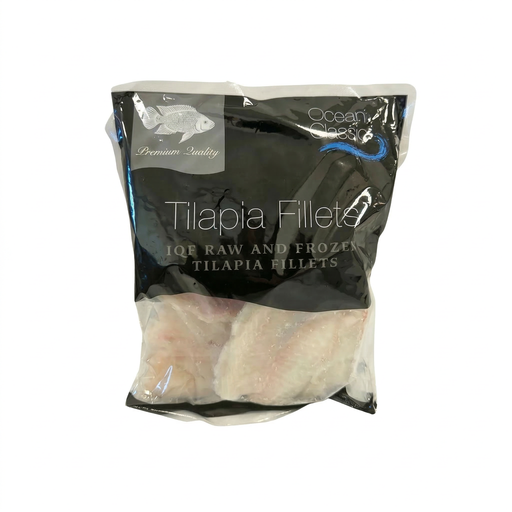 Image unavailable
The 800g net quantity gives you a starting point for planning a shared fillet meal. Check the current protein panel and how the fillets divide into your household's portions; follow the pack's thawing and cooking directions.
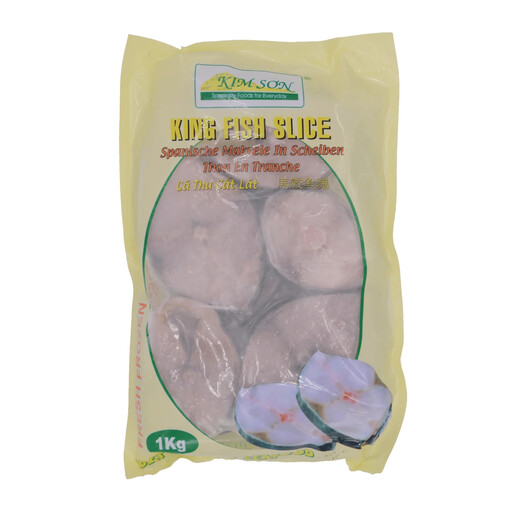 Image unavailable
The sliced format may suit a meal where you would rather divide fish pieces than prepare a whole fish. Check the current protein panel and portion sizes, cook thoroughly and take care over any small bones.
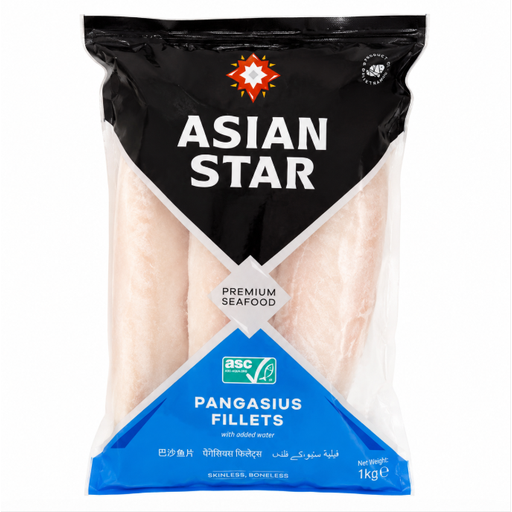 Image unavailable
For meal planning, use the stated 800g net fillet weight rather than the 1kg total pack weight. Compare the current per-100g protein panel and check how many household portions the fillets provide.
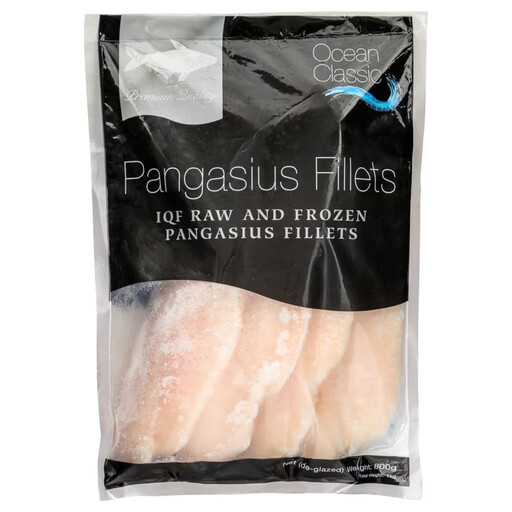 Image unavailable
The title identifies skinless, boneless fillets and 800g net weight within a 1kg pack. Check the current nutrition panel and the number of fillets needed for your meal, then follow the pack's defrosting and cooking directions.
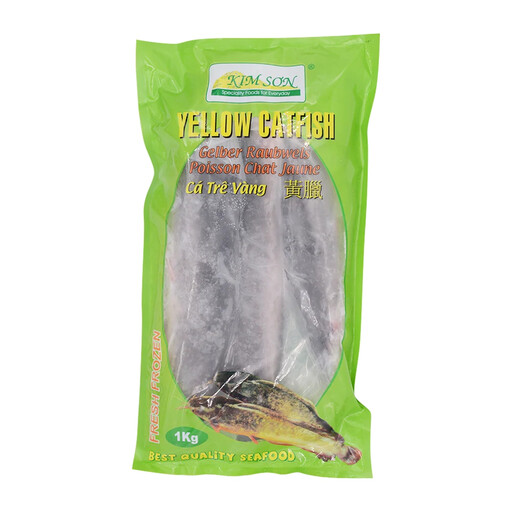 Image unavailable
This is a whole-fish option rather than a portioned fillet pack, so check its edible yield before relying on the 1kg weight for a family meal. Read the current protein panel, prepare and cook it thoroughly, and take care over small bones.
Sainsbury's lists 10.6g protein per three grilled fingers in its 30-piece Alaska pollock pack, and 12.2g per 100g. Check the serving size on any other pack rather than assuming all fish fingers provide the same amount.
If you are planning around NHS fish guidance, include an oily-fish choice separately: the NHS recommends two fish portions a week, one of them oily, and puts salmon in the oily category but cod, haddock and pollock in the white-fish category. Check the portion count when choosing a pack for several people.
Check for fish and for coating ingredients such as wheat; Marks & Spencer's Battered Cod, for example, lists cod and wheat flour. GOV.UK says specified allergens in prepacked food must be clearly labelled within the ingredients list, so read the current pack for the product you intend to serve.
No single instruction applies to every pack. Birds Eye directs shoppers to cook its Omega 3 Fish Fingers from frozen, while Marks & Spencer's British Hake Fillets give fridge-defrosting directions, use within 24 hours after defrosting and say not to refreeze after thawing. Follow the directions on the exact product.