Homemade fish-pie cooks
Plain fillets let you prepare the fish with your own sauce and mash. Check the named species and usable pack weight so you can plan how much fish goes into the pie.


For a homemade fish pie, start with plain frozen fillets and check the species and usable fish weight. Breaded or battered portions suit fish served beside mash instead; their coating changes how much of the pack is fish and may introduce additional allergens.
Plain fillets let you prepare the fish with your own sauce and mash. Check the named species and usable pack weight so you can plan how much fish goes into the pie.
Breaded or battered portions fit a plated meal rather than a pie filling. Check the pack’s cooking method and ingredients before choosing a coated product.
Check the exact pack for fish species, coating ingredients, allergens and bone warnings. GOV.UK guidance says regulated allergens present as ingredients in UK prepacked food must be clearly identified in the ingredients list.
Decide whether the fish will go into a pie or be served beside mash, then compare the details that matter within that format.
| Priority | What to check | Your needs |
|---|---|---|
| Meal format | Check whether the pack contains plain fillets or coated portions, and follow its stated preparation method. Coated portions are not a direct substitute for uncoated pie fish. | For a homemade pie, I want fish to prepare with sauce. If fish will sit beside the mash, a breaded or battered portion may fit instead. |
| Species and fish content | Read the named species in the ingredients. For coated fish, check the fish percentage: Tesco Groceries lists cod as 52% of its examined breaded cod product, while Birds Eye lists Alaska pollock as 51% of its examined breaded fillets. | I want to know which fish I am serving and, with a coated portion, how much of the product is fish rather than coating. |
| Usable quantity | Check the net weight, portion count and any distinction between fish weight and ice or coating. Do not treat the whole weight of a coated pack as plain fish. | There needs to be enough fish for the number of diners, whether I am making one pie or serving individual portions. |
| Pack instructions | Check allergens, bone warnings, cooking equipment, frozen storage and any defrosting instructions on the exact pack. GOV.UK says regulated allergens present as ingredients must be identified in the ingredients list of UK prepacked food. | I need a product I can prepare with the equipment available and serve with attention to the pack’s allergen and bone information. |
A coated pack includes more than fish. Tesco Groceries lists cod as 52% of its examined breaded cod fillets, so its full pack weight does not represent the weight of cod alone.
Compare plain fillets with plain fillets for a pie. When considering coated portions, read the fish percentage as well as the pack weight.
The examined Tesco breaded cod includes wheat and milk proteins; Birds Eye lists wheat and mustard in its examined breaded fish fillets and says they may contain milk.
Read the ingredients and allergen information on the exact pack you intend to use, even if you have bought the brand before.
Instructions vary by product. For example, the examined ASDA white-fish fillets specify what to do after defrosting, and Birds Eye warns that bones may remain in its examined breaded fillets.
Choose a pack whose cooking instructions you can follow, observe its storage and defrosting directions, and check for bones when serving.
Its coated frozen-fish portions are relevant when fish will be served beside mash.
Young's lists natural frozen fillets as well as coated fish products.
Tesco Groceries lists plain and coated frozen-fish formats that serve different pie-and-mash plans.
Its frozen-fish listings include plain white-fish fillets and coated products.
ASDA lists own-label plain white-fish fillets and named-fish cuts.
M&S lists named frozen fish including hake, cod and haddock.
These options cover plain fillets for preparing a homemade fish pie and a battered cod product for serving beside mash. Check each pack’s quantity and ingredients against your meal plan.
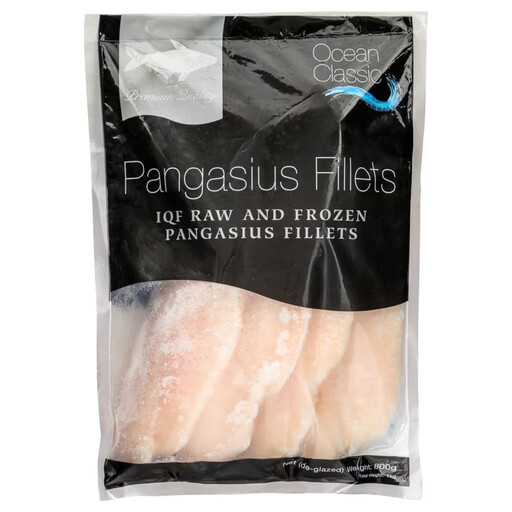 Image unavailable
These plain pangasius fillets fit a homemade pie where you prepare the fish and sauce yourself. The listing describes the fillets as skinless and boneless and gives thawing and cooking directions. Check the pack’s usable fish weight before planning portions: the description gives conflicting explanations of the stated 800g figure. Check its bone information before serving.
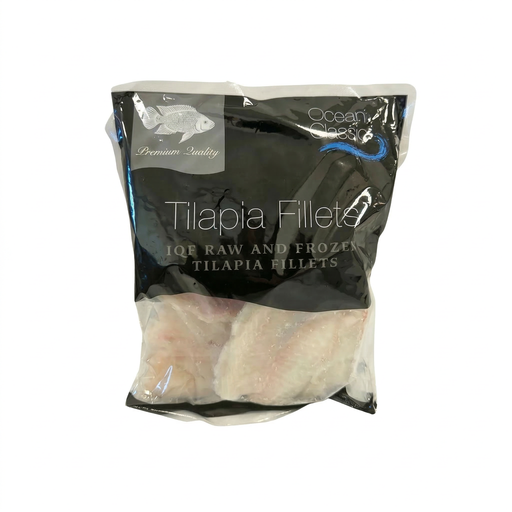 Image unavailable
These plain tilapia fillets are an option for fish prepared as part of a homemade pie. The listing identifies tilapia and states an 800g net quantity, with thawing and cooking guidance. Check the exact pack for skin and bone information before preparing and serving it.
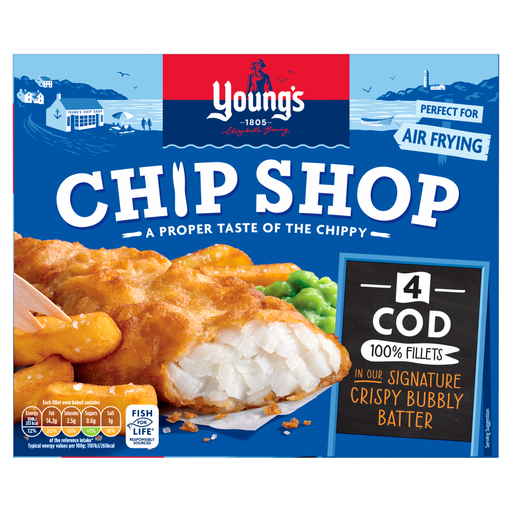 Image unavailable
These battered cod fillets suit fish served beside mash rather than fish folded into a pie. The listing gives oven-from-frozen instructions and identifies cod as 54% of the product, so the 400g pack is not 400g of plain cod. It lists fish, wheat/gluten and mustard allergens and warns that bones may remain; check the current pack before serving.
Start with plain fillets, then check the species and net fish quantity against the number of portions you need. A coated product is a different comparison because some of its pack weight is batter or breadcrumbs.
Plain fillets are the more direct choice for a homemade pie with your own sauce. Choose coated portions when the fish will be cooked and served beside mash, following the instructions on that product’s pack.
Yes. Tesco Groceries lists wheat and milk proteins in its examined breaded cod, while Birds Eye lists wheat and mustard in its examined breaded fillets and says they may contain milk. Check the exact current pack; GOV.UK says regulated allergens present as ingredients in UK prepacked food must be clearly identified in its ingredients list.
Follow the instructions for the exact product. The examined ASDA white-fish fillets and M&S hake say to use the fish within 24 hours of refrigerator defrosting and not to refreeze it after thawing; the examined Tesco breaded cod also says not to refreeze it once thawed.
No. Fish products described as boneless may still carry a warning that bones can remain. Read the pack and check the fish when serving, particularly to children.