Roast cooks adding their own flavours
Plain white-fish fillets leave you free to choose the herbs, lemon, gravy or sauce served with the fish.


Choose plain frozen white-fish fillets if you want to add your own herbs, gravy or sauce to a Sunday roast. Lightly dusted fish adds a coating, while breaded or battered fish puts a crisp, seasoned finish at the centre of the plate; check each pack’s ingredients and cooking directions. Salmon is another option if you want oily fish rather than mild white fish.
Plain white-fish fillets leave you free to choose the herbs, lemon, gravy or sauce served with the fish.
Breaded or battered fish offers a seasoned, coated option alongside roast potatoes and vegetables. Check the exact pack for ingredients, allergens and cooking directions.
Plain and coated fish can have different ingredients and per-100g nutrition values. Read the label of each pack you are considering, particularly if an allergen matters to someone eating the meal.
Decide how much of the roast’s flavour you want to add yourself, then compare the exact packs for ingredients and preparation.
| Priority | What to check | Your needs |
|---|---|---|
| Fit with roast sides | Compare plain fillets with lightly dusted, breaded and battered formats. Check whether seasoning or a coating is already part of the fish. | I’d choose plain fish if I want my own sauce to lead. If a crisp coating is part of the meal, I’d look at dusted, breaded or battered fish instead. |
| Fish type and nutrition | Check the species and compare energy, fat and other values per 100g on the exact packs. The NHS identifies cod, haddock and pollock as white fish; salmon is an oily-fish option. | For a mild white-fish centrepiece, I’d consider cod or haddock. If I want salmon instead, I’d plan the roast around its different flavour. |
| Ingredients and allergens | Read the full ingredients list and emphasised allergens. Birds Eye’s cited breaded cod contains wheat and mustard and may contain milk; its battered cod contains wheat, milk and mustard. | When an ingredient matters to someone at the table, I need the declaration on the pack I’m serving—not an assumption based on the fish species. |
| Cooking and storage | Follow the exact pack’s instructions for cooking from frozen or after thawing. Check its storage temperature and whether it permits refreezing after thawing. | I want a cooking method that fits the rest of the roast, so I’d check the directions before planning when the fish goes in the oven. |
| Bone warnings | Read the pack’s bone warning even when the product is described as a fillet. The cited M&S and Birds Eye product information says bones may remain. | If someone needs particular care when eating fish, I wouldn’t treat the word “fillet” as a bone-free guarantee. |
Marks & Spencer lists 76 kcal and 1.2g fat per 100g for its plain Wild Icelandic Cod Fillets, compared with 138 kcal and 5.9g fat for its Lightly Dusted Cod and 163 kcal and 6.0g fat for its Breaded Cod.
Compare the per-100g figures on the particular packs you are choosing, rather than applying one product’s values to another format.
A cod product can also contain coating ingredients. Birds Eye’s cited breaded and battered cod list wheat and mustard; the battered version also lists milk.
Read the current pack’s complete ingredients and allergen declaration before serving anyone with a relevant dietary restriction.
Some of the cited fillet products warn that bones may remain despite preparation.
Check the warning on the pack and take care when serving, especially if someone needs a reliably bone-free option.
Its frozen-fish listings include plain, lightly dusted and breaded cod, allowing a comparison of coating and ingredients within one retailer’s range.
Its cited breaded and battered cod products provide coated options with oven-from-frozen directions.
Young’s lists natural fish fillets as well as coated fish, including a battered Alaska pollock product.
Tesco’s cited frozen-fish category includes own-label cod, haddock and hake fillets, cod loins and branded products.
Its cited frozen-fish category lists white fish, cod, haddock, salmon and coated products.
These options cover a salmon alternative and battered fish for a Sunday roast. Choose according to whether you want the fish’s own flavour or a crisp coating alongside the roast sides.
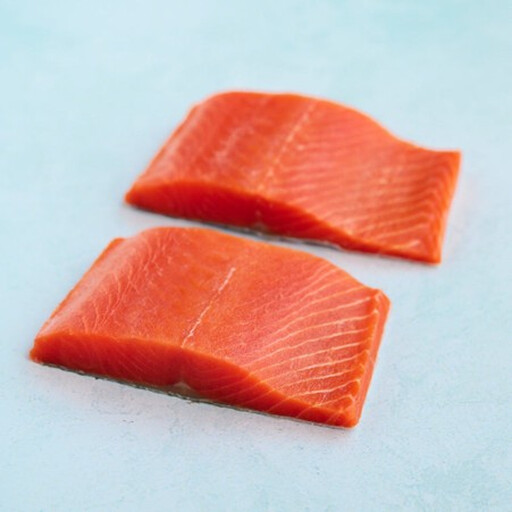 Image unavailable
Consider these salmon steaks if you want salmon rather than a mild white-fish fillet with the roast. The listing calls for thawing before cooking; check the pack for cooking directions and its crustacean and mollusc warning.
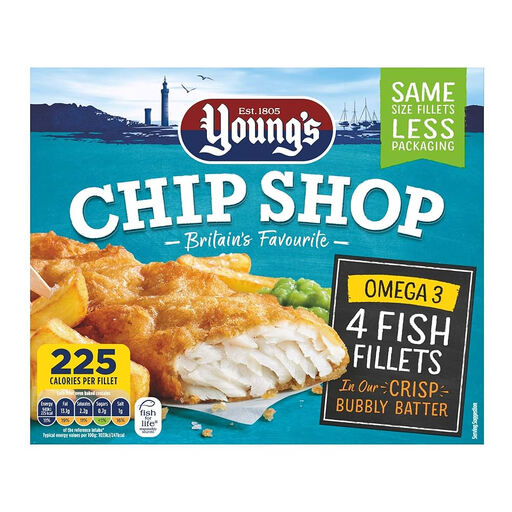 Image unavailable
This battered Alaska pollock suits a roast plate where a crisp, fish-supper-style coating is wanted. The Joybuy listing describes oven cooking from frozen and lists fish, gluten, milk and mustard allergens; follow the current pack’s cooking directions and bone warning.
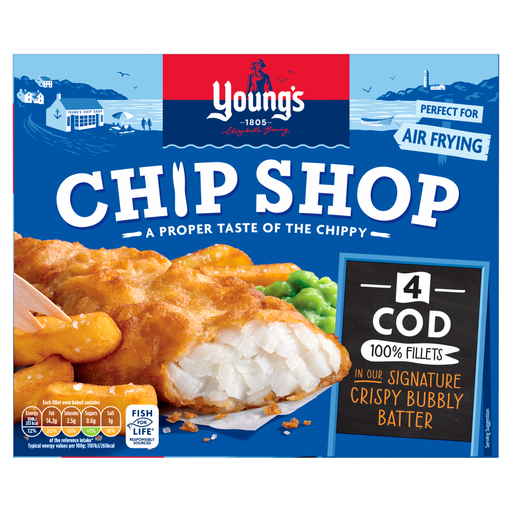 Image unavailable
Choose this battered cod if you want a coated fish option rather than a plain roast centrepiece. Follow the pack’s oven-from-frozen directions, check its fish, wheat and mustard allergen declaration, and note the warning that bones may remain.
Choose plain white fish if you want to add your own roast flavours and sauce. Breaded fish makes more sense when a crisp coating is part of the meal; check the exact pack’s ingredients and nutrition rather than treating the two formats as interchangeable.
Only use an oven-from-frozen method when the exact product’s directions permit it. Birds Eye provides such directions for its cited breaded and battered cod, but timings and preparation requirements should not be transferred to another fish product.
Fish is an allergen, and coatings can add others. Birds Eye’s cited breaded cod lists wheat and mustard and may contain milk; its battered cod lists wheat, milk and mustard. The Food Standards Agency says allergens in pre-packed food must be emphasised in the ingredients list, so read the pack you are using.
No. The NHS identifies cod as white fish and salmon as oily fish. If oily fish is the reason for choosing fish for this meal, choose an oily-fish product rather than assuming a white-fish fillet serves the same purpose.
No. The cited M&S and Birds Eye product information warns that bones may remain. Check the chosen pack’s warning and take care when serving.