Weeknight TV-dinner shoppers
If you want fish that can go straight into the oven or air fryer, check the chosen pack’s cooking directions as well as its sustainability label, ingredients and allergens.


For a quick TV dinner, choose a frozen-fish format you can prepare as directed, then check the individual pack for sustainability assurance. The Marine Stewardship Council’s blue MSC ecolabel applies to wild-caught fish; the Marine Conservation Society points shoppers towards ASC or other credible assurance for farmed fish and says neither production method is automatically the more sustainable choice. A coated portion may mean less preparation, while a plain fillet lets you choose the seasoning and sides; check the ingredients, allergens and cooking instructions either way.
If you want fish that can go straight into the oven or air fryer, check the chosen pack’s cooking directions as well as its sustainability label, ingredients and allergens.
The Marine Stewardship Council’s blue MSC ecolabel is a useful first check for wild-caught fish. Look at the named species and catch information on the individual product too.
If you are considering farmed fish alongside wild-caught cod, haddock or pollock, look for assurance appropriate to the production method. The Marine Conservation Society identifies ASC, Soil Association or Organic assurance as options to check for farmed seafood.
Start with the type of fish and its assurance label, then choose a preparation format that fits the time you have for dinner.
| Priority | What to check | Your needs |
|---|---|---|
| Sustainability assurance | Look for the blue MSC ecolabel on wild-caught fish, or an appropriate farmed-seafood assurance such as ASC. Check the named species and source details on the product. | I want a label that applies to this fish, rather than relying on a general sourcing statement. The Marine Conservation Society says neither wild capture nor farming is automatically the more sustainable method. |
| Preparation | Check whether the pack calls for cooking from frozen or thawing first, and which oven or air-fryer method it specifies. Follow that product’s instructions. | If dinner needs little advance preparation, I would look for a portion with clear cook-from-frozen directions. A fillet that needs thawing calls for more planning. |
| Ingredients and nutrition | Read the current ingredient and allergen list. Compare nutrition using the same stated basis, such as per 100g or per serving, and note the serving size. | A coated portion might suit my cooking plans, but I need to know what is in the coating. A plain fillet gives me control over what I add when preparing the meal. |
| Individual pack details | Check the particular product’s certification mark, source information and current cooking directions. Treat a brand or retailer sourcing policy as context, not as the label for every item. | Before choosing a fish, I want its own pack details to back up the sustainability claim and preparation method I am relying on. |
The Marine Conservation Society says wild capture and fish farming can both have environmental impacts; the production method alone does not settle the choice.
For wild fish, check for MSC assurance and product-specific source details. For farmed fish, look for an appropriate assurance label, such as ASC, and check the particular product.
A sourcing commitment can cover a broad seafood range without telling you which certification applies to the frozen fish you have selected.
Check the current item’s certification mark, named species and source information before relying on a product-specific claim.
A breaded or battered portion has ingredients beyond the fish. For example, the Tesco Groceries listing for Birds Eye breaded cod identifies wheat and mustard.
Read the current pack’s ingredients and allergens, and compare nutrition on a like-for-like stated basis if that matters to your choice.
Ingredients, allergens and preparation directions can change, making an older listing a poor substitute for the product supplied.
Check the pack you receive, particularly when an allergen or a specific cooking method matters.
These ranges and sourcing policies can help you decide what to inspect, but certification and cooking details still need checking on the fish you choose.
Its frozen range includes coated fish and fish fingers suited to portioned dinners.
Young's lists natural fillets alongside breaded fish, fish in sauce and meals for one.
Tesco offers frozen fish in plain and coated formats.
Sainsbury's describes a retailer-wide approach to responsible seafood sourcing.
Asda’s frozen seafood categories include plain fillets and coated fish.
M&S lists frozen plain fillets and breaded fish, as well as seafood used in meals.
These options cover a coated cod dinner and two plain-fish preparations. For each one, check the pack’s sourcing assurance and cooking directions before deciding whether it fits your TV dinner.
 No image available
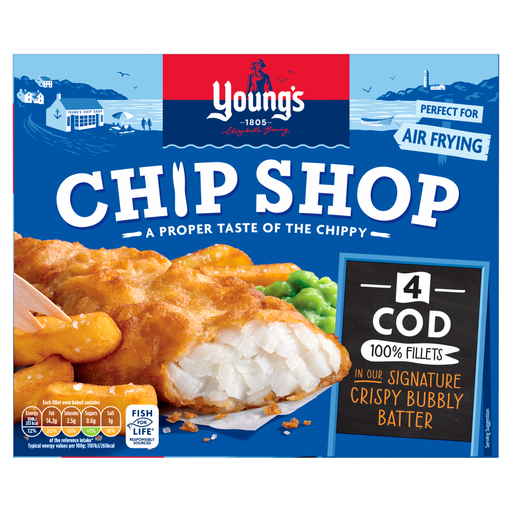
The coated, four-portion format suits a TV dinner prepared using the pack’s oven-from-frozen directions. Check the current pack for its sustainability assurance and source details; confirm air-fryer instructions before using that method. The product information identifies wheat and mustard, so check the pack if allergens matter.
 No image available
These plain, skinless and boneless fillets leave the seasoning and sides to you, but the supplied preparation guidance calls for refrigerator thawing before cooking. The title distinguishes 1kg total weight from 800g net fish. Check the current pack for its sustainability assurance and source details before treating it as a certified choice.
 No image available
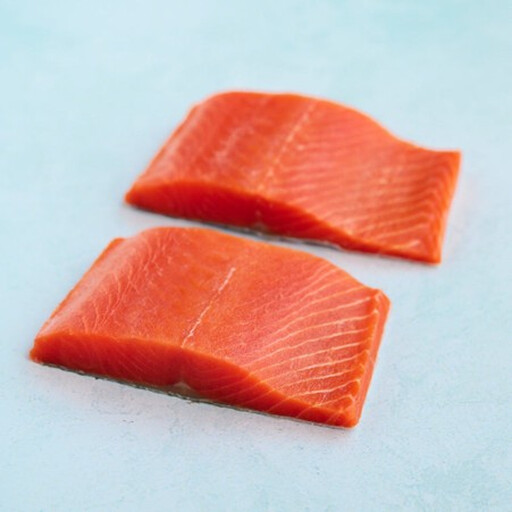
These wild sockeye salmon steaks suit a plain-fish dinner if you can plan for thawing before cooking. Check the current pack for its source details, any applicable sustainability assurance and cooking directions; a wild-caught description alone is not a certification. Check the pack’s allergen statement if crustaceans or molluscs are relevant to you.
It identifies wild-caught seafood from fishing practices independently assessed against the Marine Stewardship Council’s environmental requirements. Check that the label applies to the individual product, then read its species and source information.
No. The Marine Conservation Society says neither production method is automatically better. For wild fish, check for MSC assurance and source details; for farmed fish, it identifies ASC, Soil Association or Organic assurance as labels to look for.
Check its certification mark, named species and available source information, followed by the ingredients, allergens, storage directions and cooking instructions. Use the current pack for the product you will prepare, particularly if a coating or specific cooking method affects your choice.
Only use a cook-from-frozen method when the chosen product’s instructions provide one. Some frozen portions have oven or air-fryer directions, while other fish needs thawing first; follow the method and cooking directions on its current pack.
No. A retailer policy describes its wider sourcing approach, not necessarily the certification of an individual fish product. Check the specific pack or current product information before treating it as MSC- or ASC-certified.