At-home fish-and-chips planners
If you want a ready-coated fillet from the freezer, decide whether cod, haddock or another named fish suits the meal, then check the coating and oven directions.


Choose ready-battered cod or haddock for a fish-and-chips-style meal with little preparation, or breaded fillets if you prefer breadcrumbs. Plain frozen fillets let you make the coating yourself but take more preparation. Whichever route you choose, check the named species, portion count, allergens and the exact pack’s storage and cooking directions.
If you want a ready-coated fillet from the freezer, decide whether cod, haddock or another named fish suits the meal, then check the coating and oven directions.
Compare both the number of fillets and the pack weight. A four-fillet box and a two-fillet box answer different portion needs, even when both contain battered fish.
Batter and breadcrumbs differ by recipe. Read the current pack declaration rather than assuming a coating, or a Free From label on its own, meets every diner’s requirements.
Choose when: You want a prepared batter for a fish-and-chips-style dinner.
Bear in mind: The coating’s ingredients and allergens vary by product.
Choose when: You prefer a breadcrumb coating to batter.
Bear in mind: Breaded does not mean gluten-free; check for a specifically labelled option if needed.
Choose when: You want to prepare the batter, breadcrumbs or seasoning yourself.
Bear in mind: You will need to allow for preparation and follow that fillet’s own thawing and cooking directions.
Once you have chosen a coating, compare the fish and portions inside the pack, then check whether its handling instructions work for your meal.
| Priority | What to check | Your needs |
|---|---|---|
| Portions | Check pack weight and fillet count together. If comparing packs by weight, use the same stated weight basis. | I need enough fish for the people eating, without assuming every fillet is the same size. |
| Species and coating | Read the named species and whether the fish is battered, breaded or plain. Check the oven directions for the exact coated product. | Cod or haddock may be the fish I have in mind, while pollock or another named species may also suit my plans. I want batter, breadcrumbs or a coating I make myself. |
| Fish content | Read the ingredient declaration rather than judging by the box size. Birds Eye lists cod at 54% in its 4 Large Cod Fillets in Batter. | I want to know which fish is in the fillet and how much of that particular coated product is fish. |
| Allergens and handling | Check the current allergen declaration, freezer temperature and whether the pack directs cooking from frozen or after thawing. Follow its stated cooking method. | The coating must suit everyone eating it, and I need a preparation method that fits the time and equipment available. |
Coated ranges include cod, haddock, pollock and products labelled as whitefish. The species and fish content can differ between packs.
If species matters to your meal, check the product name and ingredient declaration before choosing.
Coated fish recipes vary. A gluten-free breadcrumb coating does not remove fish as an allergen, and other declared allergens may still matter.
Use the current pack’s full ingredient, allergen and any precautionary statements to assess the product for the people eating it.
Preparation directions differ between products; the instructions for a battered fillet need not apply to a plain one.
Follow the exact pack’s directions for cooking from frozen or thawing, oven settings and cooking time, and ensure the fish is piping hot throughout.
Young’s Chip Shop range includes battered cod and haddock packs, alongside other fish-fillet formats.
Birds Eye lists battered cod and haddock fillets and a separately labelled gluten-free breaded fish option.
Tesco Groceries lists own-label coated fish, including battered pollock, breaded cod and a Free From battered whitefish option.
These options cover ready-battered fillets for fish-and-chips night and plain frozen fillets for making your own coating.
 No image available
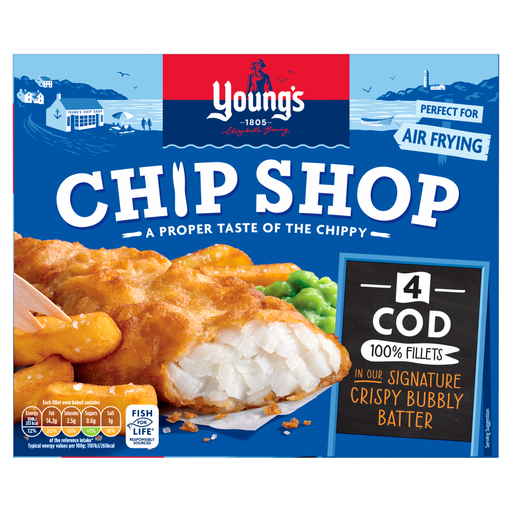
A ready-battered cod option for a planned fish-and-chips meal. The pack contains four fillets and lists cod at 54%. Check the current declaration for fish, wheat and mustard, and follow the pack’s oven-from-frozen directions.
 No image available
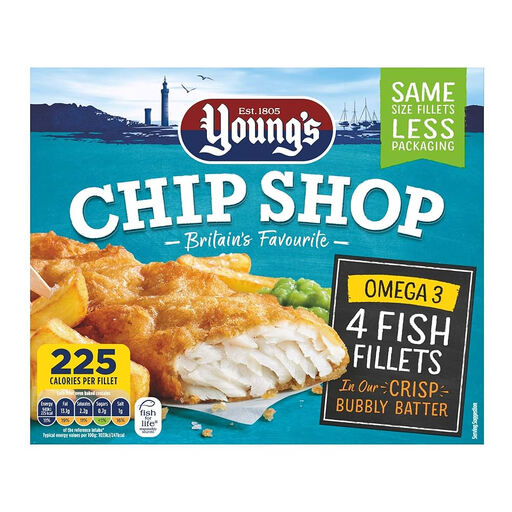
Four ready-battered Alaska pollock fillets for a meal where pollock suits your preference rather than cod or haddock. Check the current pack for fish, gluten, milk and mustard declarations and for its exact cooking directions.
 No image available
Plain pangasius fillets for making your own fish-and-chips coating. The stated total weight is 1kg, with 800g net fillets; do not treat the total as the net fish weight. Allow for refrigerator thawing and follow the product’s cooking directions.
 No image available
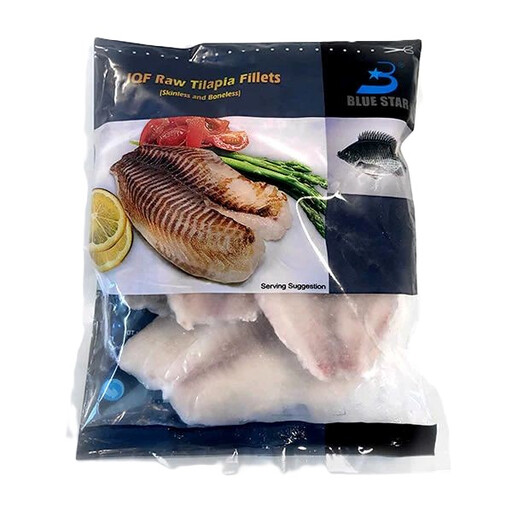
Raw, plain tilapia fillets for a meal where you will add your own coating. The pack states 720g net and a 140/200g fillet size. Prepare and cook the fish fully; despite the skinless and boneless description, the product information warns that bones may remain.
Choose the species your household prefers; neither is a universal choice. Seafish’s June 2026 fish-and-chips takeaway analysis reports cod as favoured in most of England, Wales and Northern Ireland, while haddock is more prominent in Scotland and parts of Yorkshire and the Midlands. That regional takeaway pattern need not dictate what you buy for home.
Yes, when the exact pack gives oven-from-frozen directions. Birds Eye lists 20 minutes for its battered cod, while the Young’s Chip Shop cod listing gives 20–22 minutes. Use the oven setting and full instructions on the pack you are cooking, rather than transferring a timing between products.
Check the current pack’s full declaration, because coated-fish recipes differ. The cited Birds Eye battered cod declares fish, wheat, milk and mustard; Young’s Chip Shop cod lists fish, wheat/gluten and mustard. Read any precautionary statements as well.
Follow the directions for the particular product. The cited Birds Eye battered cod and Young’s Chip Shop cod specify storage at −18°C or cooler; the product’s pack also tells you whether to cook from frozen or thaw first. Do not apply coated-fish directions to plain fillets.